
Every commercial building needs a way out when the power does not work, and the automatic door breakout feature in New York entrances rely on is what provides it. When a sliding or folding entrance loses power during a fire, an outage, or a system fault, the breakout feature lets an occupant push the panel outward, in the direction of egress, so the door behaves like a manually operated swinging door.
Pushing the leading edge of a panel releases it from its track, and a switch disables automatic operation until the panel is reset. No electricity, sensor signal, or controller command is involved, which is exactly why the feature can be trusted when everything else fails.
The details matter for facility managers across New York City, Long Island, Westchester, and Northern New Jersey: how the mechanism works, which standards govern it, and how it should be tested. Door Automation Corp, a family-owned commercial entrance specialist based in Westbury, NY, services these systems for hospitals, offices, retail properties, and institutional buildings throughout New York and New Jersey.
What the Automatic Door Breakout Feature Does in an Emergency
An automatic sliding entrance runs on a continuous loop. A sensor detects a person, a controller makes a decision, and a motor moves the panel. During a fire alarm, a blackout, or a component fault, that loop can break, and a sliding panel that handled thousands of crossings that morning becomes a barrier between occupants and the exit.
The breakout feature closes that gap. It is sometimes called breakaway, and it is built into sliding and folding entrances so the panels can swing out under manual pressure. Under the model codes, entrances that open automatically when a motion sensor or pressure pad detects a pedestrian are classed as power-operated doors, and those entrances are held to ANSI/BHMA A156.10. Technicians who provide automatic sliding door service check this feature at every inspection because it is a life safety function, not an accessory.
In practical terms, a working breakout system does four things:
- Releases the panel from its track when an occupant pushes outward
- Lets the panel swing in the direction of egress instead of staying locked in the sliding path
- Disables automatic operation while the panel is broken out, so the operator does not fight the evacuation
- Works with no electrical supply at all
How the Automatic Door Breakout Feature Releases Under Manual Pressure
A breakout event follows a short, predictable sequence. Knowing it helps staff recognize what a healthy system feels like and spot trouble before an inspector does.
- Outward pressure: An occupant pushes on the leading edge of the panel along the exit path.
- Release: The panel disengages from its sliding track hardware.
- Swing: The panel pivots outward in the direction of egress and opens the exit path.
- Automatic operation disabled: A switch stops the operator from trying to move the panel while it is broken out.
- Reset: A trained staff member or technician returns the panel to its normal position, and the entrance resumes automatic operation.
Force Limits and Standards Behind Breakout Performance
The standard that governs this feature is ANSI/BHMA A156.10, the American National Standard for Power Operated Pedestrian Doors. It caps the force needed to open a breakaway panel at 50 pounds-force, and it separately limits the force needed to slide a door by hand after a power failure to 15 pounds-force. The comparison below shows where those figures sit next to other egress door limits.
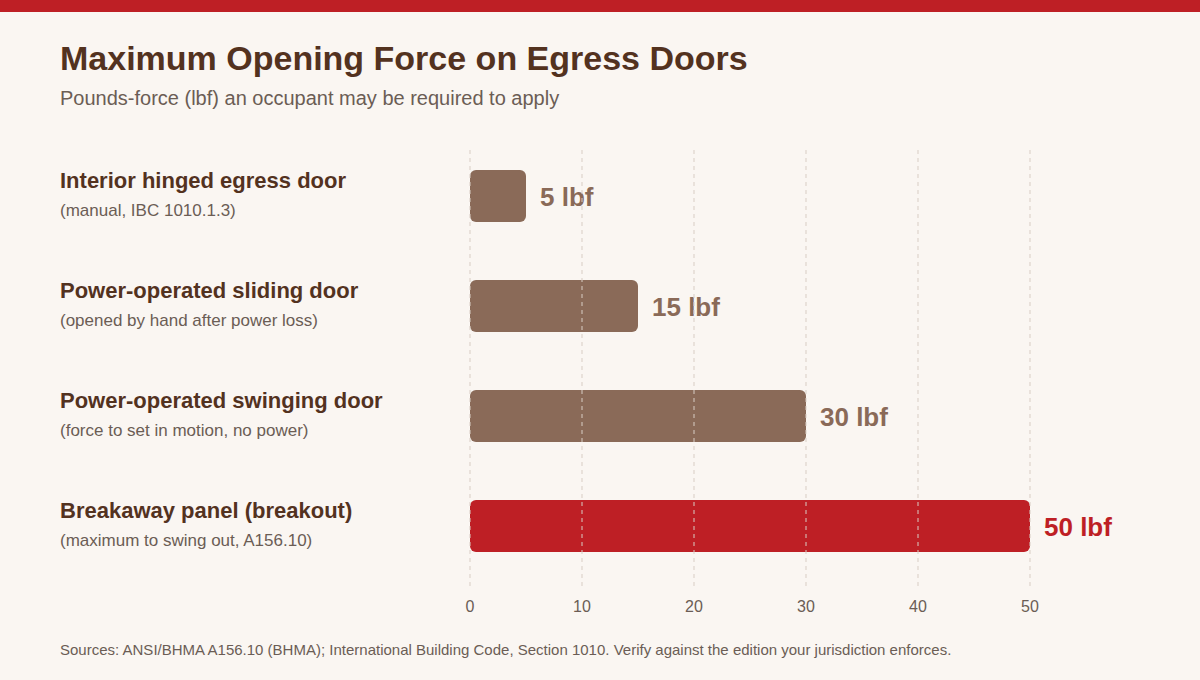
Source: BHMA (ANSI/BHMA A156.10) and the International Building Code, Section 1010.
Recent editions of the International Building Code spell out that power-operated doors must swing in the direction of egress in an emergency, while earlier editions reached the same result by referencing A156.10. NFPA 101 adds an exception for certain sliding doors serving fewer than 50 occupants, as long as they can be slid open by hand within the force limits. Which edition and exception apply to a given entrance depends on the jurisdiction, which is why a current review of commercial entrance safety compliance is worth completing before an inspector arrives.
Full Breakout vs. Partial Breakout Sliding Door Configurations
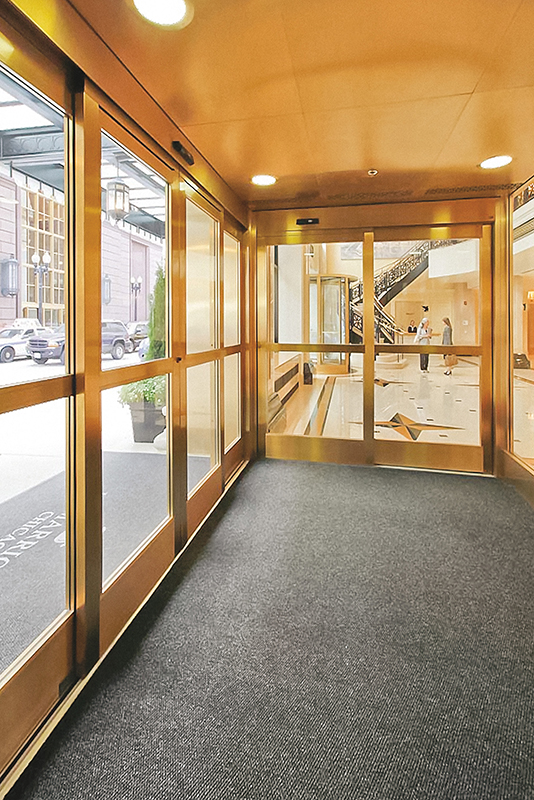
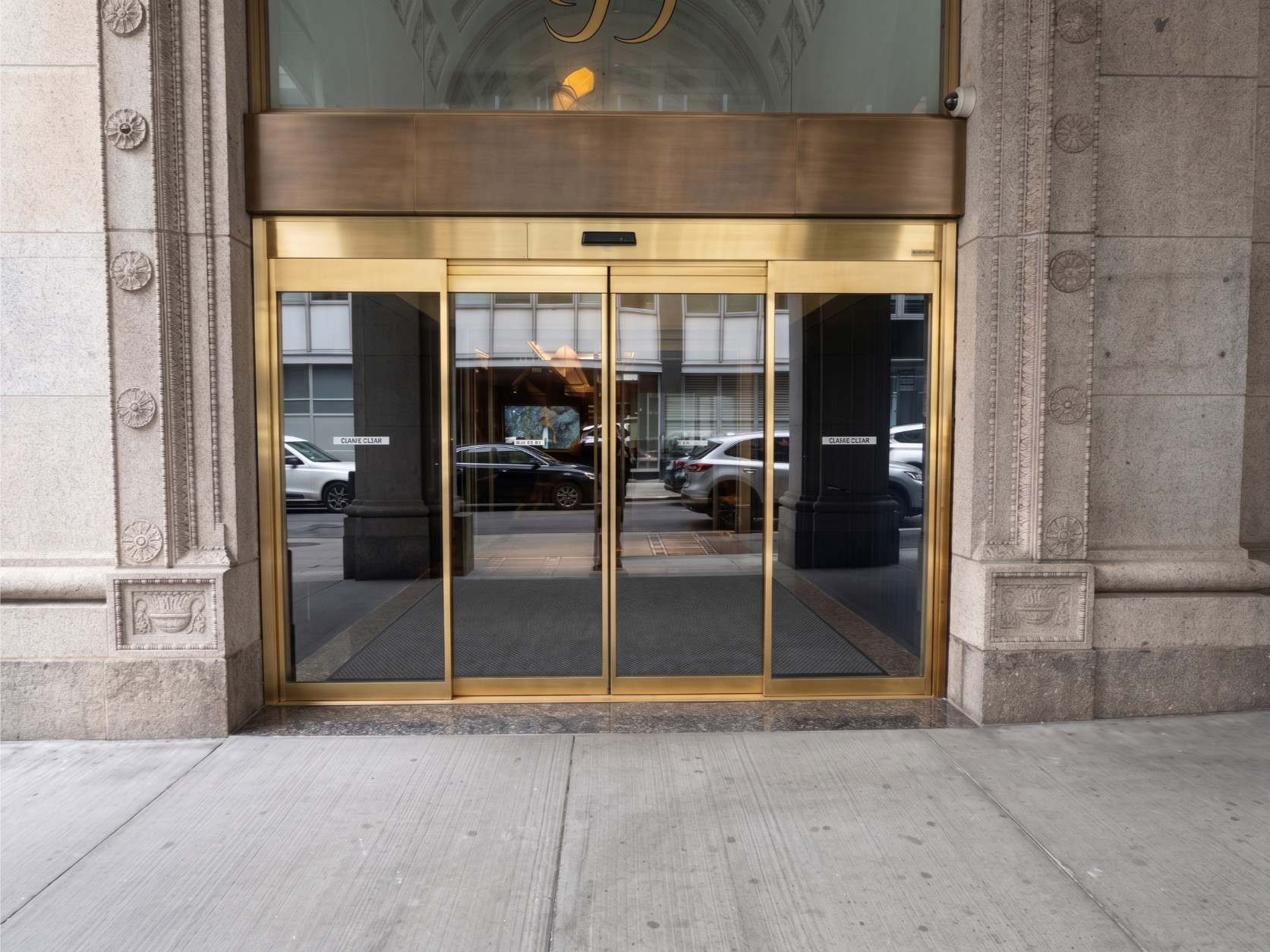
Automatic sliding entrances are installed in two common breakout arrangements. In a partial breakout system, the active sliding panels swing out while the sidelites beside them stay fixed in the frame. In a full breakout system, the sidelites also swing outward, so the entire opening clears for evacuation.
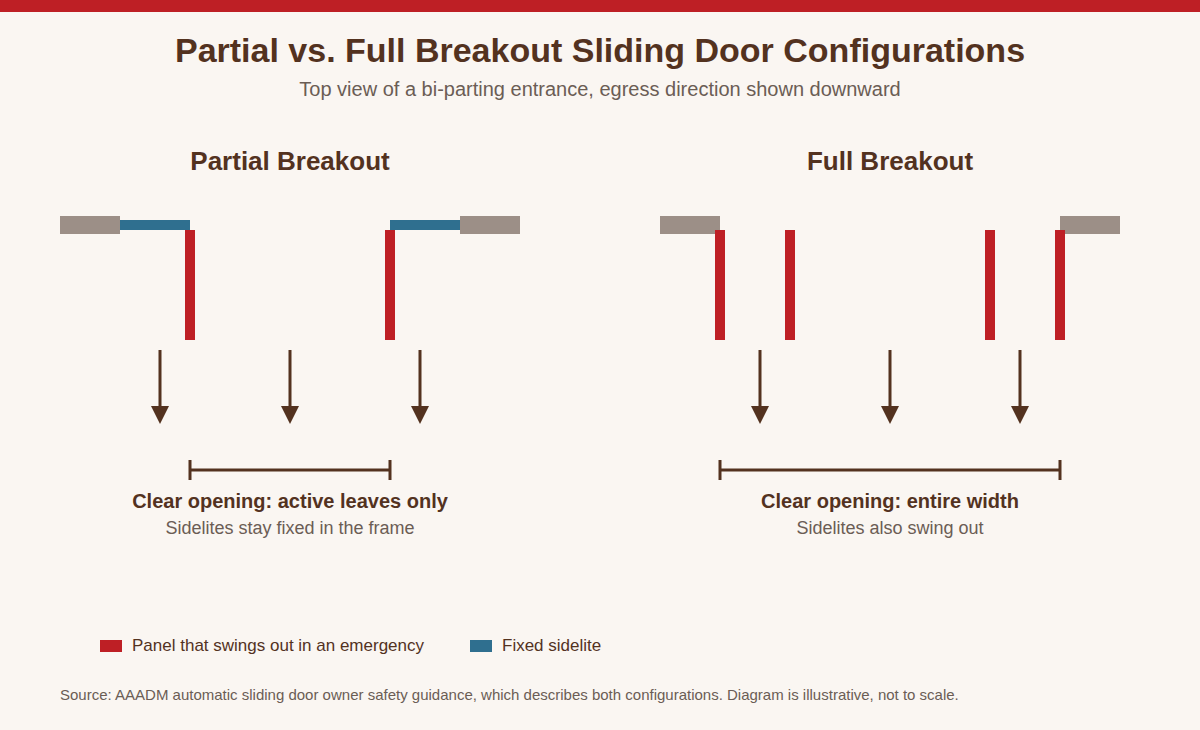
Source: AAADM owner safety guidance describing both configurations.
| Feature | Partial Breakout | Full Breakout |
|---|---|---|
| Active sliding panels | Swing out under manual pressure | Swing out under manual pressure |
| Sidelites | Remain fixed in the frame | Swing out on their own pivot hardware |
| Clear opening for egress | Limited to the active panels | The entire opening width |
| Best suited for | Lower occupant loads where the code and inspector accept it | Higher occupant loads, or entrances where the full width is needed to evacuate |
Choosing the Right Breakout Configuration for Your Entrance
The choice is not cosmetic. It depends on the width of the opening, the number of people the space serves, the code edition in force, and how the local inspector reads it. In hospitals, clinics, and care settings, where patients on gurneys and in wheelchairs may need to leave quickly, automatic door service for healthcare facilities routinely starts with a close look at how much clear width the breakout configuration actually delivers.
The configuration chosen at installation is costly to change later, so it deserves a proper egress analysis rather than a field estimate. A qualified technician can confirm what your entrance provides today and whether an upgrade is warranted.
Building Code Requirements for Emergency Egress in New York and New Jersey
National model codes set the baseline, and each jurisdiction adopts and amends them on its own timeline. That layering is the reason a general summary is never enough for a specific entrance. The milestones below show how recently each part of the tri-state region updated its building rules.
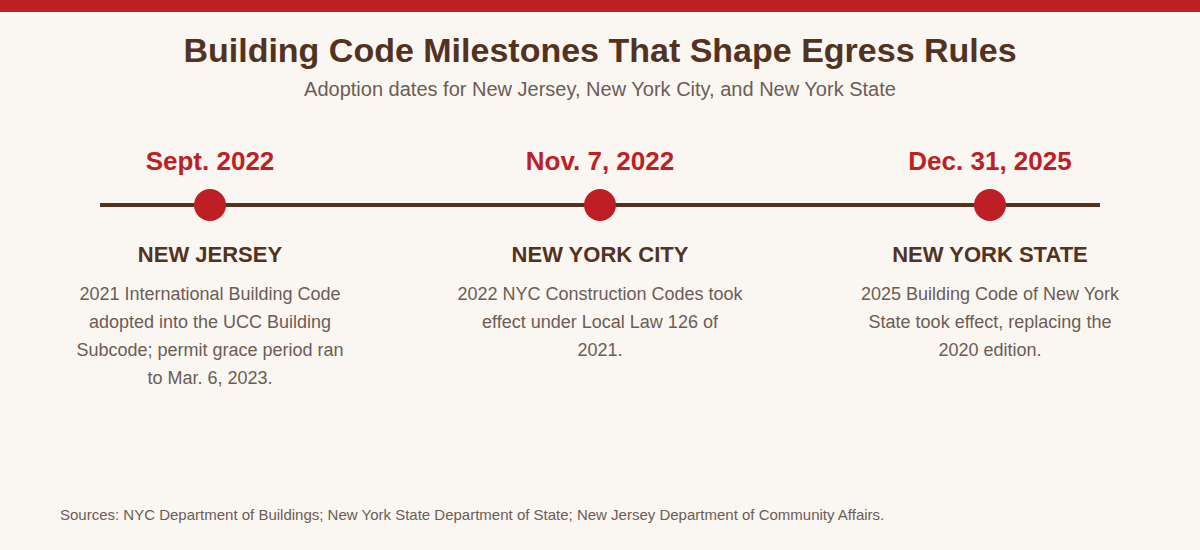
Sources: NYC Department of Buildings, New York State Department of State, and New Jersey Department of Community Affairs.
New York City applies its own construction codes, New York State applies its Uniform Code across the rest of the state, and New Jersey applies the Uniform Construction Code built on the International Building Code. Fire marshals and building officials in Long Island, Westchester, and Northern New Jersey then apply those rules to each building based on its occupancy classification and occupant load. Accessibility rules apply alongside egress rules, so a breakout configuration should also be reviewed against the ADA Standards for Accessible Design.
Testing and Maintenance That Keep Breakout Systems Compliant
A breakout mechanism that works at installation can wear quietly over months of traffic, temperature swings, and tracked-in grit. A simple, regular testing rhythm catches that wear while it is still a repair instead of a violation.
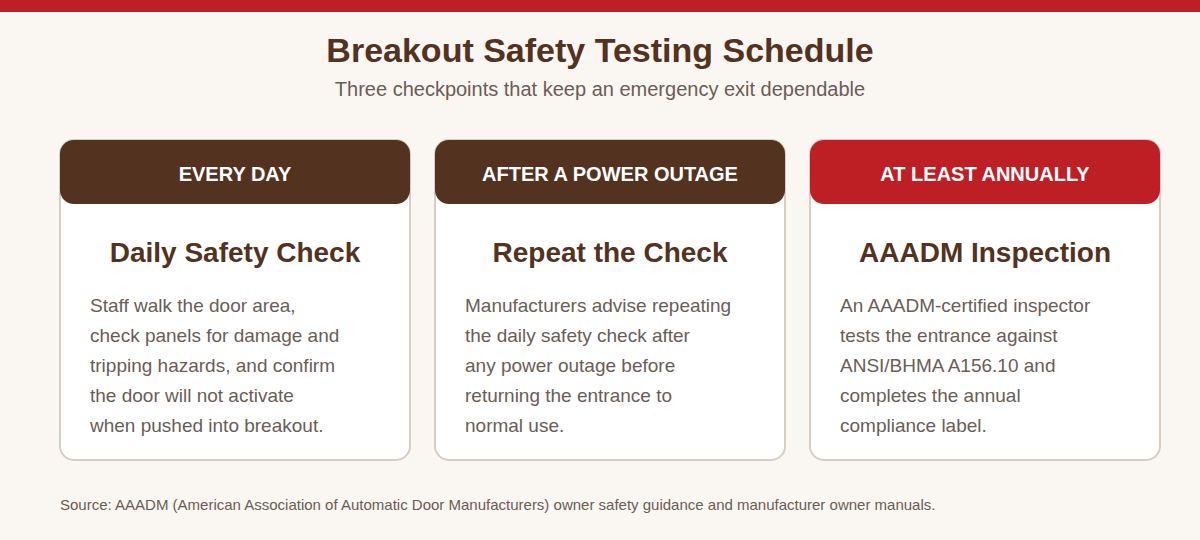
Source: AAADM owner safety guidance and manufacturer owner manuals.
Daily Safety Checks for Facility Staff
The daily check is quick and needs no tools. Staff should confirm that:
- The bottom guide and track are free of debris, stones, and buildup
- All panels are undamaged and the door area has no tripping hazards
- Safety labels and decals are in place and legible
- Where the manufacturer’s guidance calls for it, the door will not activate while a panel is pushed into breakout
- Panels swing smoothly, without unusual resistance, when tested by trained personnel
Annual AAADM Inspection by Certified Technicians
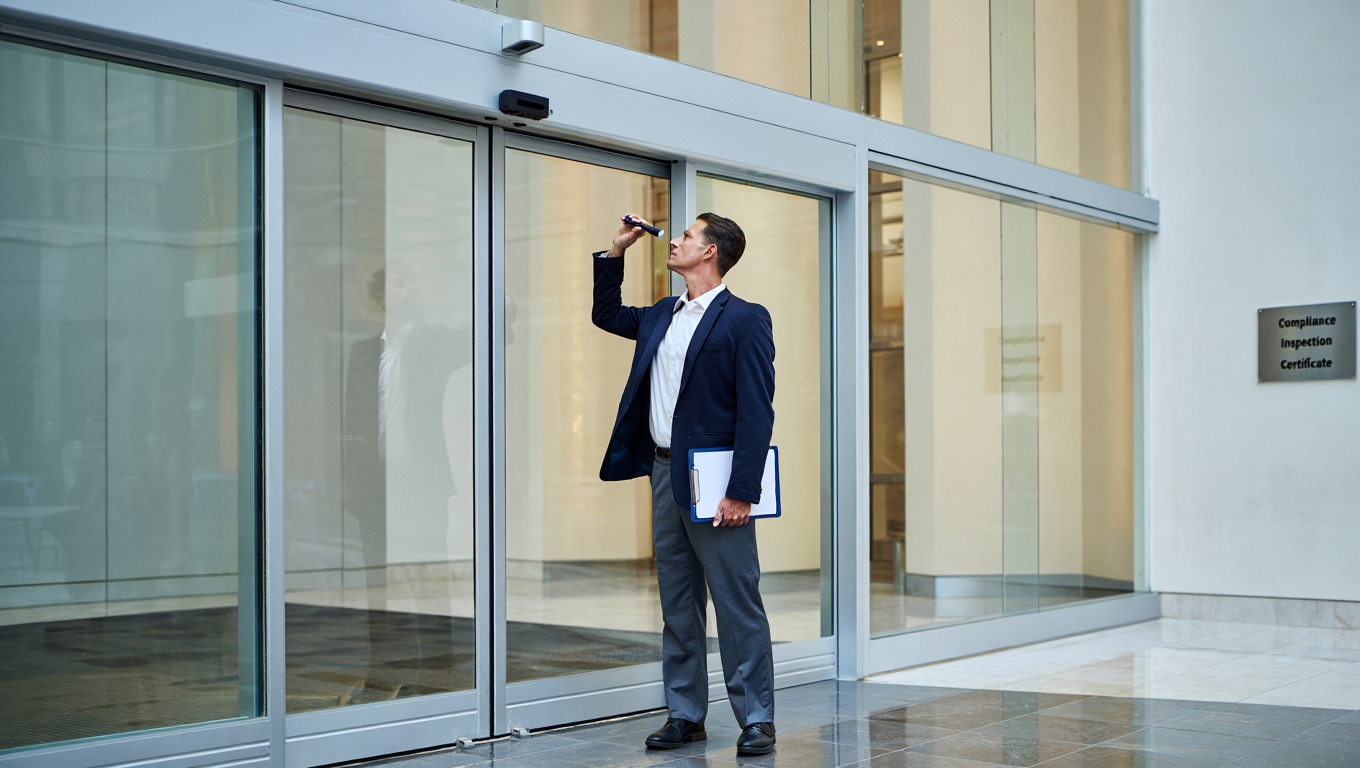
The American Association of Automatic Door Manufacturers runs a certification program for inspectors, and its guidance calls for every automatic door to be checked by an AAADM-certified inspector at least once a year. The inspector tests the entrance against ANSI/BHMA A156.10 and completes the annual compliance label, which becomes documented proof of due diligence. Scheduling AAADM inspections for commercial entrances on a fixed calendar keeps that record current.
The tri-state climate adds its own wear. Winter road salt tracked through vestibules can corrode latch and pivot hardware, cold weather can thicken lubricants and tighten tolerances, and wind loads on exposed entrances can slowly misalign panels so they bind instead of swinging cleanly. A written automatic door maintenance program addresses those conditions before they push the breakout force out of range, and a service contract keeps inspections and lubrication on a predictable schedule.
Schedule a Breakout Inspection
Warning Signs a Breakout Mechanism Needs Service
Breakout failures rarely announce themselves. These signs call for prompt attention:
- A panel that feels stiff, sticks, or needs more effort to swing out than it used to
- A panel that does not return cleanly to its track after a test
- An operator that tries to run while a panel is broken out
- Visible corrosion, bent guides, or damaged pivot hardware
- An annual compliance label that is missing or out of date
A door that cannot break out is a life safety problem, so treat it with the urgency of a failed exit. Fast emergency automatic door repair restores the feature quickly, and entrances that predate current standards may be good candidates for automatic door modernization so that breakout performance, sensors, and controls are brought up to date together.
Frequently Asked Questions About the Automatic Door Breakout Feature
What is breakout mode on a commercial automatic door?
Breakout mode is the emergency state in which a sliding or folding panel releases from its track and swings outward when someone pushes on it. The door then works like a manually operated swinging door. A switch disables automatic operation while the panel is broken out, and the entrance will not run automatically again until the panel is returned to its normal position.
How do automatic breakout doors work during a power outage?
The breakout feature is mechanical, so it does not need electricity, a sensor signal, or a controller command. When power is lost, occupants can still push the panel outward in the direction of egress, and the standard limits the force needed to 50 pounds-force or less. Sliding panels can also be moved by hand along their track after a power failure, within the force limits in ANSI/BHMA A156.10.
Are breakout features required on all commercial automatic sliding doors?
Not always. Model codes send power-operated entrances to ANSI/BHMA A156.10, and recent editions of the International Building Code state that these doors must swing in the direction of egress in an emergency. NFPA 101 contains an exception for some sliding doors that serve fewer than 50 occupants, provided they can be slid open by hand within the force limits. Because New York City, New York State, and New Jersey each adopt and amend codes on their own schedules, confirm the requirement for your occupancy with a qualified design professional or the local building official.
What is the difference between breakout and breakaway on an automatic door?
In everyday commercial door practice the two terms describe the same safety feature: a panel that swings out under manual pressure so people can leave during an emergency. The wording varies by manufacturer, standard, and region. Unless a manufacturer’s documentation draws a specific technical distinction, treat the terms as interchangeable.
How much force should it take to break out an automatic door panel?
ANSI/BHMA A156.10 limits the force needed to open a breakaway door or panel to 50 pounds-force or less. A panel that feels stiff, binds, or needs noticeably more effort than before can indicate worn latch hardware, corrosion, or misaligned pivot hardware, and it should be inspected by a certified technician.
How often should breakout mechanisms be tested?
Facility staff should complete the daily safety check recommended by AAADM, and manufacturers advise repeating it after any power outage. An AAADM-certified inspector should test the entrance at least once a year. Entrances with very heavy traffic, winter road salt exposure, or coastal wind may benefit from professional testing more often.
Schedule Breakout Testing and Service in New York and New Jersey
Keeping a breakout mechanism dependable takes knowledge of both the hardware and the rules it operates under. Door Automation Corp has served the tri-state area since 1970 with AAADM-certified technicians who test breakout force, verify the safety switch, and review the full egress path, from Westbury, NY to Manhattan, Long Island, Westchester, and Northern New Jersey. To arrange an inspection or ask about your entrances, contact our team or call (516) 678-4440.
Door Automation Corp
2700 Shames Drive, Westbury, NY 11590
Phone: (516) 678-4440
Hours: Monday to Friday, 7:00 a.m. to 5:00 p.m.