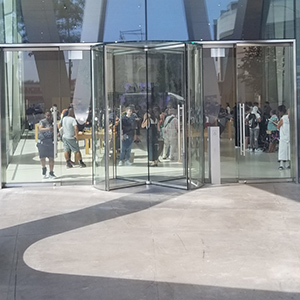

Revolving Doors

What Are the Energy Advantages of Revolving Doors?

As commercial buildings place greater emphasis on sustainability, operational efficiency, and occupant comfort, entrance design has become a critical component of overall building performance. One of the most effective yet frequently underestimated solutions is the revolving door. When evaluating the energy advantages of revolving doors, it becomes clear that these systems are more than architectural statements. They are practical tools that help reduce energy loss, stabilize indoor environments, and support compliance with modern energy regulations. In dense urban environments such as New York City, where energy performance standards continue to tighten, revolving doors are increasingly recognized as a smart investment for commercial properties seeking long-term efficiency.
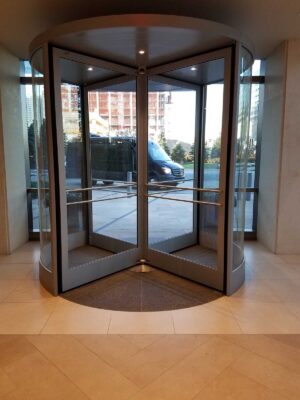
energy advantages of revolving doors

How Revolving Doors Conserve Energy

Revolving doors are designed to minimize the exchange of air between the inside and outside of a building. Unlike swing or sliding doors that open fully and allow large volumes of air to pass through, revolving doors operate as rotating compartments. At any given moment, one section of the door remains sealed, creating a buffer between interior and exterior conditions. This simple yet highly effective mechanism significantly limits unwanted airflow.

In busy commercial spaces such as office buildings, hotels, hospitals, and retail centers, doors may open hundreds or even thousands of times per day. Each opening of a traditional door allows conditioned air to escape and unconditioned air to enter, forcing heating and cooling systems to compensate. Revolving doors address this challenge by controlling airflow with every rotation.

Reduced Air Infiltration and Exfiltration

One of the most important energy advantages of revolving doors is their ability to reduce air infiltration and exfiltration. Infiltration refers to outside air entering a building, while exfiltration is the loss of conditioned indoor air to the outdoors. Both processes place additional strain on HVAC systems and increase energy consumption.

Revolving doors greatly reduce these effects by maintaining a consistent barrier between environments. This results in measurable benefits such as:

  • Lower heating demand during colder months
  • Reduced cooling load during warmer seasons
  • Less temperature fluctuation near entrances
  • Improved overall building energy performance

Over time, minimizing uncontrolled air exchange can lead to substantial reductions in utility costs, especially in large commercial facilities.

Improved HVAC System Efficiency

Because revolving doors help maintain consistent indoor temperatures, HVAC systems can operate more efficiently and predictably. Instead of constantly adjusting to sudden temperature changes caused by open doors, heating and cooling equipment can maintain steady operation. This efficiency not only lowers energy use but also reduces wear on mechanical components.

Buildings that incorporate revolving doors often experience:

  • Reduced peak energy demand
  • Longer HVAC equipment lifespan
  • Lower maintenance and repair costs

These operational advantages contribute to a strong return on investment and support long-term building performance goals.

Enhanced Indoor Comfort and Occupant Experience

Energy efficiency and occupant comfort are closely linked. Drafts, cold air bursts, and heat loss near entrances can create uncomfortable conditions for employees, visitors, and customers. Revolving doors help eliminate these issues by preventing sudden air movement and maintaining stable interior conditions.

A more comfortable entrance area supports:

  • Improved first impressions for visitors
  • Increased employee satisfaction
  • Reduced complaints related to drafts and temperature swings

By controlling airflow at the point of entry, revolving doors help create a welcoming and consistent indoor environment.

Supporting Building Pressure Balance

Modern commercial buildings rely on carefully balanced air pressure systems to function properly. When large amounts of air rush in or out through traditional doors, pressure imbalances can occur. These imbalances may affect ventilation performance, door operation, and overall building efficiency.

Revolving doors help maintain proper pressure balance by acting as airlocks. This controlled movement of people and air supports the integrity of HVAC and ventilation systems. Pressure balance is especially important in high-rise buildings, healthcare facilities, and laboratories where precise air control is essential.

Sustainability and Environmental Impact

Reducing energy consumption directly supports environmental sustainability. By limiting the need for heating and cooling, revolving doors help lower greenhouse gas emissions associated with energy production. This makes them an important component of environmentally responsible building design.

For organizations pursuing sustainability initiatives or green building certifications, revolving doors can contribute to:

  • Reduced overall energy usage
  • Improved environmental performance metrics
  • Alignment with corporate sustainability goals

These benefits extend beyond cost savings and demonstrate a commitment to responsible building practices.

Compliance With New York City Local Energy Laws

In New York City, local energy regulations such as Local Law 97 and other energy compliance requirements place increasing responsibility on building owners to reduce emissions and improve efficiency. Revolving doors can help buildings become more efficient and support compliance with New York City’s local energy compliance laws by significantly reducing energy loss at building entrances. By limiting air infiltration and improving HVAC efficiency, revolving doors assist property owners in meeting performance targets while avoiding unnecessary penalties. As energy standards continue to evolve, incorporating efficient entrance solutions is an effective step toward long-term compliance.

Automated and Non-Contact Door Technologies

The demand for non-contact access solutions has grown significantly due to COVID-19, and revolving doors have adapted to meet this need. Modern revolving doors can be equipped with automatic operation and sensor-based controls that allow users to enter and exit without physical contact. These systems enhance hygiene and safety while preserving the energy efficiency benefits of the revolving door design.

Non-contact and automated features may include:

  • Motion-activated operation
  • Low-energy drive systems
  • Integration with access control and security technology

Door Automation Corporation provides different modifications that allow for non-contact door operation and also offers new automatic doors that meet standard automated door energy compliance.

Durability and Long-Term Cost Savings

Revolving doors are built for continuous use and high-traffic environments. Their controlled rotation reduces the impact of wind pressure and repetitive slamming that can damage traditional doors. This durability results in fewer repairs and longer service life.

Long-term savings associated with revolving doors include:

  • Reduced maintenance requirements
  • Consistent performance in extreme weather
  • Lower operational disruptions

When evaluated over the lifespan of a commercial building, these factors make revolving doors a cost-effective and reliable solution.

Architectural Integration and Design Flexibility

Revolving doors offer both functional and aesthetic advantages. Available in a wide range of materials, finishes, and configurations, they can complement modern, classic, or custom architectural designs. For architects and designers, revolving doors provide an opportunity to enhance a building’s appearance while supporting energy efficiency objectives.

Door Automation Corporation works closely as design consultants with many of the top architectural firms in New York City. This collaborative approach ensures that revolving door solutions align seamlessly with both visual design goals and performance requirements.

Security and Controlled Access

Energy efficiency does not come at the expense of security. Revolving doors can be integrated with advanced security systems, including access control, monitoring, and sensors. These features help regulate entry and exit while maintaining the energy-saving benefits of the revolving door structure.

Secure and efficient entryways are especially valuable in corporate offices, healthcare facilities, and high-profile commercial properties where safety and performance must work together.

Why Revolving Doors Make Sense for Commercial Buildings

When all factors are considered, revolving doors offer a comprehensive solution for modern commercial spaces. They reduce energy loss, enhance HVAC efficiency, improve occupant comfort, support sustainability goals, and help buildings comply with evolving energy regulations, including New York City local energy laws. Combined with automation and non-contact technology, revolving doors meet the demands of today’s commercial environments while delivering long-term value.

Work with Door Automation Corporation

If you are looking to improve energy efficiency, enhance accessibility, and modernize your commercial entryways, Door Automation Corporation is ready to help. We provide solutions for convenient access to commercial spaces, offering automatic and manual swing, slide, and revolving doors. Our reliable professionals work with industry-leading products to deliver functional, dependable, and secure entryways. We also specialize in non-contact door openings and energy-compliant automated door solutions. By working closely with top architectural firms and serving as trusted design consultants, our skilled team is here whenever you need it. Contact us today to learn how our revolving door solutions can help your building achieve greater efficiency, compliance, and performance.
Why Are Revolving Doors Popular in Cities and Tall Buildings?

Step into almost any major American city and you will find them anchoring the lobbies of office towers, hotels, hospitals, and flagship retail stores. Revolving doors are popular in cities for reasons that go well beyond aesthetics or tradition. The physics of tall buildings, the energy economics of high-traffic entrances, and the pedestrian throughput demands of dense urban environments all point to the same solution. This guide breaks down exactly why revolving doors dominate urban commercial architecture and why that is unlikely to change.

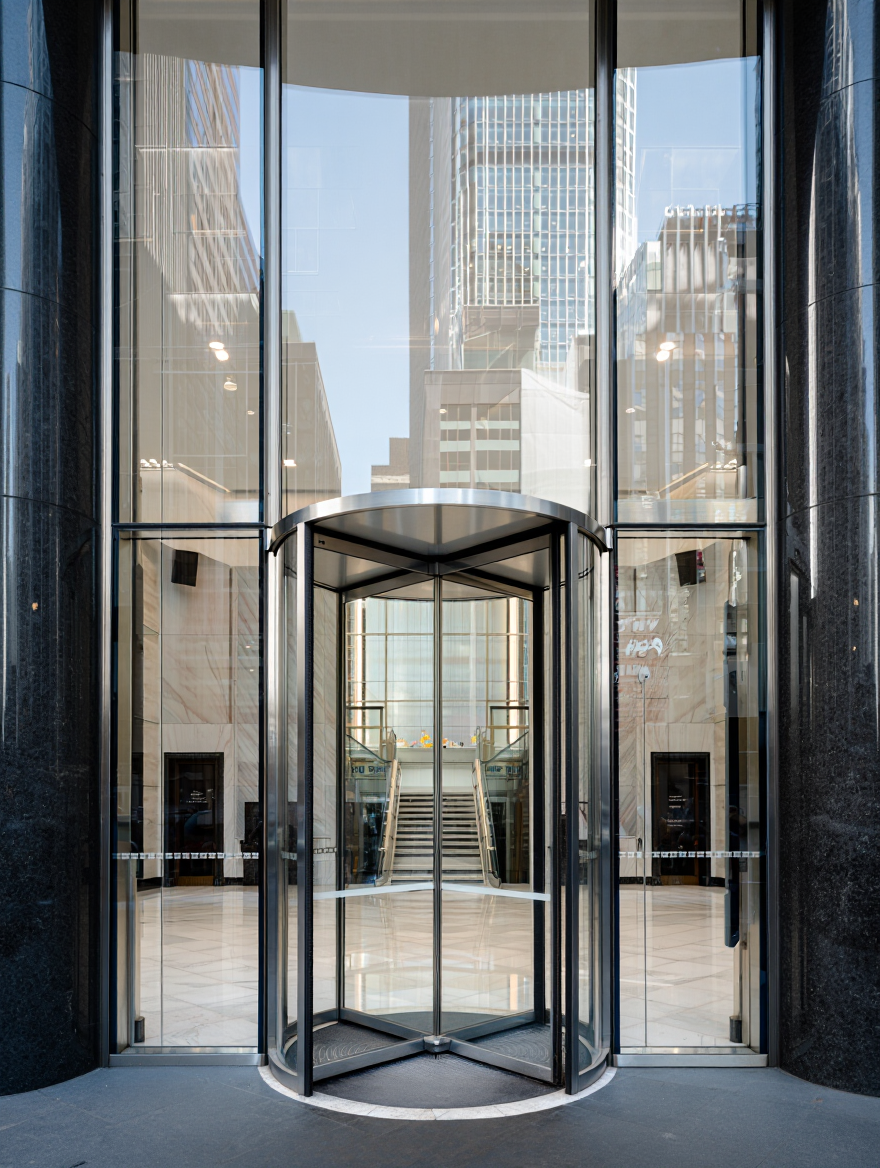
Revolving door installed in a modern commercial building lobby in New York City
Revolving doors are a fixture in the lobbies of high-rise office buildings, hotels, and institutional properties across New York City and major urban centers nationwide.

Why Are Revolving Doors Popular in Cities? The Physics Explanation

The short answer is stack effect. The longer answer involves the relationship between building height, air pressure, and what happens at every entrance every time a door opens. Understanding that relationship explains why commercial revolving doors became the standard solution for tall urban buildings and why no other entrance type has fully replaced them.

What Is the Stack Effect and Why Does It Matter for City Buildings

The stack effect, sometimes called the chimney effect, is a phenomenon that occurs in tall buildings when a significant temperature difference exists between the interior and exterior. Warm air inside the building is less dense than cold air outside. In winter, that warm air rises through the building and escapes at upper floors, while cold outside air is drawn in at lower levels. In summer, the direction can reverse depending on how aggressively the building is air conditioned relative to outdoor temperatures.

The practical consequence at ground level is significant. Every time a conventional swing or sliding door opens at the base of a tall building, the pressure differential accelerates air movement through the opening. In winter this means a rush of cold air floods the lobby. In summer it can mean warm, humid air enters an air conditioned space. The energy loss from repeated door cycles in a high-traffic building adds up to thousands of dollars annually in heating and cooling costs.

Why Are Revolving Doors Popular in Cities with Tall Buildings Specifically

A revolving door solves the stack effect problem mechanically. The multiple door wings rotating around a central axis mean that at no point during normal operation is there a direct open path between the building interior and the outside. As one person enters through one compartment, another exits through the compartment on the opposite side, and the seal between interior and exterior is never fully broken.

This is why the taller the building and the more extreme the climate, the stronger the case for a revolving entrance. A three-story retail building has modest stack effect exposure. A 50-story office tower in Manhattan has an enormous one, and the entrance design choice has real mechanical and financial consequences.

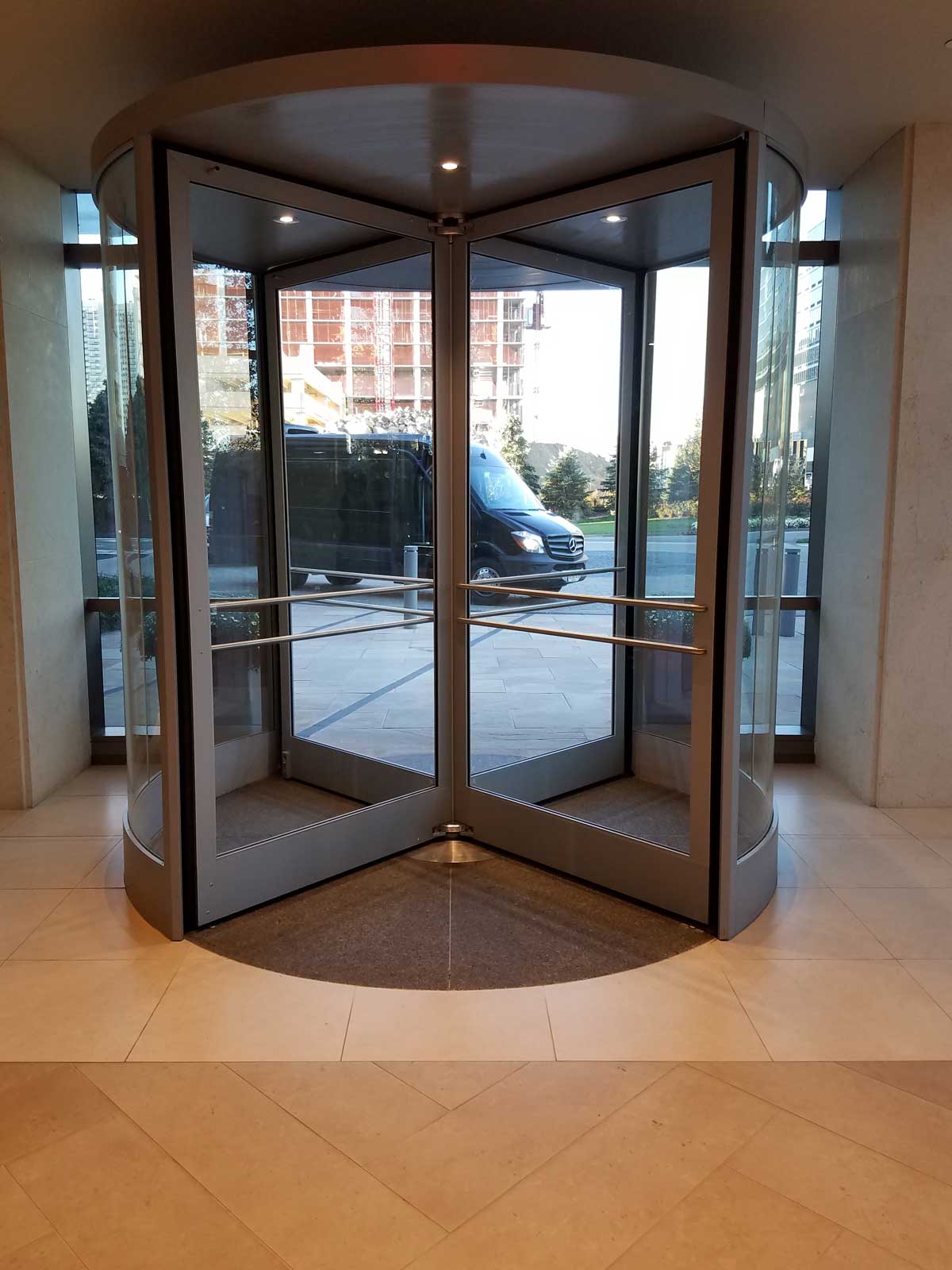
Exterior revolving door entrance at a commercial high-rise building in an urban setting
At the base of a high-rise, a revolving door maintains the pressure equilibrium between the building interior and the street, reducing energy loss from the stack effect with every user cycle.

Energy Efficiency: The Economic Case for Revolving Doors in Urban Buildings

The U.S. Department of Energy has documented the significant impact that entrance type has on building envelope energy performance. Studies on high-traffic commercial buildings have shown that replacing conventional swing doors at primary entrances with revolving doors can reduce entrance-related energy loss by as much as 70 to 90 percent in climates with significant seasonal temperature swings.

How Revolving Doors Reduce Heating and Cooling Costs in Commercial Buildings

The energy savings from a revolving door entrance come from three sources working together:

  • Elimination of direct air exchange: No open path between interior and exterior means no uncontrolled air movement during door cycles, regardless of how many people are moving through.
  • Reduced HVAC load at the entrance: Lobbies with revolving doors maintain more stable temperatures at the entrance level, reducing the demand on perimeter heating and cooling systems designed to compensate for door infiltration.
  • Stack effect suppression: By preventing the uncontrolled air exchange that drives stack effect infiltration, revolving doors reduce the overall pressure-driven air movement throughout the building, not just at ground level.

For buildings pursuing LEED certification or operating under the NYC Energy Conservation Code, revolving doors at primary entrances are a documented and measurable contribution to envelope performance. For a full breakdown of the energy performance advantages, our detailed guide on the energy advantages of revolving doors covers the specifics in depth.

Pedestrian Throughput: How Revolving Doors Handle Urban Traffic Volume

Energy performance is the engineering reason revolving doors dominate urban high-rises. Pedestrian capacity is the operational reason they make sense for dense city environments. A standard revolving door can process significantly more pedestrians per minute than a single swing door, because multiple users move through simultaneously in separate compartments rather than waiting for one person to clear the opening before the next can enter.

Revolving Door vs. Swing Door: Traffic Flow Comparison

Entrance Type Simultaneous Users Air Seal During Use Best For
Revolving Door (3-wing) Up to 3 at once Yes, continuous High-rise lobbies, hotels, airports
Revolving Door (4-wing) Up to 4 at once Yes, continuous Maximum throughput, transit hubs
Standard Swing Door 1 direction at a time No, broken each cycle Lower traffic, smaller buildings
Automatic Sliding Door Multiple, but sequential No, open during use Retail, healthcare, ADA-primary entrances

In a building where thousands of people enter and exit during morning and evening peak periods, the throughput advantage of a revolving entrance is operationally significant. It also reduces the queuing and bottlenecking at the entrance that can create safety and congestion issues in high-density pedestrian environments.

Commercial revolving door handling high pedestrian traffic volume at a city building entrance
In high-traffic urban environments, revolving doors process more pedestrians per minute than swing doors while maintaining the building’s air seal throughout every cycle.

Wind Pressure Management at Street Level

Urban street canyons created by dense high-rise development generate wind conditions at ground level that are significantly more intense than open suburban or rural environments. Wind pressure on a conventional door can make it difficult or impossible to open against the pressure, or can cause it to slam violently when opened with the wind.

A revolving door handles wind pressure in a fundamentally different way. The rotating wings do not create a single large opening that the wind can act against. The pressure acts on the curved enclosure structure rather than on the door panel directly, and the rotating mechanism is not fighting wind force the way a swing door on a hinge does. This makes revolving doors significantly more manageable for users on high-wind days, which in a city like New York or Chicago is a frequent real-world condition at the base of towers.

Noise Reduction Benefits in Urban Environments

Street noise is a significant quality of life and productivity issue in urban commercial buildings. A conventional swing or sliding door, when open, provides essentially no barrier to exterior noise. A revolving door, by contrast, maintains the acoustic separation between the street and the building interior throughout the entry and exit cycle. The sound attenuation provided by the enclosure and multiple door wings means the lobby environment behind a revolving entrance is measurably quieter than one served by swing doors, even during peak pedestrian traffic.

Types of Revolving Doors Used in Urban Commercial Buildings

Not all revolving doors are the same system. The type specified for a given building depends on traffic volume, opening size, aesthetic requirements, and budget:

  • Manual revolving doors: User-powered rotation, typically 3 or 4 wings. Most common in office buildings and hotels where speed control and a premium feel are priorities.
  • Automatic revolving doors: Motor-driven rotation with speed control, sensor activation, and access control integration. Common in healthcare facilities and high-volume retail environments where hands-free operation is required.
  • Security revolving doors (mantrap or speed gate configuration): Controlled entry with single-user compartments and access control integration. Used in financial institutions, data centers, and secure government facilities.
  • Large-diameter revolving doors: Custom configurations for monumental entrances where architectural impact and high throughput are both required. Common in flagship hotels and institutional buildings.
Custom revolving door installation at a commercial building entrance with specialized architectural requirements
Custom revolving door configurations are available for buildings with non-standard opening sizes, unique architectural programs, or specialized security and access control requirements.

Revolving Doors and Building Codes in New York City

New York City building code requires that revolving doors at primary entrances be accompanied by adjacent swing or sliding doors to provide an accessible bypass route that meets ADA requirements. A revolving door alone cannot serve as the sole compliant entrance under most commercial occupancy classifications. The adjacent door is also required for emergency egress purposes under the International Building Code.

Proper configuration of the revolving door and its adjacent accessible entrance is something that requires coordination between the architect, the door contractor, and the local building department during the permitting process. Our team handles revolving door installation and service in Manhattan with full knowledge of the local permitting and code landscape.

After installation, revolving doors in commercial buildings are subject to periodic inspection requirements under ANSI standards. Understanding AAADM inspection requirements for your revolving entrance is an important part of maintaining code compliance and limiting liability exposure.

Maintenance and Long-Term Service for Urban Revolving Doors

The mechanical complexity of a revolving door, particularly an automatic system, means that scheduled preventative maintenance is not optional. The drive system, speed controls, sensors, and wing hardware all require periodic inspection and adjustment to maintain safe and code-compliant operation. A revolving door that operates too fast, fails to slow for users, or does not stop properly when an obstruction is detected creates serious liability exposure for the building owner.

A commercial door service contract that includes revolving door maintenance ensures that inspections happen on schedule, problems are caught before they become failures, and emergency repair response is available when needed. For building managers overseeing multiple properties, our multi-site commercial door services are structured specifically to handle revolving door maintenance across a portfolio efficiently.

Frequently Asked Questions About Revolving Doors in Cities

Why are revolving doors so common in cities but rare in suburban buildings?

The primary reason is stack effect. Taller buildings experience greater pressure differentials between their interior and the outside, making the air-sealing properties of a revolving door much more valuable. Suburban buildings are typically shorter and have lower pedestrian traffic volumes, so the energy and throughput advantages of a revolving door are less compelling relative to the cost.

Do revolving doors actually save energy?

Yes, significantly. Studies on high-traffic commercial buildings have found that revolving doors can reduce entrance-related energy loss by 70 to 90 percent compared to swing doors in the same location. The continuous air seal maintained by the rotating wings prevents the uncontrolled air exchange that drives energy loss in conventionally doored entrances.

Why do skyscrapers have revolving doors at the base?

Skyscrapers generate the most intense stack effect of any building type because of their height and the large temperature differential maintained between their conditioned interiors and the outside. Without a continuously sealed entrance, the pressure difference would force large volumes of outside air into lower floors with every door cycle. A revolving door is the most effective practical solution to this problem at a high-traffic commercial entrance.

Are revolving doors required by code in New York City?

No, revolving doors are not required, but they must be accompanied by an adjacent accessible swing or sliding door when used at a primary entrance. The adjacent door provides the ADA-compliant accessible route and emergency egress path required by building code.

How often do commercial revolving doors need to be serviced?

Annual preventative maintenance is the standard recommendation for commercial revolving doors in normal use. High-traffic installations may warrant semi-annual inspections. The drive system, speed controls, wing hardware, and sensors should all be inspected and adjusted by a qualified technician on a scheduled basis.

What is the difference between a manual and automatic revolving door?

A manual revolving door relies on the user to push the door through its rotation. An automatic revolving door uses a motor-driven system with sensors that detect approaching users and control rotation speed automatically. Automatic systems are more common in healthcare, hospitality, and high-volume retail environments where hands-free operation and consistent speed control are priorities.

Working With a Revolving Door Specialist in New York and New Jersey

Specifying, installing, and maintaining a revolving door entrance in an urban commercial building requires experience with local code requirements, permitting processes, and the specific challenges of working in dense city environments. At Door Automation Corporation, we have worked on revolving door projects across New York City, Long Island, and New Jersey for commercial property owners, architects, and general contractors.

For more on choosing the right revolving door configuration for a commercial space, our guide on choosing the right revolving door for your commercial space covers the full selection process in detail.

Contact us today to discuss your revolving door project, request a site assessment, or schedule service on an existing installation.