

Automatic Door Maintenance in New York and New Jersey
Automatic door maintenance in New York and New Jersey is not just about preventing breakdowns. It is about protecting high-traffic entrances, reducing avoidable service interruptions, extending equipment life, and keeping commercial doors operating the way building owners, staff, tenants, and visitors expect. Door Automation helps commercial properties stay ahead of recurring entrance issues with maintenance support built around real usage, practical service planning, and long-term reliability.
Related: Automatic Door Service | Service Contracts | AAADM Inspections
How Automatic Door Maintenance Protects Commercial Entrances Before Small Problems Turn Expensive
Most entrance failures do not start as dramatic events. They start as drift, hesitation, inconsistent activation, loose hardware, worn rollers, slow operators, misalignment, dirty tracks, or settings that have gradually shifted off. In a commercial building, those small issues compound quickly. One day the door feels slightly sluggish. A few weeks later staff are mentioning it, tenants have noticed, and the entrance that should quietly do its job has become a recurring problem.
A structured maintenance plan catches wear before it becomes downtime, and gives facilities teams a more controlled way to manage entrances that see daily use. Door Automation supports commercial properties across New York and New Jersey with maintenance work designed to keep openings dependable, safer to use, and easier to manage over time. For a practical starting point, the automatic door maintenance checklist for commercial buildings outlines what a thorough service visit should address.
Why automatic door maintenance matters on commercial properties
The case for staying ahead of wear rather than reacting to it
- Reduces repeat service calls because recurring issues are easier to control when entrances are inspected before they fail
- Supports smoother daily operation by keeping doors that activate, open, close, and latch consistently from becoming sources of friction
- Protects installed equipment including operators, sensors, controls, rollers, and hardware that wear faster when left unchecked
- Improves planning for facilities teams by giving owners and managers a clearer picture of entrance condition across the property
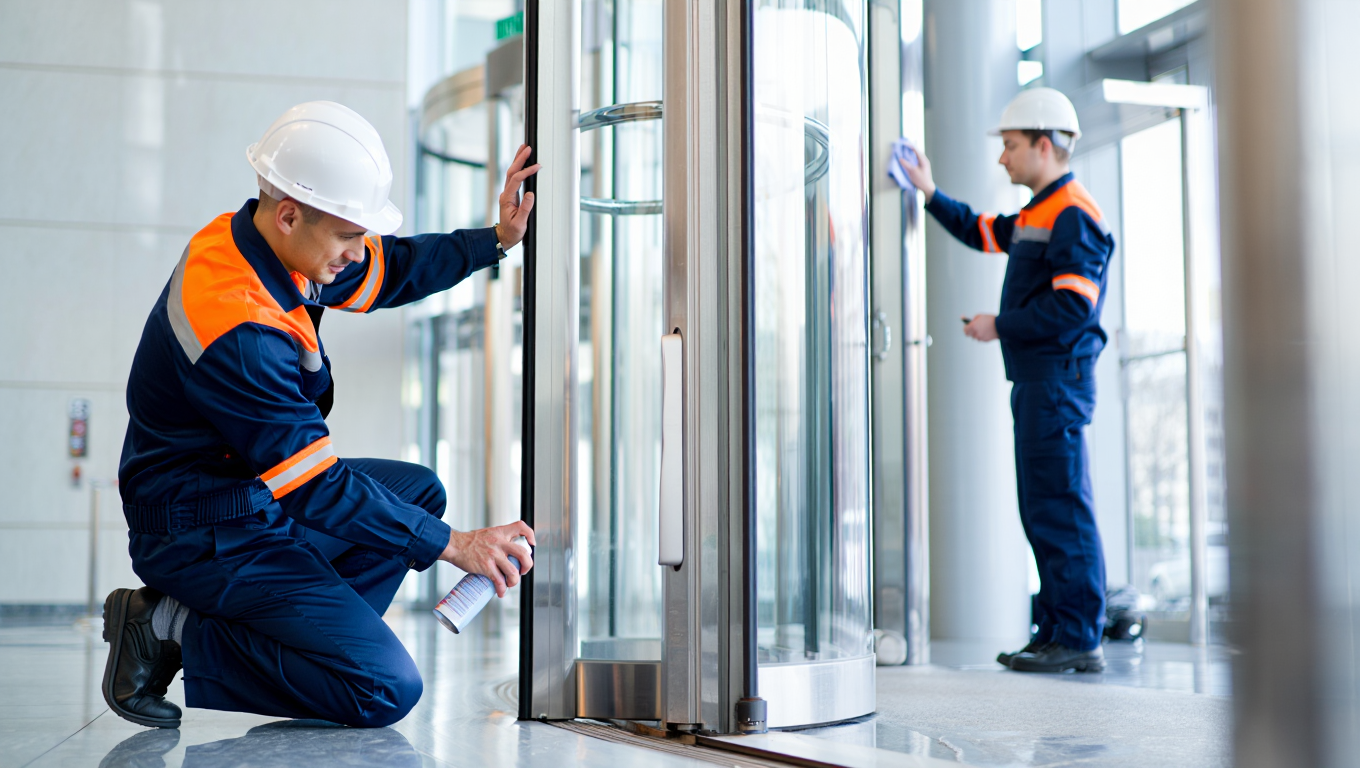
What Commercial Automatic Door Maintenance Usually Covers
Maintenance is not the same as waiting for something obvious to break. On well-used commercial entrances, it is a practical way to monitor performance, address wear, and keep systems from sliding into avoidable failure modes.
Sensor and Activation Review
Automatic doors rely on predictable activation. Maintenance identifies sensor drift, delayed activation, false triggers, and other performance issues before they affect daily traffic flow through the entrance.
Operator and Hardware Inspection
Operators, arms, rollers, tracks, pivots, guides, fasteners, and related hardware need periodic review so wear does not quietly build into a larger operational problem or an unplanned service call.
Door Alignment and Movement Checks
Doors that feel rough, drag, hesitate, or fail to close the same way every time often need attention well before an owner would describe them as broken. Alignment issues rarely resolve on their own.
Opening Safety Review
Maintenance gives building teams a more realistic picture of whether an entrance is continuing to operate the way it should under real daily use and volume rather than how it performed at installation.
Wear Pattern Monitoring
High-traffic buildings reveal the same weak points repeatedly. Planned maintenance helps spot those patterns early and address them before they escalate into a failure that disrupts access.
Parts and Service Planning
Maintenance is also about knowing which openings may soon need additional service, parts replacement, or a broader modernization review before a component reaches end of useful life.
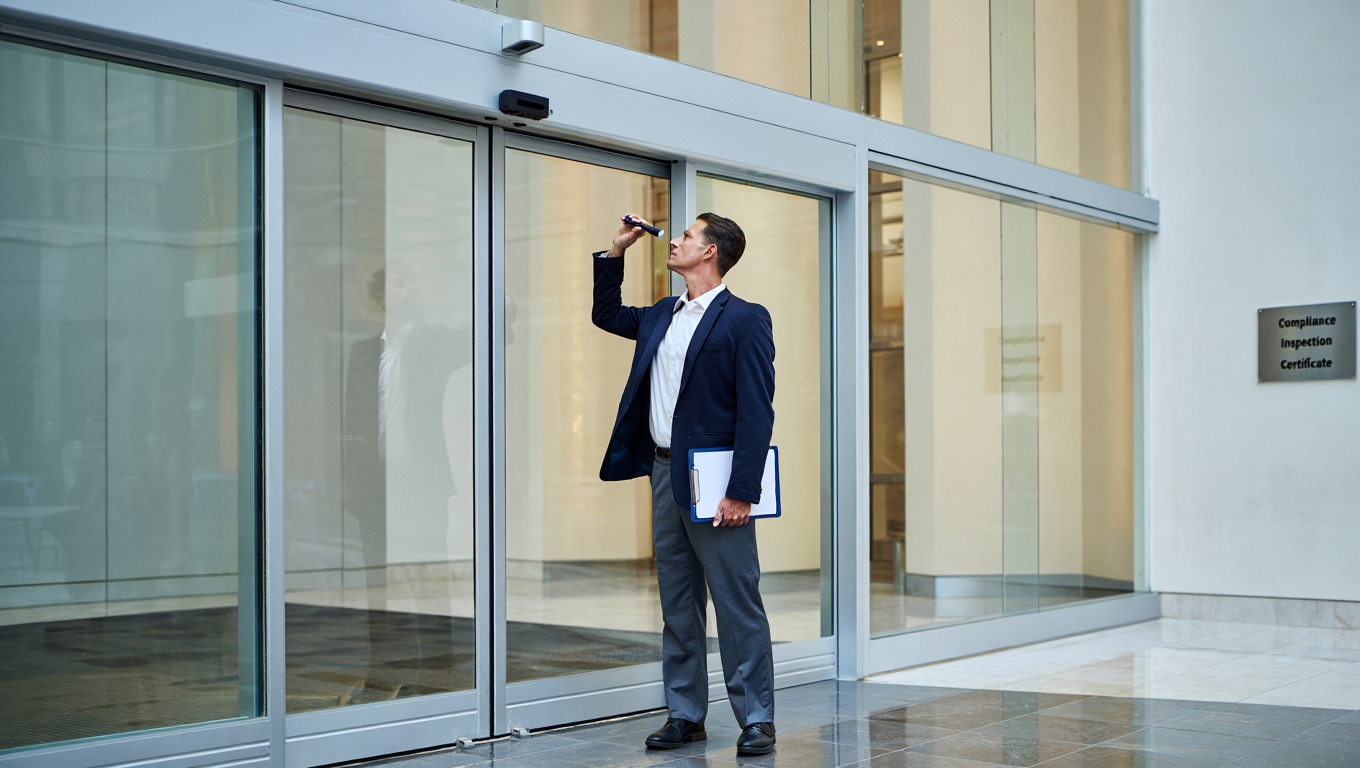
Automatic Door Maintenance Works Best When It Connects to Inspection and Safety Standards
Maintenance is not just about convenience. It also supports safer performance, cleaner documentation, and better readiness when formal inspections are due. AAADM recommends annual inspection by AAADM-certified inspectors and daily safety checks by premise owners. Buildings that skip that cycle usually deal with more preventable wear, more disruptive failures, and a harder time determining what condition the entrance is actually in.
For a closer look at how frequently inspections should be scheduled and why the interval matters, how often automatic doors should be inspected covers the question in practical terms for commercial property managers.
How maintenance supports better compliance and oversight
Connecting day-to-day upkeep with inspection readiness
- AAADM inspection support is easier when entrances are being maintained rather than neglected between visits
- Commercial entrance safety and compliance planning works better when door condition is actually being tracked over time
- Maintenance reduces the gap between "the door technically still operates" and "the entrance is performing the way it should"
- Facilities teams get a more defensible picture of which openings need attention now and which ones can be planned out responsibly over time
The definitive reference for inspection standards is AAADM, the American Association of Automatic Door Manufacturers.
Automatic Door Maintenance Priorities by Building and Entrance Type
Not every entrance should be maintained the same way. A low-use side door does not create the same wear pattern as a main entrance serving customers, patients, or tenants all day. Maintenance planning works best when it reflects how the opening is actually used and what the consequences of a failure would be.
| Building or Entrance Type | Typical Maintenance Focus | Why It Matters |
|---|---|---|
| Main retail entrances | Sensor performance, tracks, rollers, activation consistency, opening speed, daily wear points | Heavy foot traffic exposes small problems quickly and makes reliability highly visible to customers |
| Healthcare and clinic entrances | Predictable activation, smooth operation, clean access support, reduced disruption risk | In medical settings, even minor entrance issues can interfere with patient and staff movement |
| Office and tenant lobbies | Operator consistency, closer behavior, access coordination, appearance-related wear | Lobbies set expectations for the building and repeated issues are noticed quickly by tenants |
| Hospitality properties | High-cycle opening performance, guest-facing reliability, reduced emergency call risk | Entrance problems affect guest experience directly and create unnecessary staff burden |
| Multi-building portfolios | Condition tracking, prioritization, repeat failure patterns, service coordination across sites | Portfolio teams need visibility and consistency, not reactive one-off responses at each location |
For industry-specific needs, compare support across retail properties, healthcare facilities, office buildings, hospitality, and property management via Industries We Serve.
A Structured Automatic Door Maintenance Plan Helps Owners Avoid the More Expensive Version of the Problem
Most owners think about maintenance as a cost line. In practice, neglected entrances tend to produce the more expensive outcome: emergency calls that cost more than scheduled service, downtime that disrupts building operations, and repeat failures that create larger repair scopes. When a door has been allowed to deteriorate too far, the property often ends up paying for repair, lost time, and a rougher user experience all at once.
Maintenance does not guarantee that no part will ever fail. It gives the property a better chance of catching issues early, making service decisions with more information, and avoiding the cycle of ignoring an entrance until it becomes a visible operational problem. For properties already dealing with recurring costs, service contracts and multi-site commercial door services address that need directly.
Signs a building needs more structured automatic door maintenance
When reactive repairs are no longer the right approach
- The same entrance has needed multiple unscheduled repairs within the past year
- Staff have started noticing inconsistent opening or closing behavior on a regular basis
- The property has several automatic doors but no clear service schedule in place
- Managers are reacting to tenant or customer complaints rather than working from a known maintenance plan
- The entrance is part of a high-traffic route where downtime quickly becomes visible and disruptive

Automatic Door Maintenance vs. Repair vs. Modernization
Maintenance is one part of the broader service picture. The right move depends on the condition of the opening, the age of the system, and whether the real issue is gradual wear, an active failure, or equipment that has become outdated for the building's current needs.
Maintenance Is Usually the Right Fit When
- The entrance is still operating but needs consistent, structured support over time
- The goal is to reduce surprise failures and extend the useful life of installed equipment
- The building wants a cleaner, more predictable long-term service rhythm
- The property manages multiple openings that need regular condition oversight
Repair Is Usually the Right Fit When
- The door has stopped operating correctly and the issue needs to be addressed now
- There is a specific failure affecting access, safety, or daily building function
- The property cannot wait for a planned service window to address the condition
- The issue requires direct troubleshooting and component-level correction
See: emergency automatic door repair and storefront door repair.
Modernization Is Usually the Right Fit When
- The system is aging and recurring issues are starting to become structural rather than isolated
- Parts availability or long-term performance has become a persistent problem
- The owner wants updated controls, operators, or overall entrance behavior
- A broader upgrade is the smarter investment compared to continued patchwork service
Automatic Door Maintenance Based in Westbury, Serving Commercial Properties Across NY and NJ
Door Automation is based in Westbury and supports commercial properties throughout New York and New Jersey that need a more reliable approach to managing automatic entrances. For some buildings, that means keeping a few key doors in better condition on a consistent schedule. For others, it means building a service structure across multiple openings, multiple tenant types, or multiple properties under one portfolio.
Maintenance is most useful when it is tied to how a property actually operates. Buildings with steady public traffic, healthcare access points, tenant-facing lobbies, or large door inventories tend to get the most value from a plan built around real usage patterns rather than guesswork. To discuss your building's needs directly, use the contact page to reach Door Automation.
Related service paths for commercial properties
If your entrances also involve installation, planning, or broader service coordination, automatic door installation, AAADM inspections, and Door Automation's full commercial door service line covers the complete picture of what is available across New York and New Jersey.
Automatic Door Maintenance FAQs
Common questions from commercial property owners, managers, and facilities teams planning maintenance support in New York and New Jersey.
What does automatic door maintenance include?
Automatic door maintenance typically covers sensors, operators, rollers, tracks, pivots, controls, alignment, and overall door movement, along with monitoring for broader wear patterns that affect day-to-day performance. The specific scope depends on the door type, usage volume, and current condition of the system.
How is maintenance different from repair?
Maintenance is meant to catch issues early and keep the entrance operating consistently over time. Repair addresses a problem that has already developed and is affecting access or building function. Buildings that maintain entrances consistently tend to need fewer emergency repairs and face smaller scopes when issues do arise.
How often should automatic doors be maintained?
Frequency depends on usage volume, door type, and building environment. High-traffic entrances on retail, healthcare, and hospitality properties often need more frequent attention than low-use secondary doors. AAADM recommends annual inspection by a certified inspector and daily safety checks by premise owners. A maintenance plan should be built around actual usage rather than a fixed one-size schedule.
Do commercial properties need annual automatic door inspections?
AAADM recommends annual inspection by AAADM-certified inspectors along with daily safety checks by premise owners. Ongoing maintenance makes those inspection cycles more productive because the entrance is being monitored between visits rather than arriving at an inspection in an unknown state.
How do service contracts relate to automatic door maintenance?
A service contract gives a commercial property structured, ongoing access to maintenance and service support under agreed terms rather than scheduling individual calls reactively. For buildings managing multiple doors or multiple sites, a contract typically provides better cost predictability and faster response when issues arise. See service contracts for details.
Can maintenance support accessibility compliance on commercial doors?
Yes. ADA design standards set minimum accessibility requirements for covered facilities, and ongoing maintenance helps prevent the drift and wear that can cause an entrance to perform worse over time. Entrances that are not maintained regularly may develop activation delays, alignment issues, or closing-force problems that create accessibility concerns even if they were installed correctly.
Schedule Automatic Door Maintenance for Your NY or NJ Property
If your entrances are seeing steady wear, inconsistent performance, or repeat service issues, the next step is a structured maintenance plan. Door Automation Corp serves commercial properties across New York and New Jersey. Reach out through the Door Automation contact page to discuss your building's entrance needs directly.