

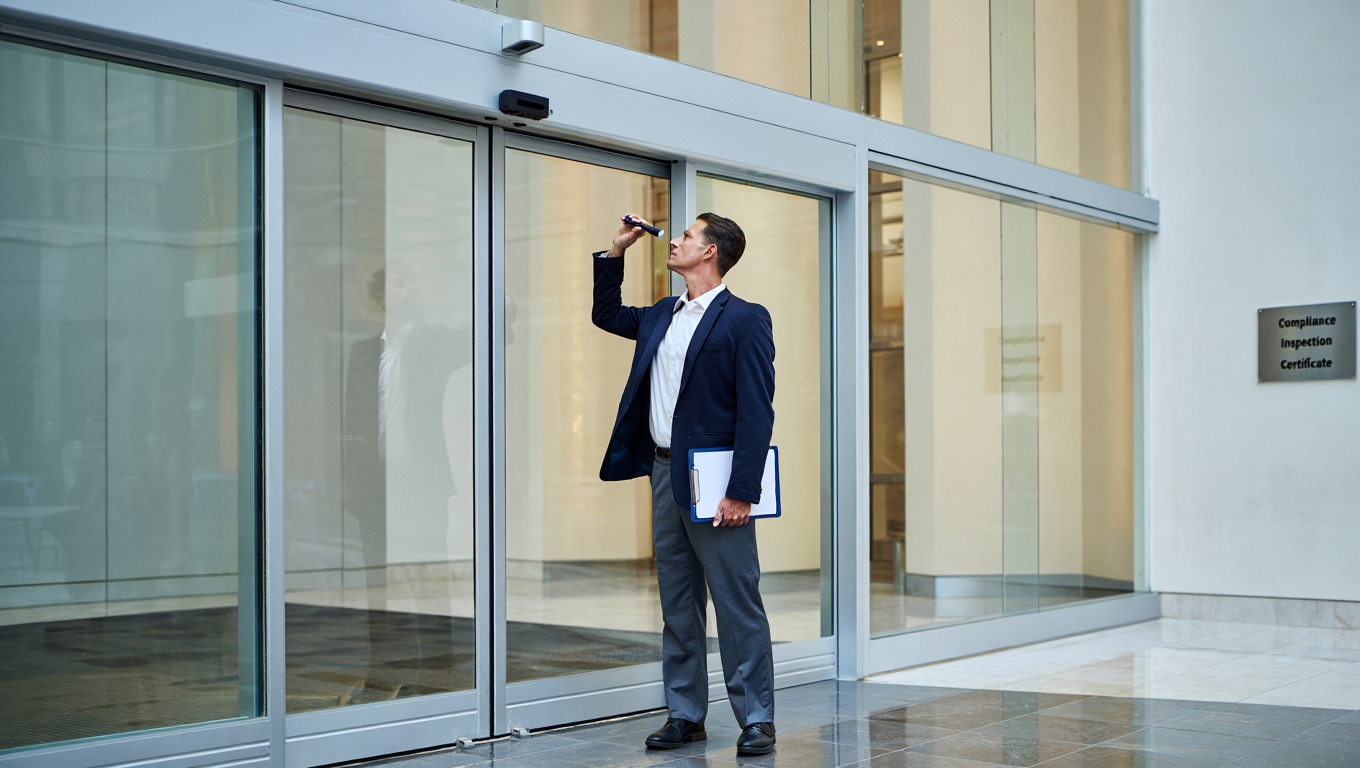
Understanding automatic door inspection frequency is essential for any facility that relies on automatic doors for safe, convenient, and reliable access. Whether your building has automatic sliding doors, swinging doors, revolving doors, or manual entry systems with automated features, inspections help protect pedestrians, reduce unexpected breakdowns, and support compliance with applicable safety standards. Automatic doors are used every day in commercial buildings, healthcare facilities, offices, retail stores, schools, hotels, transportation hubs, and many other high-use environments. Because these systems combine sensors, motors, controls, door panels, safety devices, and mechanical hardware, they require routine attention from AAADM-certified professionals.
A good inspection schedule is not only about fixing problems after they happen. It is about identifying wear, misalignment, sensor issues, slow response times, unsafe closing speeds, damaged guide rails, or other concerns before they create safety risks. The American Association of Automatic Door Manufacturers, commonly known as AAADM, plays an important role in the automatic door industry by promoting safety, education, and professional inspection practices. Many building owners and facility managers choose AAADM-certified inspectors because they are trained to evaluate automatic doors according to recognized industry standards and best practices.
For most commercial properties, automatic doors should be inspected at least annually by a qualified professional. However, that is only a general baseline. High-traffic buildings, healthcare facilities, airports, retail centers, and buildings exposed to harsh weather or heavy use may require more frequent inspections. In many cases, quarterly, semiannual, or even monthly checks may be appropriate depending on usage, building type, and risk level. Daily safety checks by building staff should be made each day and after any loss of electrical power to confirm that the doors are operating normally between professional inspections.
Automatic Door Inspection Frequency Guidelines
Automatic door inspection schedules should be based on safety requirements, manufacturer guidelines, building use, and the operating environment. While every property is different, a practical inspection program usually includes several layers of review.
A common schedule may include:
- Daily owner or staff safety checks: Quick visual and operational checks performed by trained building personnel.
- Monthly internal reviews: More detailed observation of door function, sensors, signage, activation zones, and general condition.
- Semiannual professional service visits: Preventive maintenance and testing by a qualified automatic door technician.
- Annual professional inspections: A comprehensive inspection, ideally performed by an AAADM-certified inspector.
- Additional inspections after repairs, impacts, or unusual events: Any collision, malfunction, weather damage, renovation, or major change in building use should trigger a follow-up inspection.
For many commercial buildings, an annual inspection is considered the minimum professional inspection frequency. However, minimum does not always mean sufficient. A busy hospital entrance, grocery store, office lobby, or transportation facility may cycle thousands of times each day. In these environments, waiting a full year between professional evaluations may allow small issues to become major safety or reliability concerns.
Automatic doors should also be inspected whenever there is a noticeable change in performance. If a door opens slowly, closes too quickly, hesitates, makes unusual noises, fails to detect pedestrians consistently, or does not fully close, service should be scheduled promptly. These symptoms can indicate problems with sensors, operators, rollers, tracks, control boards, activation devices, or mechanical hardware.
Professional inspections typically evaluate several important components, including:
- Door opening and closing speed
- Sensor detection zones
- Safety presence sensors
- Activation devices
- Door guides, rollers, pivots, hinges, and tracks
- Breakout functions where applicable
- Signage and decals
- Control settings
- Door alignment
- Weatherstripping and thresholds
- Emergency operation
- Overall condition of mechanical and electrical components
A consistent inspection program helps ensure that automatic doors continue to operate as intended and remain safe for daily pedestrian use.
Automatic door inspection frequency for high-traffic buildings
High-traffic buildings generally need more frequent inspections than low-use facilities. Entrances in busy commercial spaces experience constant motion, exposure, and wear. The more often a door opens and closes, the more stress is placed on its operator, belts, rollers, arms, sensors, and control systems.
High-traffic buildings may include:
- Hospitals and medical offices
- Airports and transit centers
- Schools and universities
- Supermarkets and retail stores
- Office towers
- Hotels
- Apartment and condominium buildings
- Government facilities
- Entertainment venues
- Banks and financial institutions
- Shopping centers
For these facilities, professional inspections are often recommended at least twice per year. In especially demanding locations, quarterly inspections may be appropriate. Some entrances may also benefit from a preventive maintenance contract that includes scheduled inspections, adjustments, cleaning, lubrication, and performance testing throughout the year.
Daily staff checks are especially important in high-traffic buildings. These checks do not replace professional inspections, but they help identify obvious safety concerns before the doors are used heavily during the day. Staff should look for issues such as doors striking carts, doors not opening fully, sensors missing pedestrians, unusual grinding sounds, loose signage, damaged thresholds, or debris in the door path.
In high-traffic buildings, automatic door inspections are not only a safety measure. They are also a business continuity strategy. A malfunctioning entrance can slow down operations, create accessibility challenges, inconvenience visitors, and harm the professional appearance of the property.
Factors That Affect Inspection Schedules
No two automatic door systems operate under exactly the same conditions. The right inspection frequency depends on the door type, use level, building purpose, environment, and expectations for safety and reliability. Facility managers should consider all of these factors when creating an inspection plan.
Important factors include:
- Pedestrian volume: Doors used by hundreds or thousands of people per day require more frequent inspections.
- Door type: Sliding, swinging, folding, and revolving doors each have different operating components and maintenance needs.
- Building type: Healthcare, retail, transportation, education, and public facilities often have higher safety and accessibility expectations.
- Weather exposure: Exterior doors exposed to rain, snow, humidity, wind, salt, and temperature changes may need closer attention.
- Security requirements: Buildings with controlled access systems, locks, card readers, or after-hours settings may require additional testing.
- Age of the system: Older doors may need more frequent maintenance as parts wear and performance changes.
- Manufacturer recommendations: Inspection and maintenance schedules should align with the product manufacturer’s guidance.
- Prior repair history: Doors with recurring issues should be inspected more often until the root cause is resolved.
- Code and compliance obligations: Local building codes, accessibility requirements, and industry standards may influence inspection practices.
- User risk: Entrances used by children, elderly individuals, people with disabilities, patients, or large crowds may require heightened attention.
The American Association of Automatic Door Manufacturers is an important reference point for professional standards in the industry. AAADM-certified inspectors are trained to inspect automatic pedestrian doors with attention to safety, proper operation, and applicable standards. Working with trained professionals helps building owners make informed decisions about inspection schedules, repairs, upgrades, and compliance concerns.
Environmental and usage considerations
Environmental conditions can significantly affect automatic door performance. Exterior doors face different challenges than interior doors. A clean, climate-controlled office lobby may not require the same maintenance schedule as a street-facing retail entrance in New York City exposed to constant foot traffic, dust, rain, winter salt, and temperature swings.
Common environmental concerns include:
- Dirt and debris in tracks or thresholds
- Moisture near sensors, controls, or operators
- Corrosion from salt or humidity
- Wind pressure affecting door movement
- Temperature changes that affect seals, sensors, and mechanical parts
- Physical impacts from carts, deliveries, luggage, or equipment
- Construction dust from renovations
- Ice or snow near exterior entrances
Usage patterns also matter. A door that experiences intense morning and evening rushes may wear differently from a door used steadily throughout the day. Doors at loading areas, retail entrances, hospitals, or office towers may be exposed to carts, stretchers, packages, strollers, wheelchairs, and high volumes of pedestrians. These conditions can increase the likelihood of misalignment, sensor obstruction, worn rollers, damaged guide rails, and door panel issues.
COVID-19 also changed how many commercial properties think about entryways. Non-contact door operation has become more common as businesses look for ways to reduce touchpoints and improve convenience. Automatic doors, touchless activation sensors, wave switches, and other modifications can help create safer and more user-friendly entrances. However, these systems still need regular inspection to verify that sensors, controls, and activation devices are working properly.
Benefits of Routine Inspections
Routine automatic door inspections provide several important benefits for building owners, facility managers, tenants, employees, and visitors. These benefits go beyond basic maintenance. They support safety, accessibility, reliability, and long-term value.
One of the biggest benefits is improved pedestrian safety. Automatic doors must detect people accurately and move at appropriate speeds. If sensors are misaligned, detection zones are blocked, or closing speeds are incorrect, the risk of contact or injury can increase. A proper inspection helps confirm that the system is functioning as intended.
Routine inspections also help support compliance. Commercial buildings are expected to provide safe and accessible entryways. While requirements vary depending on location and building type, automatic doors are often subject to safety standards, accessibility expectations, and manufacturer guidelines. Professional inspections help identify issues before they become compliance concerns.
Other benefits include:
- Fewer unexpected breakdowns: Regular inspections catch wear and performance issues early.
- Longer equipment life: Proper maintenance reduces strain on motors, operators, rollers, sensors, and controls.
- Improved accessibility: Reliable automatic doors make it easier for all visitors to enter and exit the building.
- Better energy performance: Doors that close properly can help reduce heating and cooling loss.
- Enhanced security: Properly functioning doors, locks, and controls support secure building access.
- Reduced liability exposure: Documented inspections show that the property is taking safety seriously.
- Lower repair costs over time: Minor adjustments are often less expensive than emergency repairs or major component replacements.
- Improved visitor experience: Smooth, quiet, dependable doors create a better first impression.
Routine inspections are especially valuable because automatic door problems are not always obvious at first. A door may still open and close, but its sensors may not detect properly at the edges. A sliding door may operate, but its rollers may be wearing unevenly. A swing door may function, but its closing speed may be outside recommended settings. Professional inspections help uncover these hidden issues.
Reducing emergency repairs through inspections
Emergency repairs are often more expensive, disruptive, and stressful than planned maintenance. When an automatic door fails without warning, it can affect building access, security, accessibility, and customer experience. In some cases, a malfunctioning entrance may need to be taken out of service until repairs are completed.
Routine inspections help reduce emergency repairs by identifying early warning signs, such as:
- Unusual noise during operation
- Delayed opening or closing
- Doors closing totoo quickly
- Sensor inconsistency
- Door panels rubbing or dragging
- Loose hardware
- Worn rollers or guide components
- Damaged weatherstripping
- Faulty activation devices
- Control setting issues
- Incomplete closing or locking
By addressing these issues early, building owners can avoid larger failures. Preventive maintenance can also be scheduled during convenient times, reducing disruption to tenants, employees, and visitors. For businesses that rely on constant access, such as hospitals, retail stores, office buildings, and hotels, this reliability is essential.
Inspection records can also help facility managers make better long-term decisions. If the same component fails repeatedly, the door may need a more substantial repair, upgrade, or replacement. If a system is outdated, an inspection may reveal opportunities to improve safety, accessibility, energy performance, or touchless operation.
FAQ
How often should automatic doors be professionally inspected?
Most commercial automatic doors should be professionally inspected at least once per year. High-traffic or high-risk buildings may need inspections every six months, quarterly, or more often, depending on use and conditions.
Should automatic doors be checked every day?
Yes. Building staff should perform simple daily safety checks to confirm that doors open, close, detect pedestrians, and move smoothly, stay open long enough, clean the area of debris or loose parts, and that signage is in good condition.. Daily checks do not replace professional inspections, but they help catch obvious problems quickly.
Who should inspect automatic doors?
Automatic doors should be inspected by a qualified professional. Many building owners prefer AAADM-certified inspectors because they are trained in automatic pedestrian door safety and inspection practices.
What are the signs that an automatic door needs service?
Common warning signs include slow operation, fast closing, unusual noises, inconsistent sensor response, doors not closing fully, dragging panels, loose hardware, or visible damage.
Do automatic sliding doors and swing doors have different inspection needs?
Yes. Sliding doors and, swing doorss, revolving doors, and manual doors with automated features have different components and safety considerations. Inspection schedules should reflect the specific door type and manufacturer recommendations.
Are inspections required for compliance?
Inspection expectations can vary by location, building type, and applicable standards. Routine professional inspections help support safety, accessibility, and compliance with relevant requirements. AAADM strongly recommends that all automatic pedestrian doors be inspected professionally at a minimum once per year.
Can inspections help reduce repair costs?
Yes. Inspections can identify small issues before they become major failures. Preventive service is often more cost-effective than emergency repairs or full system replacement.
How do touchless automatic doors affect inspection needs?
Touchless systems still require regular inspection. Sensors, activation devices, controls, and safety features must be checked to confirm proper operation and reliable non-contact access.
Call Door Automation Corporation for Automatic Door Inspection and Service
Automatic doors play a major role in the safety, convenience, accessibility, and appearance of your commercial space. A proactive inspection schedule helps keep your entryways dependable while reducing the risk of unexpected repairs and performance issues.
Door Automation Corporation provides solutions for convenient access to commercial spaces, including automatic and manual, swing, slide, and revolving doors. Our reliable professionals work with industry-leading products to provide functional, dependable, and secure entryways. As non-contact door openings become the new normal due to COVID-19, we can provide modifications that support non-contact door operation, as well as new automatic doors that follow standard automated door energy compliance. We also work closely as design consultants with many of the top architectural firms in New York City.
For dependable automatic door service, inspections, repairs, upgrades, and entryway solutions, contact us today. Our skilled team is here whenever you need professional support for safe, reliable, and convenient access.