

Swinging Door Service & Repair
Swinging door service in New York and New Jersey helps commercial properties keep manual and automatic swing entrances safe, accessible, secure, and dependable. Door Automation Corporation services swinging doors for retail buildings, healthcare facilities, office buildings, hospitality properties, schools, industrial facilities, and managed commercial locations that need reliable daily access without recurring entrance problems.
For urgent doors that will not close, will not latch, drag the floor, create a safety concern, or leave an entrance unsecured, emergency automatic door repair is available.
Swinging Door Service for Commercial Entrances
Swinging doors take constant abuse in busy commercial buildings. Customers pull on them, staff push carts through them, visitors lean on them, wind catches them, closers drift out of adjustment, and hardware loosens over time. When a swing door starts scraping, slamming, sticking, sagging, or failing to latch, it creates more than a small annoyance. It can affect security, accessibility, energy control, daily traffic flow, and the overall impression of the property.
Door Automation handles automatic and manual swinging door repair, installation, replacement, maintenance, and hardware service across New York and New Jersey. The work starts with the full opening, not just the most obvious part. Door condition, frame condition, hinges, pivots, closers, operators, sensors, locks, strikes, thresholds, and alignment all matter if the entrance is going to work correctly after service.
Swinging door service for automatic and manual entrances
- Automatic swinging doors with operators, activation devices, sensors, safety devices, controls, and accessibility hardware
- Manual swinging doors with hinges, pivots, closers, locks, latches, strikes, pulls, push bars, and commercial entry hardware
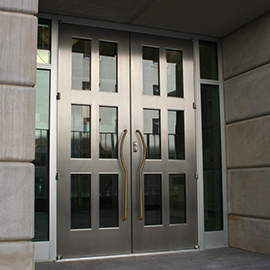
- Commercial glass swing doors used in storefronts, lobbies, vestibules, offices, schools, healthcare facilities, and tenant entrances
- High-traffic service doors where alignment, closer control, hardware durability, and secure latching matter every day
- Replacement and modernization when worn hardware, obsolete operators, damaged doors, or repeated failures make repair less practical
For properties with multiple entrance types, Door Automation also services automatic sliding doors, revolving doors, balanced doors, and manual commercial doors.
Common Swinging Door Problems That Need Service
A swinging door usually gives warning before it fails completely. The problem is that those warnings are easy to ignore until the door stops securing properly, starts damaging the frame, or becomes difficult for customers, tenants, patients, or staff to use.
Swinging Door Service for Sagging Doors
A sagging door can rub the frame, scrape the threshold, miss the latch, or put extra strain on hinges, pivots, closers, and operators. The longer it runs out of alignment, the more damage it can create.
Doors That Slam or Close Too Slowly
Closer problems can make a door slam, creep, fail to latch, or stay open too long. Proper closer adjustment helps control safety, comfort, security, and traffic flow.
Latch and Lock Problems
If the latch misses the strike, the lock does not line up, or the door only secures when someone pulls it hard, the opening needs alignment and hardware service before it becomes a security issue.
Automatic Swing Operator Issues
Automatic swinging doors may fail to open, open too aggressively, stop short, hesitate, or behave inconsistently when operators, sensors, activation devices, or controls are out of condition.
Loose Hinges, Pivots, and Hardware
Loose hardware is not harmless. It can create misalignment, wobble, noise, frame damage, door sag, and repeated service problems if the mounting condition is not corrected.
Accessibility and Safety Concerns
Commercial swing entrances need to be usable, predictable, and safe. Excessive opening force, poor timing, unreliable activation, or blocked clearances can create real problems for public-facing buildings.
Facilities dealing with recurring door failures can also use how to know when an automatic door needs repair and ways to lower automatic door repair costs for practical repair planning.
Automatic Swinging Door Repair, Operators, Sensors, and Safety Devices
Automatic swinging doors support accessibility and convenience, but they also add moving components that must be installed, adjusted, and maintained correctly. Operators, sensors, activation devices, control settings, door speed, closing force, safety clearances, locks, and manual breakout behavior all affect how the door performs in real daily use.
Automatic swinging door service includes full system checks
- Swing operator troubleshooting for doors that fail to open, fail to close, stop short, move erratically, or make unusual noise
- Sensor and activation checks for touchless switches, push plates, motion sensors, presence sensors, and inconsistent activation behavior
- Door timing and force review to support safer movement, smoother operation, and better accessibility for daily users
- Locking and access coordination where automatic swinging doors interact with electric locks, strikes, maglocks, or access control hardware
- Repair-versus-replacement guidance when an operator, control, or hardware package is worn, obsolete, unreliable, or no longer suited to the building
Low-energy automatic swing doors
Low-energy automatic swing doors are common in accessibility routes, offices, schools, healthcare environments, and commercial buildings where controlled opening speed and predictable operation matter more than high-speed traffic flow.
Public-facing automatic swing entrances
Public-facing swing entrances need consistent activation, clean closing, safe movement, reliable latching, and hardware that can hold up to daily use from people who are not thinking about the door at all.
For broader upgrade planning, automatic door modernization can help when outdated equipment or repeated failures are making the entrance harder to keep reliable.
Manual Swinging Door Repair and Commercial Door Hardware
Manual swinging doors may seem simpler than automatic doors, but they still rely on a complete system. A closer that is slightly off, a hinge that is pulling loose, a pivot with worn bearings, or a strike that is no longer aligned can cause daily frustration and long-term damage.
Manual swinging door service for commercial properties
- Hinge replacement, hinge reinforcement, and loose hardware correction
- Pivot repair, pivot replacement, and bearing-related service
- Closer replacement, closer adjustment, backcheck tuning, and latch-speed correction
- Lock, latch, strike, panic hardware, and pull-handle service
- Frame, threshold, and clearance adjustments where rubbing or sagging affects the opening
- Door replacement recommendations when damage, wear, or frame condition makes repair less dependable
Storefront swing doors
Storefront swing doors need to look clean, close securely, and handle frequent use. Door Automation supports storefront entrances where glass, aluminum, hardware, locks, closers, and alignment all need to work together.
Back-of-house and staff entrances
Secondary entrances, service doors, and staff routes often take heavy abuse. These doors still need proper closing, latching, and hardware condition because they affect security and daily operations.
For storefront-specific issues, storefront door repair covers common commercial glass entrance problems.
Swinging Door Installation and Replacement
A swinging door that is installed poorly can create years of problems. The door may rub, fail to latch, stress the frame, wear through closers, or make automatic operators work harder than they should. Proper installation and replacement work should account for the door, frame, hardware, traffic pattern, security needs, accessibility needs, and long-term maintenance.
New Commercial Swing Door Installation
New installations require correct fit, secure mounting, proper hardware selection, controlled closing, clean clearances, and alignment that supports long-term use in the actual building environment.
Automatic Swing Door Replacement
Replacement may involve the operator, sensors, controls, activation devices, door hardware, or the full entrance package depending on the condition of the existing system.
Manual Swing Door Replacement
Manual door replacement may be the right move when the door is warped, damaged, poorly fitted, repeatedly misaligned, or no longer able to secure properly with standard hardware repairs.
Door Automation also provides commercial automatic door installation for properties planning new entrances, accessibility upgrades, or replacement systems.
Preventive Maintenance for Commercial Swinging Doors
Preventive maintenance helps property teams avoid the most predictable door problems: sagging, closer drift, loose hardware, latch failure, operator strain, and repeated emergency calls. A swing door that is inspected and adjusted on a schedule is much less likely to surprise the building during peak traffic.
What swinging door maintenance can include
- Closer and operator review to confirm controlled movement, consistent closing, and reliable opening behavior
- Hinge and pivot inspection to identify wear, looseness, sag, bearing problems, or mounting concerns
- Latch and lock checks to make sure the door secures without slamming, lifting, pulling, or forcing the hardware
- Sensor and activation checks for automatic swing doors that need predictable response and safer daily movement
- Hardware tightening and adjustment to reduce avoidable wear before it turns into frame damage or door failure
An automatic door maintenance contract is especially useful for buildings with multiple entrances, high daily traffic, public access, tenant complaints, or safety documentation needs.
Swinging Door Service by Property Type
Different properties put different pressure on swinging doors. Retail stores need clean customer access, healthcare facilities need reliable patient movement, offices need secure tenant entrances, hospitality buildings need polished guest-facing access, and managed properties need predictable vendor support across multiple openings.
Commercial buildings that commonly need swing door service
- Retail storefronts and shopping centers
- Healthcare facilities, clinics, and medical offices
- Office buildings, tenant lobbies, and interior access points
- Hotels, restaurants, hospitality properties, and event spaces
- Schools, public buildings, institutional facilities, and transit-related spaces
- Multi-site commercial properties and property management portfolios
Related property support includes automatic door service for retail properties, automatic door service for healthcare facilities, automatic door service for office buildings, and multi-site commercial door services.
Swinging Door Product PDFs
These product references can help facility teams identify common swinging door systems and operator options before service. Final repair or replacement recommendations should be based on the actual door, frame, hardware, operator, traffic level, and safety needs at the building.
Automatic Swing Door System References
Parts, Hardware, and Service Planning
PDFs are useful for reference, but a field inspection is still the practical way to confirm what the door needs. Door Automation can help identify the operator, hardware, replacement parts, and maintenance approach that match the actual entrance.
For parts support, see automatic door parts and components. For safety-focused entrance documentation, see AAADM inspections.
Safety, Accessibility, and Inspection Support for Swinging Doors
Commercial swinging doors affect more than convenience. They influence accessible entry, emergency movement, secure closing, pedestrian safety, building comfort, and day-to-day traffic flow. Automatic swing doors in particular need careful attention because the operator, sensor, activation, and door hardware all work together as one moving system.
Accessibility Routes
Automatic swing doors are often used where accessibility matters. Reliable activation, safe movement, controlled force, and predictable closing help support easier entry for visitors, patients, tenants, staff, and customers.
Secure Closing
A swing door that does not latch properly can leave a building exposed. Door alignment, closer control, strike placement, lock condition, and frame condition all affect whether the entrance secures consistently.
Inspection Readiness
Automatic swinging doors benefit from documented service and inspection support, especially in public-facing buildings where safe operation and accountability matter.
Door Automation provides AAADM inspection support and service aligned with recognized automatic door safety practices. External automatic door safety information is available through AAADM.
Swinging Door Service FAQs
Answers for commercial property teams scheduling automatic or manual swinging door repair, maintenance, installation, and replacement in New York and New Jersey.
What does swinging door service include?
Swinging door service can include automatic swing operator repair, sensor adjustment, activation device service, hinge and pivot repair, closer adjustment, lock and latch service, alignment correction, door replacement, frame review, and preventive maintenance.
Do you repair both automatic and manual swinging doors?
Yes. Door Automation services automatic swinging doors with operators, sensors, controls, and activation devices, as well as manual commercial swinging doors with hinges, pivots, closers, locks, latches, strikes, and related hardware.
Why is my commercial swing door not latching correctly?
A swing door may fail to latch because of sagging hinges, worn pivots, closer problems, frame movement, strike misalignment, damaged hardware, threshold rubbing, or improper door fit. Correcting the latch often requires fixing the alignment issue that caused it.
Can you repair automatic swinging door operators and sensors?
Yes. Automatic swinging door service can include operator troubleshooting, sensor checks, activation device review, control adjustments, lock coordination, and safety response testing. The exact repair depends on the condition of the entrance system.
How often should commercial swinging doors be maintained?
Many commercial swinging doors should be inspected at least once or twice per year, with high-traffic entrances often needing more frequent maintenance. Usage, weather exposure, public access, security needs, and past repair history should guide the schedule.
When should a swinging door be replaced instead of repaired?
Replacement may be the better option when the door is warped, damaged, poorly fitted, repeatedly misaligned, difficult to secure, or paired with obsolete automatic equipment. A field inspection can confirm whether repair or replacement makes more sense.
Need Swinging Door Service Scheduled?
Request service for automatic swinging doors, manual swing doors, operators, sensors, hinges, pivots, closers, locks, latches, and commercial entrance hardware across New York and New Jersey.