

Commercial Automatic Door Installation
Commercial automatic door installation in New York and New Jersey gives busy properties safer, smoother, and more accessible entrances built around real traffic patterns, building conditions, and long-term service needs. Door Automation Corporation installs sliding, swinging, folding, revolving, balanced, and manual-to-automatic entrance systems for retail buildings, healthcare facilities, office properties, hospitality spaces, managed buildings, and multi-site commercial locations.
For existing entrances that are already failing, unsafe, stuck, or disrupting daily access, emergency automatic door repair is available.
Commercial Automatic Door Installation for High-Traffic Buildings
Automatic doors need to do more than open and close. A successful commercial entrance installation needs to fit the building, support safe movement, handle daily traffic, coordinate with locks and access needs, and remain serviceable after the project is complete. When the wrong system is installed or the opening is not evaluated properly, the result is usually callbacks, sensor complaints, hardware strain, poor user experience, or an entrance that never feels quite right.
Door Automation Corporation installs automatic entrance systems by evaluating the full opening first. Door type, frame condition, traffic volume, safety requirements, activation method, glass package, hardware condition, electrical needs, security expectations, and future maintenance all matter. The goal is to install a system that supports the property instead of forcing the property to work around the equipment.
Commercial automatic door installation for new and existing entrances
- New automatic door systems for commercial entrances, storefronts, lobbies, vestibules, and public-facing access points
- Manual-to-automatic conversions where an existing entrance can be upgraded with the right operator, hardware, and safety setup
- Replacement installations for aging doors, unreliable systems, outdated operators, and entrances with recurring service issues
- Storefront and glass entrance work where door framing, hardware, locks, closers, and glass condition need to be addressed with the installation
- Safety and accessibility planning for activation devices, approach clearances, sensor coverage, controlled movement, and inspection readiness
Door Automation is based in Westbury and supports commercial automatic door installation throughout New York City, Long Island, and New Jersey.
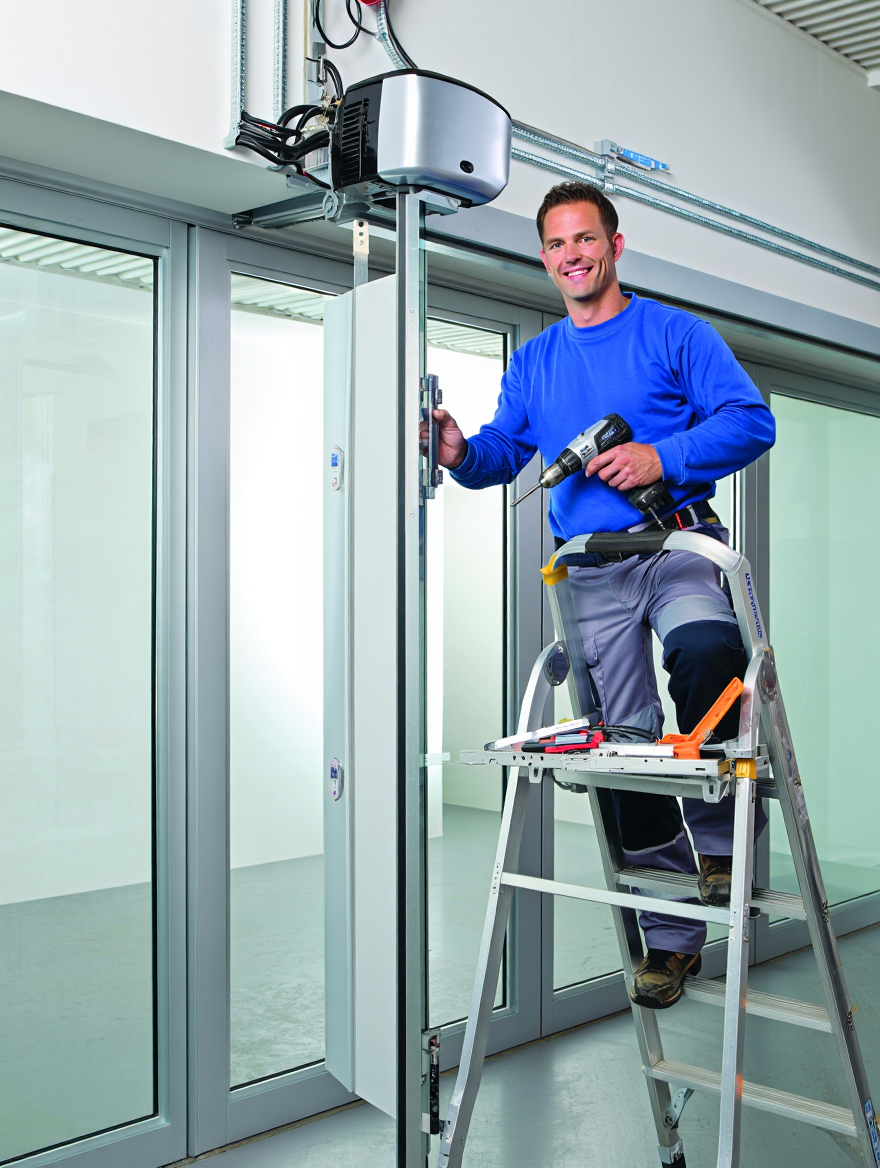
Automatic Door Installation Services
Every installation should start with the actual entrance conditions. A retail storefront, medical office, hotel lobby, school entrance, tenant lobby, and managed commercial building may all need automatic access, but they do not need the same equipment, layout, or service plan.
Automatic Sliding Door Installation
Automatic sliding doors are common for high-traffic retail, healthcare, transit, lobby, and public-facing entrances where smooth flow, sensor reliability, and clear movement through the opening matter.
Automatic Swinging Door Installation
Automatic swinging doors work well for accessibility routes, controlled entries, lower-energy openings, office interiors, medical spaces, and buildings that need automated access without a sliding package.
Folding Door Installation
Folding doors can be useful where space constraints, opening width, or clearance concerns make a conventional swing or slide configuration less practical.
Revolving Door Installation
Revolving doors support lobby comfort, energy control, traffic movement, and architectural entrances in hotels, office buildings, mixed-use properties, and high-volume commercial spaces.
Balanced Door Installation
Balanced doors are a strong fit for specialty commercial entrances where wind pressure, large panels, sidewalk clearance, and architectural presentation affect daily use.
Manual Door Conversion
Manual commercial doors can often be evaluated for automation, power assist, hardware upgrades, or replacement when the entrance needs easier access and more controlled operation.
For existing openings that may need repair before new equipment is installed, storefront door repair can address glass, aluminum framing, pivots, closers, locks, handles, thresholds, and related entrance hardware.
What a Commercial Automatic Door Installation Should Include
A doorway can look ready for automation from the outside while still having hidden problems that affect the installation. Weak framing, damaged thresholds, poor alignment, missing electrical planning, incompatible locks, heavy traffic patterns, or unclear activation needs can all turn a simple project into a problem if they are not addressed early.
Commercial automatic door installation planning factors
- Opening condition including frame strength, door fit, threshold condition, glass condition, hardware age, and surrounding structure
- Traffic flow including customer volume, staff routes, patient movement, deliveries, tenant access, carts, wheelchairs, and peak periods
- Door type selection including sliding, swinging, folding, revolving, balanced, manual conversion, or a specialty configuration
- Activation method including motion sensors, presence sensors, push plates, touchless switches, access control triggers, or other activation devices
- Safety setup including sensor coverage, controlled speed, closing behavior, breakout or emergency function, and predictable daily operation
- Security coordination including locks, strikes, maglocks, access control equipment, after-hours schedules, and building procedures
Manual-to-automatic conversion planning
Some manual doors are good candidates for automatic operation. Others need frame repair, hardware replacement, door replacement, or a different entrance type before automation makes sense. The existing opening should be evaluated before choosing equipment.
Long-term serviceability
A strong installation should also be serviceable. Parts, sensors, operators, locks, and controls need to be accessible enough for future maintenance, repair, and inspection support.
Project documentation
Clear installation notes help property teams understand what was installed, how the door should behave, and what future maintenance should focus on.
Installation follow-through
After installation, high-traffic entrances should be monitored during regular use so small adjustments can be handled before they become repeat service issues.
How Automatic Door Installation Projects Move Forward
No two commercial entrances are exactly the same, but a clean installation process should move in a practical order. The building conditions, equipment choice, safety setup, and post-installation support all need attention before the entrance can be considered ready for daily use.
1. Opening Evaluation
The doorway, frame, door leaf, glass, threshold, hardware, traffic pattern, security needs, and surrounding layout are reviewed to determine what the entrance can support.
2. System Selection
The door style, operator type, activation method, safety devices, locks, and related hardware are matched to the building instead of forcing one standard package into every opening.
3. Installation Scope
The scope is defined based on what the entrance needs, which may include operators, sensors, new door packages, frame updates, hardware replacement, electrical coordination, or storefront work.
4. Equipment Installation
Operators, activation devices, safety sensors, controls, hardware, and supporting components are installed and adjusted for the specific opening and expected traffic.
5. Function and Safety Review
The entrance is checked for activation response, movement, timing, sensor behavior, closing performance, locking function, and practical usability before regular operation.
6. Maintenance Planning
High-use entrances should be supported after installation. Automatic door service contracts help protect the system after it goes into daily use.
Accessibility, Safety, and Inspection Considerations
Automatic entrance installation affects how people enter, exit, wait, pass through, and interact with the building. Accessibility, safety, traffic flow, activation zones, opening behavior, and emergency movement should be part of the planning conversation from the start.
Installation checkpoints that affect long-term performance
| Checkpoint | Why It Matters | Related Service |
|---|---|---|
| Opening suitability | The frame, door leaf, glass, threshold, and hardware must support the intended automatic system. | Storefront repair |
| Accessible operation | The entrance should support predictable movement for customers, visitors, patients, tenants, staff, and people using mobility devices. | Safety compliance |
| Activation setup | Sensors, push plates, touchless switches, and access-triggered operation need to match the traffic pattern and door type. | Maintenance |
| Inspection readiness | Automatic entrances should be installed with future inspection, safety review, and documentation in mind. | AAADM inspections |
| Future service | A new installation should be maintainable without turning every routine issue into a major disruption. | Service contracts |
External accessibility guidance is available from the U.S. Access Board ADA standards. Automatic door safety information is available through AAADM.
Install, Repair, Maintain, or Modernize?
A new installation is not always the right answer. Some entrances need repair. Some need a better maintenance rhythm. Some need modernization because the existing system is aging but the opening still makes sense. The right choice depends on the condition of the entrance and the outcome the property needs.
Install When the Opening Needs a New System
Installation makes sense when a manual entrance needs automation, the property is being renovated, the current opening no longer supports daily traffic, or a new entrance system is part of a broader building improvement.
Repair When the Current System Has a Correctable Issue
Emergency repair or scheduled service may be the right move when the system is generally viable but has a failed component, alignment issue, sensor problem, or mechanical fault.
Maintain When the Door Needs Ongoing Protection
Automatic door maintenance helps keep working entrances clean, adjusted, documented, and less likely to fail during peak traffic.
Modernize When the Equipment Is Aging
Automatic door modernization can make sense when parts are obsolete, failures repeat, controls are outdated, or the entrance needs better safety and serviceability.
Replace When Repair No Longer Holds
Replacement may be the smarter path when the door, frame, operator, glass, hardware, or activation system is too worn, damaged, or outdated to keep repairing confidently.
Plan Ahead When the Building Has Multiple Entrances
Multi-site commercial door services help property teams coordinate installation, repair, inspection, and maintenance across more than one location.
Automatic Door Installation by Property Type
Commercial automatic door installation should reflect how the building is used. A retail entrance needs customer flow and storefront presentation. A healthcare entrance needs accessibility and predictable movement. An office lobby needs secure access and tenant confidence. A hospitality entrance needs a polished arrival experience. A managed property needs consistency across multiple openings.
Commercial buildings that commonly need automatic door installation
- Retail stores, shopping centers, restaurants, and customer-facing storefronts
- Healthcare facilities, clinics, medical office buildings, and patient access points
- Office buildings, tenant lobbies, commercial towers, and shared entrances
- Hotels, event spaces, hospitality properties, and guest-facing buildings
- Schools, institutional properties, transit-related spaces, and public-facing facilities
- Managed commercial buildings, mixed-use properties, and multi-site portfolios
Property-specific support includes automatic door service for retail properties, automatic door service for healthcare facilities, automatic door service for office buildings, automatic door service for hospitality properties, and automatic door service for property management.
Installation Support After the System Goes Live
A new automatic door should not be installed and forgotten. Once the entrance is in daily use, sensors may need fine-tuning, staff may notice traffic patterns that were not visible during the installation, and high-use components will begin wearing immediately. Planned support helps protect the installation investment.
Post-installation support can include
- Follow-up adjustments for activation behavior, timing, speed, closing behavior, and user flow
- Preventive service for operators, sensors, rollers, tracks, pivots, closers, locks, and activation devices
- Inspection support for facilities that need documented automatic door safety review
- Parts planning for replacement components, future maintenance needs, and long-term serviceability
- Emergency support when a new or existing entrance creates an urgent access, safety, or security issue
For ongoing support, automatic door service contracts help keep entrances inspected, maintained, and easier to manage over time.
Commercial Automatic Door Installation FAQs
Answers for property managers, contractors, facility managers, building engineers, business owners, and commercial teams planning automatic door installation in New York and New Jersey.
What does commercial automatic door installation include?
Commercial automatic door installation can include opening evaluation, door type selection, operator installation, sensor setup, activation device installation, safety device configuration, lock coordination, hardware replacement, storefront work, function testing, and maintenance planning.
Can an existing manual door be converted to automatic operation?
In many cases, yes. A manual entrance may be converted if the door, frame, hardware, opening condition, traffic pattern, and safety needs support automation. Some openings need hardware updates, frame repair, or replacement before automatic operation makes sense.
What type of automatic door is best for a commercial entrance?
The best automatic door type depends on traffic volume, opening width, building use, accessibility needs, security requirements, weather exposure, and available space. Sliding, swinging, folding, revolving, balanced, and manual conversion options each fit different entrance conditions.
How much does automatic door installation cost?
Cost depends on the door type, opening condition, operator selection, hardware needs, sensor package, electrical coordination, storefront work, and whether the project is a new installation, conversion, replacement, or modernization. A site review is the practical way to determine scope.
Should I install a new system or modernize the existing entrance?
New installation may be best when the existing opening no longer fits the building's needs. Modernization may be better when the opening is still viable but the operator, controls, sensors, hardware, or safety equipment need updating.
Do new automatic doors need maintenance?
Yes. New automatic doors still need maintenance because sensors, operators, rollers, tracks, pivots, closers, locks, activation devices, and safety systems wear during daily use. Planned service helps protect the installation and reduce future emergency calls.
Need Commercial Automatic Door Installation Planned?
Request installation support for automatic sliding doors, swinging doors, folding doors, revolving doors, balanced doors, manual conversions, storefront entrances, and commercial building access systems across New York and New Jersey.