

Commercial Automatic Door Types we Service
Commercial automatic door types serviced across New York and New Jersey include sliding, swinging, revolving, balanced, folding, and manual entrance systems. Door Automation Corp supports high-traffic commercial buildings with repair, emergency response, inspections, modernization, and planned maintenance that keeps entrances safe, reliable, and operating to code.
Need urgent support? Emergency repair is available now, or review service contract options for planned coverage.
Choose the Right Door System Support for Your Building
Different entrances fail in different ways. Sliding doors often develop sensor, roller, and track problems. Swing doors can drift out of alignment or develop activation-zone issues. Revolving and balanced doors bring their own hardware, safety, and performance demands. This page helps facility teams identify which systems Door Automation Corp services and navigate to the correct repair or maintenance page for their building's entrance type.
Use the door-type section below to navigate directly to the service page for your building's entrance system, whether the issue involves routine wear, a safety concern, emergency repair, or a full modernization discussion.
Best fit for
- Facility managers comparing service needs across different door systems on one property
- Property teams managing mixed entrance types across a larger portfolio
- Owners planning repairs, inspections, service contracts, or entrance upgrades
- Architectural and operations teams evaluating specialized commercial entry systems
Service contracts and AAADM inspections are available alongside repair work for all entrance types listed below. For additional background, the automatic door repair signal guide and the overview of AAADM inspection requirements are both relevant starting points.
Commercial Door Systems by Type
Each entrance system has different service patterns, safety considerations, and upgrade paths. Select the system that matches your building's entry type to reach the right service page.
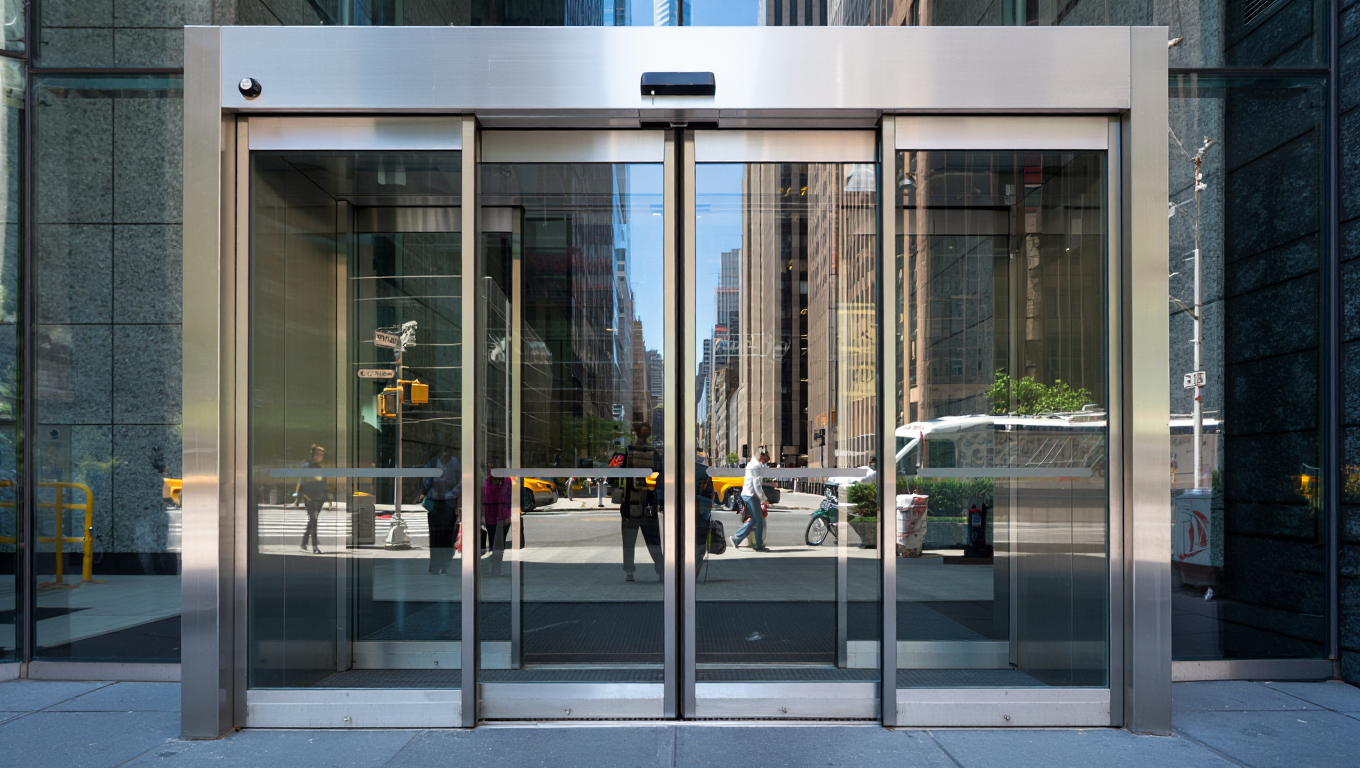
Sliding Doors
Automatic and manual sliding entrances for retail, healthcare, office, education, hospitality, and mixed-use buildings. Common work includes operator diagnostics, sensor issues, track problems, roller wear, breakout hardware, and general entrance reliability across high-cycle public-facing entries.
Swinging Doors
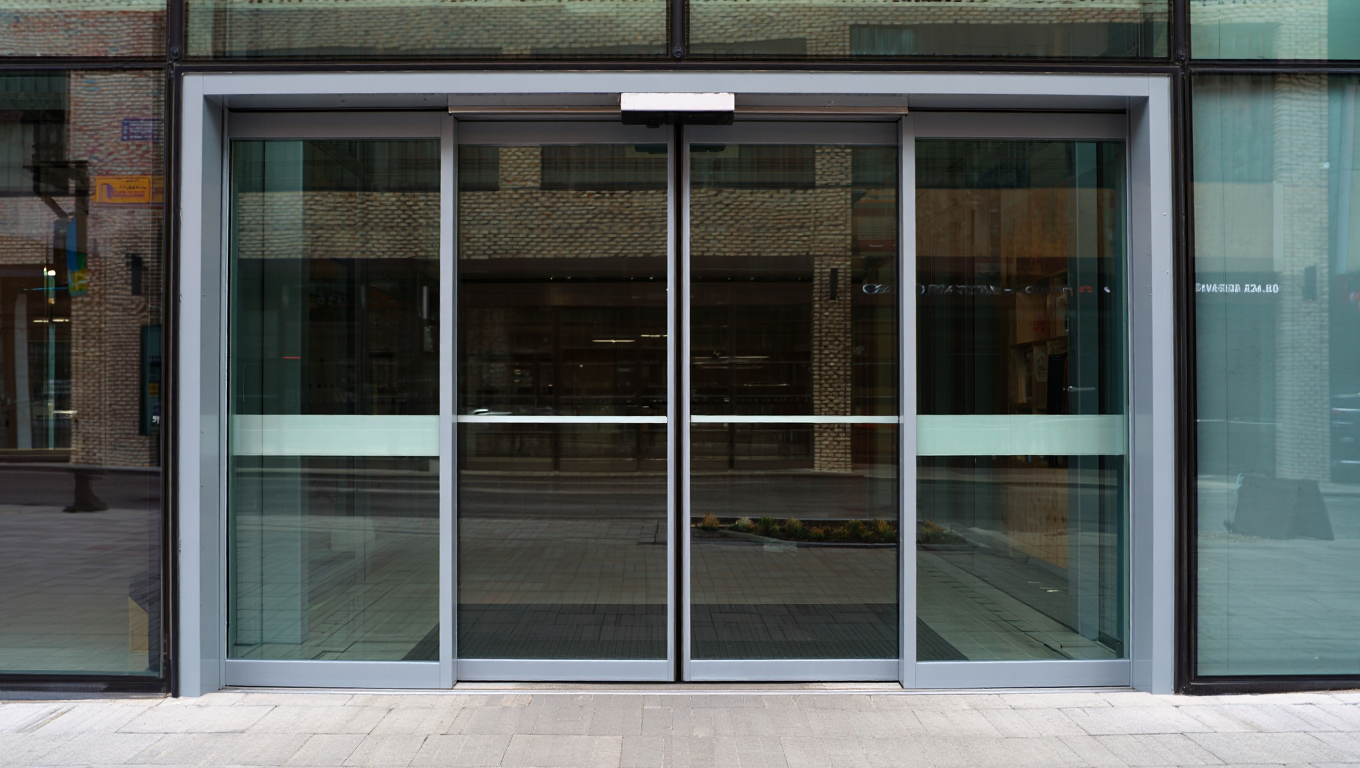
Swing door systems require careful attention to operators, activation devices, safety sensors, hinges, arms, and opening behavior. They are common in healthcare, accessibility-focused entrances, education, and office environments where controlled movement and low-energy operation matter.
Balanced Doors
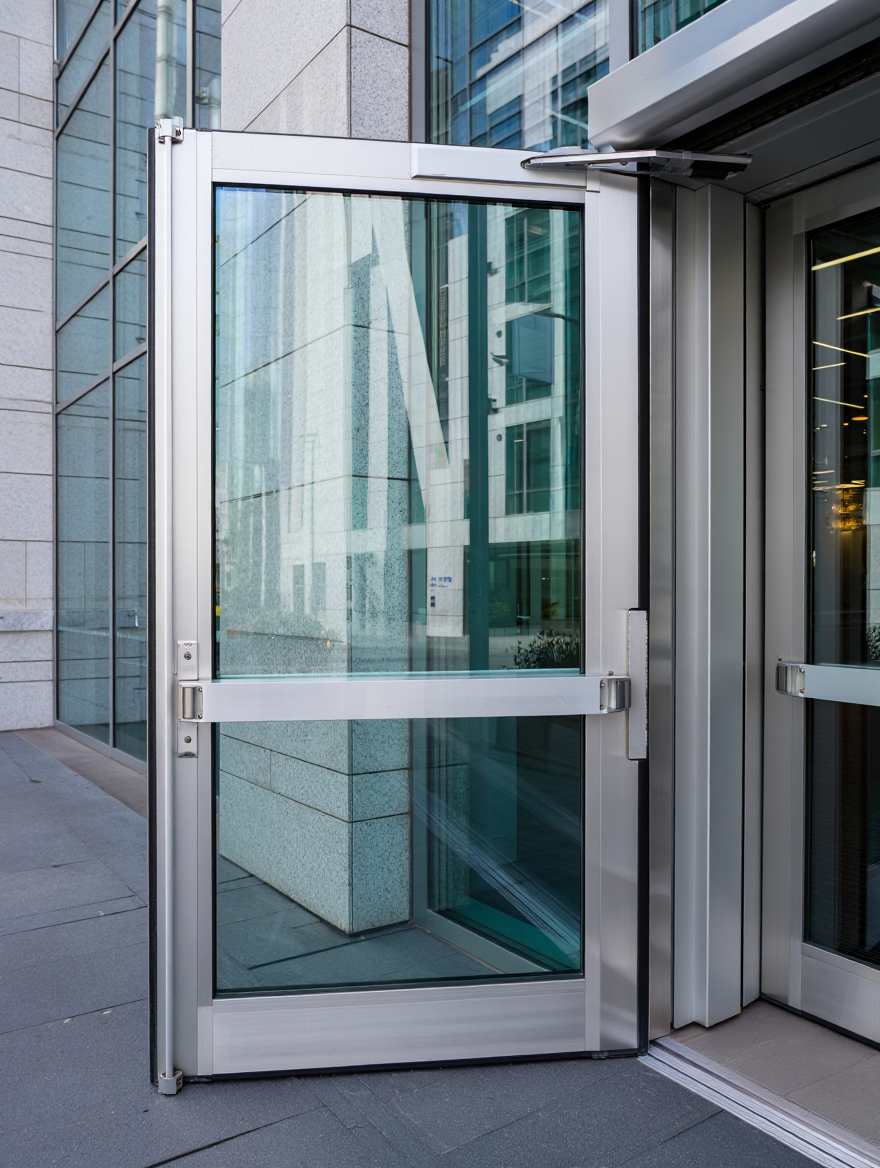
Balanced doors are specialized large-format entrances designed to reduce opening force while handling heavy leaf sizes. They need knowledgeable service when pivots, closers, weather performance, alignment, or custom hardware develop problems under daily commercial use.
Revolving Doors
Revolving doors protect energy performance, traffic flow, and lobby aesthetics, but require experienced handling for sensors, speed control, safety systems, canopies, wings, and code-sensitive operation in active public buildings across New York and New Jersey.
Folding Doors
Automatic folding doors are often chosen where space is limited but accessibility and automation still matter. These systems can develop issues with panels, pivots, sensors, operators, breakout behavior, and daily wear in higher-traffic commercial environments.
Manual Doors
Manual commercial entrances still need reliable closers, pivots, panic hardware, thresholds, alignment, weather performance, and accessibility-minded operation. When these systems fail, the result is often a security, safety, or daily usability problem that compounds quickly.
Not Sure Which Door Type Matches Your Entrance?
That is a common situation. Facilities often know there is an entrance problem but are unsure whether the system should be classified as sliding, swinging, balanced, or a specialty door. The easiest approach is to identify how the door moves, what kind of hardware controls it, and whether it uses a powered operator, safety sensors, or manual-only hardware.
Quick sorting guide
- Sliding: panels move horizontally on a track
- Swinging: the leaf opens on hinges or pivots with an operator arm or manual closer
- Revolving: multiple wings rotate through a circular enclosure
- Balanced: oversized entrance door with offset pivot geometry for easier operation
- Folding: panels fold and stack while the opening cycle stays compact
- Manual: no powered operator, but still requires reliable hardware and safety-conscious operation
If the entrance type is still unclear, the automatic door service page covers all systems broadly, or send a service request and Door Automation Corp can help route the work to the right technician and door category.
Common Buildings and Use Cases by Door System
Commercial entrances are not interchangeable. Different building types rely on different door systems based on traffic flow, safety requirements, aesthetics, and energy performance considerations.
Retail, Grocery, and Mixed-Use
Sliding and swinging doors are common where traffic volume, accessibility, and convenient entry matter most. Consistent opening performance and sensor behavior are critical in these settings where customer flow depends on reliable automatic response.
Sliding door service often handles the highest daily cycle counts in retail environments. For broader context on these properties, retail property door service covers service planning specific to that building type.
Healthcare, Education, and Public Buildings
Swing doors, sliding doors, and low-energy operators are often chosen for safe access, accessibility compliance, and controlled movement patterns. Inspection and service documentation can be especially important in these environments given their public-use sensitivity.
AAADM inspection support is available when compliance and safety documentation matter. Healthcare door service covers the specific service context for medical facilities.
Class A Office, Hospitality, and Landmark Entrances
Revolving and balanced doors are often selected for appearance, energy control, and premium entrance design. These systems require more specialized parts knowledge and service planning than standard commercial entries.
Dedicated pages for revolving doors and balanced doors cover the specific service considerations for those systems.
Why Door Type Matters for Repair, Maintenance, and Modernization
A commercial entrance is a system, not just a panel of metal and glass. Hardware, operator logic, sensors, closing force, activation method, traffic flow, and code expectations all change depending on the door category. Good service planning starts with identifying the exact type of entrance involved.
Repairs are more accurate when the system is classified correctly
Door type determines which components are most likely to fail, what testing matters, and whether the next best step is repair, calibration, parts replacement, inspection, or full modernization. A revolving door problem is not diagnosed like a sliding door problem. A balanced door issue is not approached like a standard manual closer failure. The automatic door repair vs. replacement guide covers how to evaluate that decision regardless of door type.
Service contracts work better when visit scope matches the entrance mix
Properties with multiple entrance systems benefit from service planning that reflects real hardware conditions across each type. A site with one revolving entry, two sliding vestibules, and several manual side doors should not be treated like a single-system building. Service contracts should match actual traffic, risk, and system complexity. For multi-location portfolios, multi-site commercial door services allow coordinated coverage across all locations.
Door Type-Specific Safety Expectations
Automatic doors are not just convenience features. They are active entrance systems that affect access, safety, and daily liability for the buildings that use them. Different door types introduce different inspection points, hazard zones, and maintenance priorities, which is why service history, testing records, and system-specific knowledge matter in commercial environments.
Door Automation Corp offers dedicated AAADM inspection support alongside repair and contract service for all door types. The American Association of Automatic Door Manufacturers (AAADM) provides the inspection and safety framework that certified technicians follow across commercial automatic door systems.
Examples of what changes by door type
- Sensor coverage and activation zones for automatic sliding and swinging systems
- Breakout and egress behavior requirements for sliding and folding doors
- Speed control and wing behavior standards for revolving doors
- Force, alignment, and closing behavior expectations for manual and balanced systems
Frequently Asked Questions: Commercial Door Types in NY and NJ
Quick answers for owners, facility managers, and operations teams comparing commercial entrance systems and deciding where to request service.
What are the main commercial automatic door types?
Common commercial automatic door types include sliding doors, swinging doors, revolving doors, and folding doors. Some properties also use specialized balanced doors or high-traffic manual doors that still require ongoing hardware service and safety-conscious maintenance.
Which door type is best for high-traffic commercial buildings?
That depends on the building. Sliding doors are common for retail and healthcare entries, swinging doors work well for accessibility-focused openings, and revolving doors are often chosen for premium lobbies and energy control. The best answer depends on traffic volume, available space, design goals, and safety requirements specific to each building.
Do different door types need different maintenance schedules?
Yes. Wear patterns, testing needs, and inspection priorities vary significantly by system. Buildings with mixed entrance types typically benefit from a tailored service contract rather than a generic one-size approach applied across every entrance regardless of type or traffic volume.
Can one company service multiple door types across a property or portfolio?
Yes. Door Automation Corp supports multiple commercial entrance categories across New York and New Jersey, helping property teams keep service organized rather than managing separate vendor relationships for each entrance type. Multi-site commercial door services are available for organizations managing multiple locations.
When should I use the general service page instead of a specific door-type page?
The automatic door service page is the better starting point if the door type is not yet identified, if the building has several entrance systems, or if a broader overview of repair, emergency response, inspections, and maintenance options is needed before narrowing to a specific system.
Schedule Service for the Right Commercial Door System
Use the door-type section above to reach the correct entrance page, or go directly to the automatic door service page if the building has multiple systems or the entrance type is not yet confirmed. Door Automation Corp supports repair, planned maintenance, inspections, and emergency response across commercial properties in New York and New Jersey. Send a service request to get started, or see the full range of services on the Door Automation Corp main site.