

If an automatic door at your commercial building has stopped working properly, you are probably trying to figure out the automatic door repair cost before you call anyone out. The honest answer is that it depends on what broke, but most facility managers can expect anywhere from a couple hundred dollars for a sensor adjustment to several thousand for a full operator replacement. Repair is just one part of the broader automatic door service equation, and knowing the price ranges, the factors that push costs up or down, and when repair stops making sense compared to replacement will help you make a faster, better-informed decision.
Automatic Door Repair Cost by Component
Repair pricing depends heavily on which part of the system failed. Here is what most commercial properties can expect to pay:
| Repair Type | Typical Cost Range |
|---|---|
| Minor adjustments or recalibration | $150 – $300 |
| Sensor replacement | $250 – $600 |
| Operator (motor/drive unit) repair | $400 – $1,200 |
| Operator replacement | $1,000 – $3,500 |
| Glass or frame replacement | $500 – $2,000+ |
| Track or roller repair | $300 – $1,200 |
Labor typically runs $75 to $150 per hour, often with a one- to two-hour minimum. If the door fails after hours or on a weekend, expect an emergency service premium of roughly $200 to $500 on top of the standard repair cost.
What Drives Automatic Door Repair Cost Up or Down
A few variables consistently explain why two repair bills for what looks like the same problem can differ so much:
- Door type: Sliding and swing doors use more widely available parts, while revolving door and balanced door systems require specialized components and more technical labor.
- Brand and part availability: Proprietary operators or control boards can mean longer lead times and higher part costs than a generic-compatible system.
- OEM versus generic parts: Original manufacturer parts usually add 15 to 30 percent to the bill but tend to reduce the odds of a repeat failure.
- Emergency versus scheduled service: A same-day emergency call almost always costs more than a repair booked during normal business hours.
- Labor rates by location: Technician rates in major metro markets run higher than in less dense markets, and complex jobs may require more than one technician.
Common Issues That Lead to an Automatic Door Repair Call
Sensor Problems
Motion and presence sensors are the most frequent failure point. Weather exposure and debris buildup gradually reduce their accuracy until the door stops responding reliably.
Motor or Operator Wear
A door that opens sluggishly or not at all usually points to a worn operator. This is one of the pricier repairs, which is why catching early warning signs matters.
Control Board Failure
The control board is the system’s logic center. When it fails, the door may stop responding correctly to sensor input even if the motor itself is fine.
Track and Roller Wear
For sliding systems, worn rollers or debris-packed tracks cause noisy, jerky movement. Left alone, this accelerates wear on the operator as well.
How Maintenance Lowers Your Automatic Door Repair Cost Over Time
The gap between a reactive approach (fixing things only after they break) and a preventative approach shows up clearly once you look at annual numbers:
| Approach | Typical Annual Cost Per Door | Risk Level | Downtime Risk |
|---|---|---|---|
| Reactive only (repair when broken) | $800 – $2,500+ | High | High, often unplanned |
| Preventative maintenance only | $300 – $600 | Low | Minimal, planned |
| Preventative plus minor repairs | $400 – $900 | Low to moderate | Very low |
Two maintenance visits a year, ideally one in fall and one in spring, catches the seasonal wear that tends to turn into expensive emergency calls in the middle of winter or summer. Partnering with a provider for ongoing automatic door maintenance and a commercial door service contract builds this schedule in automatically, and most contracts also include priority emergency response and discounted labor rates on covered repairs, which further reduces the average automatic door repair cost over the life of the system.
Between professional visits, there are a few basic habits that meaningfully reduce wear: keeping tracks and thresholds free of debris, making sure signage is clear so users are not fighting the door’s natural speed, and having staff flag small issues (a squeak, a hesitation, a sensor that misses someone) before they become a full breakdown.
Warning Signs Worth Acting On Before the Automatic Door Repair Cost Climbs
- Inconsistent activation, where the door opens for some people but not others
- Grinding, clicking, or scraping sounds during operation
- Noticeably slower or hesitant movement
- A door that will not fully close
- Visible damage to panels, frames, or the threshold
Our full breakdown of how to know when your automatic door needs repair goes deeper into these signs if you want to train your building staff to catch problems early.
Door-Type Specific Cost Considerations
Repair patterns differ depending on which of our automatic door types you have installed, so it helps to know what typically drives cost on your specific system:
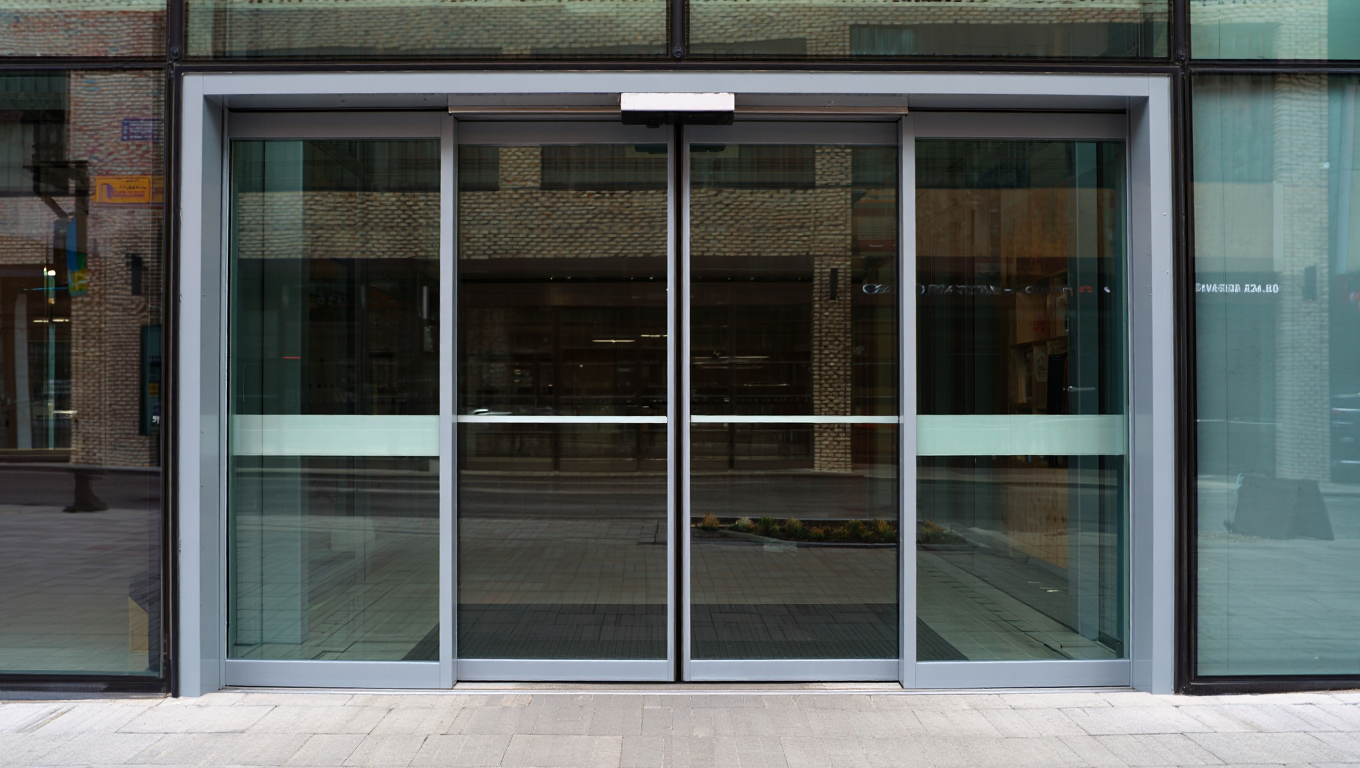
- Sliding doors: track and roller wear from debris accumulation is the primary cost driver
- Swinging doors: operator arm connections and pivot hardware loosen over time and transfer vibration into the operator
- Revolving doors: drive systems, speed controls, and wing alignment require more specialized (and pricier) service than sliding or swing systems
- Balanced doors: the floor closer and overhead concealed closer are the most expensive components to replace, making their upkeep the top priority
When Repair No Longer Makes Sense
At some point, the smarter financial move shifts from repair to replacement. A few signs it may be time to stop repairing:
- Repair costs over the past year have exceeded roughly half the system’s replacement cost
- Parts for the operator or control system are becoming hard to source
- The same component keeps failing after repair
- The building would benefit from ADA compliance or the energy efficiency gains of an automatic door modernization upgrade
Our guide on automatic door repair versus replacement walks through how to weigh that decision in more detail.
Why Choose Door Automation Corporation
Door Automation Corporation provides full-service repair, maintenance, and installation for every major automatic door type, including storefront door repair. Our technicians are available for both scheduled and emergency repair calls, we offer touchless and ADA-compliant upgrade options, and our AAADM inspections double as an independent check on your system’s condition, often catching the small issues that keep automatic door repair cost from spiraling into a major bill.
If you want a structured way to track upkeep between visits, our maintenance checklist for commercial buildings is a useful reference for your facility team.
Frequently Asked Questions
What is the average automatic door repair cost?
Most repairs fall between $150 for a minor sensor adjustment and $3,500 for a full operator replacement. The average commercial service call, factoring in labor and common part replacements, tends to land in the $250 to $900 range.
Does an emergency repair cost more than a scheduled one?
Yes. Expect an additional $200 to $500 on top of the standard repair cost for after-hours or weekend emergency service. If the door is not a safety hazard, scheduling during business hours avoids this premium.
Is a maintenance contract worth it if I want to lower repair costs?
For most properties with two or more automatic doors, yes. A contract typically costs $500 to $1,500 per year and usually pays for itself within one to two years by catching problems early and reducing emergency calls.
How do I know if I should repair or replace my automatic door?
If repairs over the last 12 months have cost more than half of what a new system would cost, or if the same component keeps failing, replacement is usually the more economical choice.
Can building staff do anything to reduce automatic door repair cost themselves?
Yes. Keeping tracks and thresholds clear of debris, posting clear operating signage, and reporting unusual sounds or hesitation early all help. Internal adjustments to sensors, operators, or control boards should still be left to a qualified technician.
Get a Repair Estimate for Your Property
Whether your door needs a minor sensor adjustment or a full operator replacement, Door Automation Corporation provides fast, transparent estimates for commercial properties. Contact us today to schedule an inspection or get a custom repair quote.