About Door Automation

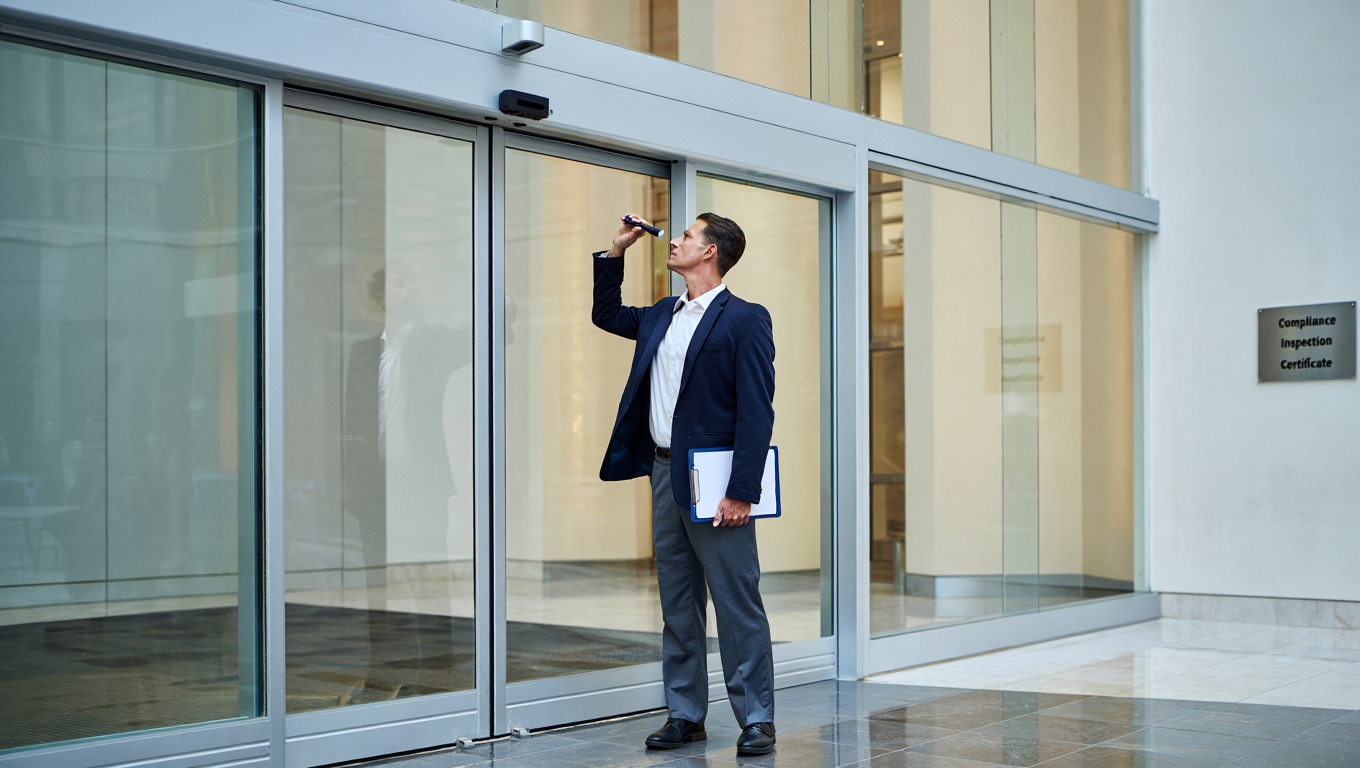
AAADM Inspection by a guy in a suit in front of a building

How Often Should Automatic Doors Be Inspected?

Understanding automatic door inspection frequency is essential for any facility that relies on automatic doors for safe, convenient, and reliable access. Whether your building has automatic sliding doors, swinging doors, revolving doors, or manual entry systems with automated features, inspections help protect pedestrians, reduce unexpected breakdowns, and support compliance with applicable safety standards. Automatic doors are used every day in commercial buildings, healthcare facilities, offices, retail stores, schools, hotels, transportation hubs, and many other high-use environments. Because these systems combine sensors, motors, controls, door panels, safety devices, and mechanical hardware, they require routine attention from AAADM-certified professionals.

A good inspection schedule is not only about fixing problems after they happen. It is about identifying wear, misalignment, sensor issues, slow response times, unsafe closing speeds, damaged guide rails, or other concerns before they create safety risks. The American Association of Automatic Door Manufacturers, commonly known as AAADM, plays an important role in the automatic door industry by promoting safety, education, and professional inspection practices. Many building owners and facility managers choose AAADM-certified inspectors because they are trained to evaluate automatic doors according to recognized industry standards and best practices.

For most commercial properties, automatic doors should be inspected at least annually by a qualified professional. However, that is only a general baseline. High-traffic buildings, healthcare facilities, airports, retail centers, and buildings exposed to harsh weather or heavy use may require more frequent inspections. In many cases, quarterly, semiannual, or even monthly checks may be appropriate depending on usage, building type, and risk level. Daily safety checks by building staff should be made each day and after any loss of electrical power to confirm that the doors are operating normally between professional inspections.

Automatic Door Inspection Frequency Guidelines

Automatic door inspection schedules should be based on safety requirements, manufacturer guidelines, building use, and the operating environment. While every property is different, a practical inspection program usually includes several layers of review.

A common schedule may include:

  • Daily owner or staff safety checks: Quick visual and operational checks performed by trained building personnel. 
  • Monthly internal reviews: More detailed observation of door function, sensors, signage, activation zones, and general condition. 
  • Semiannual professional service visits: Preventive maintenance and testing by a qualified automatic door technician. 
  • Annual professional inspections: A comprehensive inspection, ideally performed by an AAADM-certified inspector. 
  • Additional inspections after repairs, impacts, or unusual events: Any collision, malfunction, weather damage, renovation, or major change in building use should trigger a follow-up inspection. 

For many commercial buildings, an annual inspection is considered the minimum professional inspection frequency. However, minimum does not always mean sufficient. A busy hospital entrance, grocery store, office lobby, or transportation facility may cycle thousands of times each day. In these environments, waiting a full year between professional evaluations may allow small issues to become major safety or reliability concerns.

Automatic doors should also be inspected whenever there is a noticeable change in performance. If a door opens slowly, closes too quickly, hesitates, makes unusual noises, fails to detect pedestrians consistently, or does not fully close, service should be scheduled promptly. These symptoms can indicate problems with sensors, operators, rollers, tracks, control boards, activation devices, or mechanical hardware.

Professional inspections typically evaluate several important components, including:

  • Door opening and closing speed 
  • Sensor detection zones 
  • Safety presence sensors 
  • Activation devices 
  • Door guides, rollers, pivots, hinges, and tracks 
  • Breakout functions where applicable 
  • Signage and decals 
  • Control settings 
  • Door alignment 
  • Weatherstripping and thresholds 
  • Emergency operation 
  • Overall condition of mechanical and electrical components 

A consistent inspection program helps ensure that automatic doors continue to operate as intended and remain safe for daily pedestrian use.

Automatic door inspection frequency for high-traffic buildings

High-traffic buildings generally need more frequent inspections than low-use facilities. Entrances in busy commercial spaces experience constant motion, exposure, and wear. The more often a door opens and closes, the more stress is placed on its operator, belts, rollers, arms, sensors, and control systems.

High-traffic buildings may include:

  • Hospitals and medical offices 
  • Airports and transit centers 
  • Schools and universities 
  • Supermarkets and retail stores 
  • Office towers 
  • Hotels 
  • Apartment and condominium buildings 
  • Government facilities 
  • Entertainment venues 
  • Banks and financial institutions 
  • Shopping centers 

For these facilities, professional inspections are often recommended at least twice per year. In especially demanding locations, quarterly inspections may be appropriate. Some entrances may also benefit from a preventive maintenance contract that includes scheduled inspections, adjustments, cleaning, lubrication, and performance testing throughout the year.

Daily staff checks are especially important in high-traffic buildings. These checks do not replace professional inspections, but they help identify obvious safety concerns before the doors are used heavily during the day. Staff should look for issues such as doors striking carts, doors not opening fully, sensors missing pedestrians, unusual grinding sounds, loose signage, damaged thresholds, or debris in the door path.

In high-traffic buildings, automatic door inspections are not only a safety measure. They are also a business continuity strategy. A malfunctioning entrance can slow down operations, create accessibility challenges, inconvenience visitors, and harm the professional appearance of the property.

Factors That Affect Inspection Schedules

No two automatic door systems operate under exactly the same conditions. The right inspection frequency depends on the door type, use level, building purpose, environment, and expectations for safety and reliability. Facility managers should consider all of these factors when creating an inspection plan.

Important factors include:

  • Pedestrian volume: Doors used by hundreds or thousands of people per day require more frequent inspections. 
  • Door type: Sliding, swinging, folding, and revolving doors each have different operating components and maintenance needs. 
  • Building type: Healthcare, retail, transportation, education, and public facilities often have higher safety and accessibility expectations. 
  • Weather exposure: Exterior doors exposed to rain, snow, humidity, wind, salt, and temperature changes may need closer attention. 
  • Security requirements: Buildings with controlled access systems, locks, card readers, or after-hours settings may require additional testing. 
  • Age of the system: Older doors may need more frequent maintenance as parts wear and performance changes. 
  • Manufacturer recommendations: Inspection and maintenance schedules should align with the product manufacturer’s guidance. 
  • Prior repair history: Doors with recurring issues should be inspected more often until the root cause is resolved. 
  • Code and compliance obligations: Local building codes, accessibility requirements, and industry standards may influence inspection practices. 
  • User risk: Entrances used by children, elderly individuals, people with disabilities, patients, or large crowds may require heightened attention. 

The American Association of Automatic Door Manufacturers is an important reference point for professional standards in the industry. AAADM-certified inspectors are trained to inspect automatic pedestrian doors with attention to safety, proper operation, and applicable standards. Working with trained professionals helps building owners make informed decisions about inspection schedules, repairs, upgrades, and compliance concerns.

Environmental and usage considerations

Environmental conditions can significantly affect automatic door performance. Exterior doors face different challenges than interior doors. A clean, climate-controlled office lobby may not require the same maintenance schedule as a street-facing retail entrance in New York City exposed to constant foot traffic, dust, rain, winter salt, and temperature swings.

Common environmental concerns include:

  • Dirt and debris in tracks or thresholds 
  • Moisture near sensors, controls, or operators 
  • Corrosion from salt or humidity 
  • Wind pressure affecting door movement 
  • Temperature changes that affect seals, sensors, and mechanical parts 
  • Physical impacts from carts, deliveries, luggage, or equipment 
  • Construction dust from renovations 
  • Ice or snow near exterior entrances 

Usage patterns also matter. A door that experiences intense morning and evening rushes may wear differently from a door used steadily throughout the day. Doors at loading areas, retail entrances, hospitals, or office towers may be exposed to carts, stretchers, packages, strollers, wheelchairs, and high volumes of pedestrians. These conditions can increase the likelihood of misalignment, sensor obstruction, worn rollers, damaged guide rails, and door panel issues.

COVID-19 also changed how many commercial properties think about entryways. Non-contact door operation has become more common as businesses look for ways to reduce touchpoints and improve convenience. Automatic doors, touchless activation sensors, wave switches, and other modifications can help create safer and more user-friendly entrances. However, these systems still need regular inspection to verify that sensors, controls, and activation devices are working properly.

Benefits of Routine Inspections

Routine automatic door inspections provide several important benefits for building owners, facility managers, tenants, employees, and visitors. These benefits go beyond basic maintenance. They support safety, accessibility, reliability, and long-term value.

One of the biggest benefits is improved pedestrian safety. Automatic doors must detect people accurately and move at appropriate speeds. If sensors are misaligned, detection zones are blocked, or closing speeds are incorrect, the risk of contact or injury can increase. A proper inspection helps confirm that the system is functioning as intended.

Routine inspections also help support compliance. Commercial buildings are expected to provide safe and accessible entryways. While requirements vary depending on location and building type, automatic doors are often subject to safety standards, accessibility expectations, and manufacturer guidelines. Professional inspections help identify issues before they become compliance concerns.

Other benefits include:

  • Fewer unexpected breakdowns: Regular inspections catch wear and performance issues early. 
  • Longer equipment life: Proper maintenance reduces strain on motors, operators, rollers, sensors, and controls. 
  • Improved accessibility: Reliable automatic doors make it easier for all visitors to enter and exit the building. 
  • Better energy performance: Doors that close properly can help reduce heating and cooling loss. 
  • Enhanced security: Properly functioning doors, locks, and controls support secure building access. 
  • Reduced liability exposure: Documented inspections show that the property is taking safety seriously. 
  • Lower repair costs over time: Minor adjustments are often less expensive than emergency repairs or major component replacements. 
  • Improved visitor experience: Smooth, quiet, dependable doors create a better first impression. 

Routine inspections are especially valuable because automatic door problems are not always obvious at first. A door may still open and close, but its sensors may not detect properly at the edges. A sliding door may operate, but its rollers may be wearing unevenly. A swing door may function, but its closing speed may be outside recommended settings. Professional inspections help uncover these hidden issues.

Reducing emergency repairs through inspections

Emergency repairs are often more expensive, disruptive, and stressful than planned maintenance. When an automatic door fails without warning, it can affect building access, security, accessibility, and customer experience. In some cases, a malfunctioning entrance may need to be taken out of service until repairs are completed.

Routine inspections help reduce emergency repairs by identifying early warning signs, such as:

  • Unusual noise during operation 
  • Delayed opening or closing 
  • Doors closing totoo quickly
  • Sensor inconsistency 
  • Door panels rubbing or dragging 
  • Loose hardware 
  • Worn rollers or guide components 
  • Damaged weatherstripping 
  • Faulty activation devices 
  • Control setting issues 
  • Incomplete closing or locking 

By addressing these issues early, building owners can avoid larger failures. Preventive maintenance can also be scheduled during convenient times, reducing disruption to tenants, employees, and visitors. For businesses that rely on constant access, such as hospitals, retail stores, office buildings, and hotels, this reliability is essential.

Inspection records can also help facility managers make better long-term decisions. If the same component fails repeatedly, the door may need a more substantial repair, upgrade, or replacement. If a system is outdated, an inspection may reveal opportunities to improve safety, accessibility, energy performance, or touchless operation.

FAQ

How often should automatic doors be professionally inspected?

Most commercial automatic doors should be professionally inspected at least once per year. High-traffic or high-risk buildings may need inspections every six months, quarterly, or more often, depending on use and conditions.

Should automatic doors be checked every day?

Yes. Building staff should perform simple daily safety checks to confirm that doors open, close, detect pedestrians, and move smoothly, stay open long enough, clean the area of debris or loose parts, and that signage is in good condition.. Daily checks do not replace professional inspections, but they help catch obvious problems quickly.

Who should inspect automatic doors?

Automatic doors should be inspected by a qualified professional. Many building owners prefer AAADM-certified inspectors because they are trained in automatic pedestrian door safety and inspection practices.

What are the signs that an automatic door needs service?

Common warning signs include slow operation, fast closing, unusual noises, inconsistent sensor response, doors not closing fully, dragging panels, loose hardware, or visible damage.

Do automatic sliding doors and swing doors have different inspection needs?

Yes. Sliding doors and, swing doorss, revolving doors, and manual doors with automated features have different components and safety considerations. Inspection schedules should reflect the specific door type and manufacturer recommendations.

Are inspections required for compliance?

Inspection expectations can vary by location, building type, and applicable standards. Routine professional inspections help support safety, accessibility, and compliance with relevant requirements. AAADM strongly recommends that all automatic pedestrian doors be inspected professionally at a minimum once per year. 

Can inspections help reduce repair costs?

Yes. Inspections can identify small issues before they become major failures. Preventive service is often more cost-effective than emergency repairs or full system replacement.

How do touchless automatic doors affect inspection needs?

Touchless systems still require regular inspection. Sensors, activation devices, controls, and safety features must be checked to confirm proper operation and reliable non-contact access.

Call Door Automation Corporation for Automatic Door Inspection and Service

Automatic doors play a major role in the safety, convenience, accessibility, and appearance of your commercial space. A proactive inspection schedule helps keep your entryways dependable while reducing the risk of unexpected repairs and performance issues.

Door Automation Corporation provides solutions for convenient access to commercial spaces, including automatic and manual, swing, slide, and revolving doors. Our reliable professionals work with industry-leading products to provide functional, dependable, and secure entryways. As non-contact door openings become the new normal due to COVID-19, we can provide modifications that support non-contact door operation, as well as new automatic doors that follow standard automated door energy compliance. We also work closely as design consultants with many of the top architectural firms in New York City.

For dependable automatic door service, inspections, repairs, upgrades, and entryway solutions, contact us today. Our skilled team is here whenever you need professional support for safe, reliable, and convenient access.

great looking materials and finishes on an automatic door

Best Finishes and Materials for Automatic Doors

Choosing the right automatic door materials is an important part of designing a commercial entryway that is attractive, durable, secure, and easy to use. Automatic doors do more than open and close. They help manage traffic flow, support accessibility, improve energy efficiency, and create a strong first impression for visitors, tenants, employees, and customers. Whether a building uses automatic swing doors, sliding doors, revolving doors, or manual doors with automatic modifications, the materials and finishes selected can affect long-term performance, maintenance needs, safety, and overall appearance.

Automatic doors are commonly used in office buildings, hotels, hospitals, retail stores, airports, schools, mixed-use developments, and many other commercial spaces. Because these entrances often experience heavy daily use, the materials must be able to withstand frequent operation, changing weather conditions, cleaning routines, and public contact. At the same time, the finish should complement the building’s architecture and support the desired level of visibility, privacy, and security.

Below is an informational guide to the best finishes and materials for automatic doors, including important considerations for commercial properties, accessibility, hygiene, and long-term value.

Why Material Selection Matters for Automatic Doors

Automatic doors are mechanical systems that depend on precise movement, reliable hardware, and durable components. The wrong material choice can lead to premature wear, unnecessary repairs, poor insulation, or a mismatched appearance. The right material can help the door system perform better and look professional for years.

Material selection matters because it can influence:

  • Door weight and operating efficiency 
  • Resistance to dents, corrosion, and scratches 
  • Compatibility with sensors, operators, and control systems 
  • Glass visibility and safety 
  • Energy performance 
  • Security and impact resistance 
  • Cleaning and maintenance requirements 
  • Architectural appearance 
  • Code compliance and accessibility 

Commercial entryways must also be designed with safety standards in mind. The American Association of Automatic Door Manufacturers, commonly known as AAADM, plays an important role in promoting safety, education, and professional standards in the automatic door industry. Working with knowledgeable professionals who understand industry standards helps ensure that automatic door systems are installed, inspected, and maintained properly.

Aluminum: A Popular Choice for Commercial Automatic Doors

Aluminum is one of the most widely used materials for automatic door frames, especially in commercial sliding and swinging door systems. It is lightweight, durable, corrosion-resistant, and adaptable to many architectural styles.

Aluminum is often preferred because it offers a strong balance of appearance and function. Since automatic door operators must move the door panels repeatedly throughout the day, a lighter material can help reduce strain on the operating system. Aluminum provides structural support without adding unnecessary weight.

Common advantages of aluminum include:

  • Excellent corrosion resistance 
  • Lightweight construction 
  • Easy compatibility with glass panels 
  • Wide range of finish options 
  • Low maintenance requirements 
  • Modern, professional appearance 
  • Strong performance in high-traffic locations 

Aluminum frames are commonly used in storefronts, office entrances, healthcare facilities, schools, and retail buildings. They can be finished in clear anodized aluminum, dark bronze, black, painted finishes, or custom colors to match surrounding architecture.

Stainless Steel for Durability and a Premium Appearance

Stainless steel is another excellent material for automatic doors, particularly in environments where strength, cleanliness, and appearance are top priorities. It is frequently used in hospitals, airports, luxury buildings, transportation hubs, laboratories, food service areas, and high-end commercial spaces.

Stainless steel offers a polished and professional appearance while providing excellent durability. It resists corrosion, handles frequent cleaning, and can stand up well in demanding environments. For businesses that want a sleek, modern look with long-lasting performance, stainless steel is often a strong choice.

Stainless steel may be used for:

  • Door rails 
  • Push plates 
  • Kick plates 
  • Handles 
  • Cladding 
  • Frames 
  • Hardware components 
  • Protective trim 

One of the biggest benefits of stainless steel is its ability to handle repeated contact. In busy commercial settings, doors are often touched, bumped, cleaned, and exposed to carts, equipment, luggage, or pedestrian traffic. Stainless steel provides added protection in these situations.

Glass Options for Automatic Doors

Glass is a central material in many automatic door systems. It improves visibility, supports natural light, and creates an open, welcoming entrance. However, not all glass is the same. The type of glass selected should be based on safety, security, energy efficiency, privacy, and appearance.

Common glass options include:

  • Tempered glass: Heat-treated for strength and designed to break into small pieces rather than sharp shards. 
  • Laminated glass: Made with an interlayer that helps hold the glass together if broken. 
  • Insulated glass: Designed to improve thermal performance and reduce energy loss. 
  • Tinted glass: Helps reduce glare and solar heat gain. 
  • Frosted or etched glass: Adds privacy while still allowing light to pass through. 
  • Low-E glass: Improves energy efficiency by reducing heat transfer. 
  • Security glass: Designed for enhanced impact resistance in higher-risk areas. 

For many commercial spaces, glass automatic doors create a transparent and accessible entryway. They allow people to see whether someone is approaching from the opposite side, which can improve safety and traffic flow. In retail settings, glass also helps maintain visibility into the business.

Anodized Finishes for Aluminum Doors

Anodized finishes are commonly used on aluminum automatic doors because they are durable, attractive, and resistant to corrosion. The anodizing process strengthens the surface of the aluminum and creates a finish that does not peel or flake as some coatings can.

Popular anodized finish colors include:

  • Clear aluminum 
  • Champagne 
  • Light bronze 
  • Medium bronze 
  • Dark bronze 
  • Black 

Anodized finishes are especially useful for commercial buildings that need a clean, professional look with reliable long-term performance. They are often selected for storefronts, office buildings, institutional facilities, and high-traffic public spaces.

A clear anodized finish provides a bright, modern appearance, while bronze or black finishes can create a more traditional, dramatic, or upscale look. The best choice depends on the building’s design, surrounding materials, and branding.

Painted and Powder-Coated Finishes

Painted and powder-coated finishes offer more color flexibility than many standard metal finishes. These options are useful when the automatic door system needs to match a specific architectural color, brand palette, or exterior design.

Powder coating is especially valued because it creates a durable, uniform finish. It is applied as a dry powder and then cured, creating a strong surface that resists chipping, fading, and scratching when properly maintained.

Benefits of painted and powder-coated finishes include:

  • Broad color selection 
  • Custom design flexibility 
  • Durable surface protection 
  • Compatibility with many architectural styles 
  • Good resistance to weathering 
  • Professional appearance 

These finishes are often used in commercial spaces where appearance is a major design consideration. They can help automatic doors blend seamlessly with curtain wall systems, storefront framing, metal panels, and other architectural elements.

Bronze and Dark Finishes for Sophisticated Entrances

Dark bronze, black, and similar deep finishes are popular in modern commercial architecture. They provide a refined appearance and can create strong visual contrast against glass, stone, brick, or light-colored exterior materials.

Bronze finishes are often used in:

  • Office towers 
  • Hotels 
  • Residential lobbies 
  • Retail storefronts 
  • Cultural institutions 
  • Historic renovations 
  • Luxury commercial buildings 

A dark finish can make an entrance feel more polished and intentional. However, darker finishes may show dust, fingerprints, or surface marks more easily than lighter finishes, depending on the location and cleaning routine. For this reason, property owners should consider both appearance and maintenance when selecting a finish.

Protective Plates and Reinforced Components

Automatic doors in high-traffic commercial spaces often benefit from protective components. These elements help reduce wear, improve durability, and prevent visible damage from daily use.

Common protective components include:

  • Kick plates 
  • Push plates 
  • Armor plates 
  • Mop plates 
  • Edge guards 
  • Protective rails 
  • Reinforced bottom rails 

Kick plates are especially useful on swing doors, where the lower portion of the door may be contacted by shoes, carts, cleaning equipment, or deliveries. Stainless steel is a common choice for these protective elements because it is strong, easy to clean, and visually professional.

Protective components are particularly important in hospitals, schools, airports, apartment buildings, and service entrances where door systems may be exposed to frequent impact.

Materials for Automatic Sliding Doors

Automatic sliding doors are common in retail stores, healthcare facilities, hotels, and office buildings because they provide convenient hands-free access while saving space. Materials for sliding doors must support smooth operation, stability, and safety.

Typical sliding door systems include:

  • Aluminum frames 
  • Tempered or laminated glass panels 
  • Stainless steel or aluminum rails 
  • Weatherstripping 
  • Threshold components 
  • Sensor-compatible headers 
  • Durable track systems 

Sliding doors often use large glass panels to create a bright and open entry. Because these doors move horizontally, the materials must be carefully balanced to allow the operator to function reliably. Aluminum and glass are a common pairing because they provide strength, visibility, and relatively low weight.

Materials for Automatic Swing Doors

Automatic swing doors are frequently used where existing manual doors need to be automated or where a traditional hinged door design is preferred. These doors may be made from glass, aluminum, steel, wood, or a combination of materials.

Automatic swing doors may be used in:

  • Office entrances 
  • Restrooms 
  • Healthcare spaces 
  • Schools 
  • Apartment buildings 
  • Interior corridors 
  • Accessible entrances 

When converting manual swing doors to automatic operation, the existing door material and frame condition must be evaluated. The operator must be compatible with the door’s weight, hinge condition, traffic flow, and safety requirements.

Common swing door materials include:

  • Aluminum and glass 
  • Hollow metal 
  • Stainless steel 
  • Wood veneer 
  • Fiberglass 
  • Full glass panels 

Automatic swing doors may also be equipped with touchless activation devices, wave sensors, push plates, card readers, and access control systems.

Materials for Revolving Doors

Revolving doors are often selected for large commercial buildings, hotels, and office towers because they help control air exchange, improve energy efficiency, and manage pedestrian traffic. These systems require strong, durable materials because they include multiple moving wings, glass panels, central shafts, and surrounding enclosure components.

Common revolving door materials include:

  • Aluminum 
  • Stainless steel 
  • Tempered glass 
  • Laminated glass 
  • Bronze-finished metal 
  • Painted or powder-coated metal 
  • Security glass for higher-risk applications 

Revolving doors are highly visible architectural features, so finish selection is especially important. Stainless steel can create a sleek and modern look, while bronze or dark finishes may provide a more traditional or upscale appearance. Glass selection is also important for visibility and safety.

Wood and Wood Veneer Finishes

While less common for exterior automatic sliding systems, wood and wood veneer finishes can be used in certain automatic swing door applications, especially in interior commercial spaces. Wood provides warmth and a refined appearance, making it suitable for offices, hospitality environments, private clubs, and high-end interiors.

However, wood requires careful consideration. It may be more sensitive to moisture, impact, and environmental changes than metal or glass. For automatic operation, the door must also be properly balanced and compatible with the operator.

Wood finishes may be appropriate for:

  • Executive offices 
  • Conference areas 
  • Interior lobbies 
  • Hospitality spaces 
  • Institutional interiors 
  • Historic buildings 

For many commercial projects, wood is combined with metal hardware, glass vision panels, or protective plates to improve durability.

Touchless and Non-Contact Door Operation

Non-contact door openings have become increasingly important in commercial environments. Due to COVID-19, many businesses and building owners have looked for ways to reduce touchpoints and improve the convenience of entry. Touchless automatic door solutions can help support cleaner, more accessible, and more convenient movement through a space.

Non-contact door operation may include:

  • Motion sensors 
  • Presence sensors 
  • Wave-to-open switches 
  • Touchless activation plates 
  • Access control integration 
  • Remote activation 
  • Automatic operators for existing manual doors 

The material and finish selection should support these systems. For example, sensor housings, activation plates, and access control devices should be compatible with the surrounding door frame and finish. Stainless steel touchless plates, dark sensor housings, and integrated frame-mounted devices can help the system look clean and intentional.

Energy Efficiency and Door Materials

Automatic doors can support energy efficiency when properly selected, installed, and maintained. Energy performance depends on the door type, glass selection, sealing, opening speed, traffic patterns, and control settings.

Important energy-related material considerations include:

  • Insulated glass for improved thermal performance 
  • Low-E coatings to reduce heat transfer 
  • Weatherstripping to limit air leakage 
  • Revolving doors to reduce air exchange 
  • Properly sealed sliding door systems 
  • Energy-compliant automatic door systems 
  • Durable thresholds and sweeps 

Door Automation Corporation provides new automatic doors that follow standard automated door energy compliance. This is especially important for commercial buildings in dense urban environments where comfort, efficiency, and code considerations all matter.

Security Considerations for Automatic Door Materials

Security is another major factor when selecting automatic door materials. Commercial entryways must balance openness and accessibility with protection. Depending on the building type, security needs may range from basic durability to advanced access control and impact-resistant materials.

Security-focused material options may include:

  • Laminated safety glass 
  • Reinforced metal frames 
  • Stainless steel hardware 
  • Access-controlled automatic doors 
  • Heavy-duty locking systems 
  • Breakout panels for emergency egress 
  • Security-rated glazing 
  • Durable door rails and stiles 

For office buildings, schools, medical facilities, and multi-tenant properties, automatic doors may need to integrate with card readers, intercoms, cameras, or building management systems. The selected materials must accommodate this technology without compromising appearance or performance.

Maintenance and Cleaning Considerations

A beautiful automatic door system should also be practical to maintain. High-traffic entrances collect fingerprints, dust, moisture, and debris. The materials and finishes selected should match the building’s cleaning schedule and expected usage level.

Maintenance-friendly choices include:

  • Stainless steel protective plates for high-contact areas 
  • Anodized aluminum frames for corrosion resistance 
  • Powder-coated finishes for color durability 
  • Tempered or laminated glass for safety 
  • Smooth surfaces that are easy to wipe down 
  • Durable thresholds and tracks that can be cleaned regularly 

Sliding door tracks, sensors, and operators should be inspected and maintained by qualified professionals. AAADM-trained inspectors and experienced automatic door technicians can help identify issues before they become larger problems.

Matching Materials to Building Type

Different commercial spaces have different needs. A hospital entrance may prioritize hygiene, accessibility, and durability. A luxury hotel may prioritize appearance and smooth operation. A retail storefront may need visibility, branding, and high daily performance.

Here are common material priorities by building type:

  • Healthcare facilities: Stainless steel, touchless activation, easy-clean surfaces, wide automatic openings, durable glass. 
  • Retail stores: Aluminum frames, clear glass, sliding doors, branded finishes, strong visibility. 
  • Office buildings: Revolving doors, sliding doors, bronze or black finishes, access control integration. 
  • Hotels: Premium finishes, stainless steel, glass, revolving doors, quiet operation. 
  • Schools: Durable frames, reinforced glass, safe hardware, accessible entry systems. 
  • Industrial facilities: Heavy-duty metal doors, protective plates, practical finishes, secure operation. 
  • Residential buildings: Attractive lobby doors, automatic swing or sliding systems, access control compatibility. 

The best choice depends on traffic, security needs, climate exposure, architectural design, and budget.

The Role of Professional Design and Installation

Even the best materials will not perform properly if the door system is poorly designed or installed. Automatic doors require careful planning because the door panels, operators, sensors, safety systems, activation devices, controls, and surrounding structure must work together.

Professional design and installation can help ensure:

  • Correct door type selection 
  • Proper operator sizing 
  • Safe sensor placement 
  • Code-conscious installation 
  • Smooth daily performance 
  • Reliable access control integration 
  • Long-term serviceability 
  • Appropriate finish and material selection 

Door Automation Corporation works closely as design consultants with many top architectural firms in New York City. This experience is especially valuable for commercial projects that require both dependable performance and a polished architectural result.

FAQ: Best Finishes and Materials for Automatic Doors

What is the best material for automatic door frames?

Aluminum is one of the most common choices because it is lightweight, durable, corrosion-resistant, and compatible with glass. Stainless steel is also an excellent option when added strength, hygiene, or a premium appearance is needed.

What type of glass is best for automatic doors?

Tempered glass and laminated glass are commonly used for safety. Insulated, tinted, Low-E, or security glass may be recommended depending on energy, privacy, and security needs.

Are stainless steel finishes good for high-traffic doors?

Yes. Stainless steel is durable, easy to clean, and resistant to corrosion. It is a strong choice for hospitals, airports, office buildings, hotels, and other busy commercial spaces.

What finish is most durable for aluminum automatic doors?

Anodized and powder-coated finishes are both durable options. Anodized finishes are known for corrosion resistance, while powder coating offers wider color flexibility.

Can existing manual doors be converted to automatic doors?

In many cases, yes. Existing swing doors can often be modified with automatic operators and touchless activation devices, depending on the door condition, frame, hardware, and safety requirements.

Are touchless automatic doors worth it?

Yes. Touchless systems can improve convenience, accessibility, and hygiene by reducing the need for physical contact. They are especially useful in healthcare, office, retail, and public environments.

What does AAADM have to do with automatic doors?

The American Association of Automatic Door Manufacturers supports safety, education, and professional standards in the automatic door industry. AAADM-trained professionals help promote proper inspection and safe operation of automatic door systems.

Which automatic door type is best for energy efficiency?

Revolving doors can be very effective at reducing air exchange in busy buildings. Sliding and swinging automatic doors can also support energy efficiency when properly sealed, equipped with appropriate glass, and installed according to applicable standards.

How often should automatic doors be serviced?

Automatic doors should be inspected and maintained regularly based on usage, environment, and manufacturer recommendations. High-traffic commercial doors may require more frequent professional service.

What is the best finish for a modern commercial entrance?

Black, dark bronze, clear anodized aluminum, and stainless steel are all popular choices for modern commercial entrances. The best finish depends on the building design, desired appearance, and maintenance expectations.

Choose Door Automation Corporation for Reliable Commercial Entry Solutions

The best automatic door system begins with the right materials, the right finish, and the right team. Door Automation Corporation provides solutions for convenient access to commercial spaces, including automatic and manual, swing, slide, and revolving doors. Our reliable professionals work with industry-leading products to provide functional, dependable, and secure entryways.

As non-contact door openings continue to become the new normal due to COVID-19, we can provide modifications that support touchless door operation, as well as new automatic doors designed to follow standard automated door energy compliance. We work closely as design consultants with many of the top architectural firms in New York City, and our skilled team is here whenever you need dependable support.

For professional automatic door solutions that combine convenience, safety, accessibility, and architectural quality, rely on us. Contact us to learn more about our commercial door services and speak with our team about the right automatic door system for your space.

AAADM Inspection by a guy in a suit in front of a building

Why Glass Selection Matters for Automatic Doors

When planning or upgrading an entry system, many property owners focus on the door configuration first, but the glass itself deserves equal attention because of automatic door glass requirements. The right glass helps doors perform smoothly in busy environments while supporting the design of the building and protecting the people who use it.

Automatic doors are used in office buildings, healthcare facilities, hotels, retail centers, schools, airports, and many other commercial spaces. Because these doors often serve as the first point of contact for visitors, their appearance matters. Just as importantly, they must stand up to frequent operation, pedestrian traffic, environmental exposure, and safety expectations. Glass plays a central role in all of these areas. A poor glass choice can lead to breakage, vibration, noise, reduced energy performance, and safety concerns. A smart glass choice supports long-term function and strengthens the overall entrance system.

Why glass is a critical part of an automatic door system

Glass is not simply an insert within a door. It is one of the core components that affects how the door looks, moves, and performs over time. In commercial settings, doors must balance convenience, code compliance, accessibility, and architectural design. The glass contributes to each of these priorities.

From a performance perspective, quality glass helps maintain structural integrity and smooth movement. Doors that open and close repeatedly throughout the day need materials that can resist impact, limit energy loss, and stay properly aligned. Glass that is poorly matched to the application may flex too much or place stress on fittings and hardware.

From a design perspective, glass strongly influences the look of an entrance. Clear, tinted, frosted, or low-iron glass can create very different impressions. The transparency, color tone, and finish affect how welcoming, modern, or private a space feels. For many commercial buildings, doors are meant to blend seamlessly into a carefully designed facade. The glass choice helps create that architectural harmony.

From a safety perspective, the correct glass can reduce the risk of injury if a panel is struck or damaged. In automatic door systems, especially those in high-traffic environments, safety glass is essential. This is one reason manufacturers, installers, and building owners must pay close attention to applicable standards and best practices.

The role of glass in safety, performance, and aesthetics

Choosing high-quality glass allows an automatic door to perform the way it should while also complementing the surrounding architecture.

Safety

Safety is one of the main reasons glass selection matters so much. Automatic doors are used by employees, customers, patients, deliveries, and visitors of all ages and abilities. The glass must be able to withstand normal contact and occasional impact. Properly selected safety glass helps reduce the chance of dangerous breakage. It also contributes to user confidence, especially in spaces where doors operate continuously and quickly.

Performance

The wrong glass can compromise the performance of the door system. Glass that is too thin or not suited for the traffic level can vibrate during operation, create noise, and increase wear on surrounding components. Over time, this may affect door alignment, movement quality, and service life. Selecting the proper thickness and type helps support stable movement and dependable daily use.

Aesthetics

The visual effect of automatic doors should not be overlooked. Entrances shape first impressions, and glass has a major influence on how the building is perceived. Bright, clean, well-chosen glass can make an entryway feel open, modern, and professional. Specialty finishes can support privacy or branding while still maintaining a polished appearance. Even subtle details, such as the clarity and tone of the glass, can elevate the overall impression of the property.

Risks of choosing the wrong type of glass

Selecting the wrong glass can create problems that go far beyond appearance.

One major risk is breakage. Glass that is too thin or not rated as safety glass may crack or shatter when exposed to impact. In busy commercial areas, this creates a serious hazard for pedestrians and staff. High-traffic entrances demand materials that are specifically suited for repeated use and contact.

Another issue is operational instability. Low-grade or mismatched glass may vibrate excessively while the door moves. This vibration can produce distracting noise, reduce the sense of quality, and contribute to wear on the operator, fittings, and framing components. What begins as a small issue can lead to maintenance concerns over time.

Another issue is the transfer of energy. Glass is a major component of the building envelope and a significant source of energy loss or gain. Energy transfer through glass is governed by three key metrics: 

  • U-Factor: Measures heat transfer rate; lower values mean better insulation. For climate zones 4–7, U-Factor 0.30 is often required. 
  • Solar Heat Gain Coefficient (SHGC): Fraction of solar radiation admitted; lower SHGC reduces cooling loads in hot climates, higher SHGC can help in cold climates. 
  • Visible Transmittance (VT): Measures daylight penetration; balances lighting needs with solar control. Improper glass selection can lead to letting too much hot or cool temperatures permeate into or out of a building. 

Improper glass selection can also shorten the lifespan of the overall entrance system. If the glass is too heavy, too thin, or incompatible with the hardware, the door may experience alignment issues or increased strain. This can lead to service interruptions, more frequent repairs, and avoidable replacement costs.

There is also the issue of visual inconsistency. If the glass does not suit the building’s architectural style, the entrance may appear outdated or disconnected from the rest of the property. Since commercial doors are both functional and visible, the wrong glass can affect curb appeal just as much as performance.

Key factors that affect durability in automatic door applications

Durability in automatic doors depends on more than glass alone, but the glass choice is a foundational factor. Several elements should be evaluated when selecting glass for a commercial automatic door system.

Thickness

Glass thickness has a direct impact on strength, stability, and suitability for the door type. Thicker glass is often necessary in heavy-use settings or larger door systems. If the glass is too thin for the application, it may be more vulnerable to impact, vibration, and long-term fatigue.

Manufacturing quality

Not all glass is made to the same standard. High manufacturing quality improves flatness, consistency, and resistance to defects that could affect appearance or performance. Commercial automatic doors benefit from glass that is fabricated with precision and intended for demanding use.

Impact resistance

Automatic doors in commercial spaces encounter a wide range of daily stresses. People may push carts through them, carry packages near them, or accidentally strike them. Impact resistance matters, especially at entrances with constant traffic.

Heat tolerance and environmental exposure

Automatic doors are often exposed to sunlight, temperature shifts, humidity, and seasonal weather conditions. The selected glass must perform well in the specific environment. In some cases, thermal considerations are especially important for energy efficiency and long-term resilience.

Compatibility with hardware and framing

The glass must work properly with the surrounding system. Frames, clamps, gaskets, rails, and fittings all need to be matched to the glass type and thickness. Even excellent glass can underperform if it is paired with incompatible hardware. Proper integration helps prevent misalignment, stress points, and premature breakage.

Tempered glass and why it is so commonly used

Tempered glass is one of the most popular materials for doors, and for good reason. It is significantly stronger than standard glass and is well-suited to commercial environments where entrances need to perform consistently and safely.

Tempered glass is heat-treated to increase its strength and durability. This makes it more resistant to impact and daily wear. It also offers a clean, flat, attractive appearance that works well in a wide range of commercial designs, from sleek storefronts to corporate lobbies.

Another important advantage is its break pattern. When tempered glass breaks, it shatters into small, rounded pieces rather than large, sharp shards. While any glass breakage is a serious issue, this characteristic can reduce the risk of severe injury compared to ordinary glass. That said, proper selection and installation are still vital. Tempered glass is not a one-size-fits-all answer. The thickness, application, framing, and traffic conditions still need to be carefully evaluated.

How aesthetics influence glass selection

Safety and durability are essential, but appearance still matters. Commercial doors are part of the building’s identity. The right glass can reinforce a modern, professional image and create a more inviting entrance for customers, clients, and visitors.

Property owners and designers may consider:

  • Transparency level for openness and visibility 
  • Tint or color tone to complement the exterior facade 
  • Frosted or decorative finishes for privacy and style 
  • Clarity and reflectivity for a polished, high-end look 
  • Consistency across the entrance system for a cohesive design 

In many cases, the best glass is the one that balances visual appeal with the practical demands of daily use. A beautiful entrance should still function smoothly and safely year after year.

Why long-term value matters

The lowest upfront price does not always lead to the best result. Investing in the right glass can lower maintenance needs, improve user safety, reduce noise and vibration, and preserve the visual quality of the entrance. Over time, these benefits can translate into better operational efficiency and a stronger return on investment.

A high-quality entrance system can also support broader goals, such as accessibility, energy performance, and a more professional tenant or customer experience. Since automatic doors are used every day, even small improvements in durability and function can make a meaningful difference.

FAQ

What type of glass is most commonly used for doors?

Tempered glass is one of the most common choices because it offers strong impact resistance, a clean appearance, and a safer break pattern than standard glass.

Why is safety glass important in automatic doors?

Safety glass helps reduce the risk of serious injury if the glass is damaged. This is especially important in commercial spaces with high pedestrian traffic.

Can the wrong glass affect door performance?

Yes. Glass that is too thin, low quality, or incompatible with the system can cause vibration, noise, alignment issues, and faster wear on door components.

Does glass choice affect the appearance of a building?

Absolutely. The clarity, tint, finish, and overall quality of the glass have a major impact on how modern, welcoming, and cohesive the entrance looks.

Should glass selection be based only on appearance?

No. Appearance matters, but safety, durability, traffic level, hardware compatibility, and long-term performance are all essential factors.

Choose a trusted partner for safe and attractive entryways

Selecting the right glass for a door is about more than style. It is a decision that affects safety, performance, durability, accessibility, and the overall impression of your property. The right material can help your entrance operate smoothly, protect building occupants, and support a polished, professional look that lasts.

For expert guidance and dependable entry solutions, turn to Door Automation Corporation. We provide solutions for convenient access to commercial spaces, including automatic and manual, swing, slide, and revolving doors. Our reliable professionals work with industry-leading products to deliver functional, dependable, and secure entryways. As non-contact access solutions continue to be the new normal due to COVID-19, we can provide modifications for non-contact door operation as well as new automatic doors that follow standard automated door energy compliance. We also work closely as design consultants with many of the top architectural firms in New York City. Whether you need a new system, an upgrade, or expert support, our skilled team is here when you need us. Contact us today to learn more.

automatic door being repaired by Door Automation employee

Automatic Door Repair vs. Replacement: Which Makes Sense?

When a commercial entry system starts showing signs of wear, business owners and facility managers often face the same question: automatic door repair vs. replacement. The answer depends on more than the immediate price tag. It involves the age of the system, safety requirements, energy performance, reliability, and the long-term needs of the property. For decision-makers responsible for protecting budgets and maintaining smooth access, the right choice is the one that balances short-term practicality with lasting value.

Automatic doors play a major role in how people experience a building. They affect accessibility, convenience, first impressions, traffic flow, and security. In busy commercial environments, even a minor malfunction can disrupt operations, frustrate visitors, and create liability concerns. That is why deciding whether to repair or replace a system should never be based on cost alone. A door that appears fixable today may continue to generate repair bills, downtime, and compliance risks tomorrow. On the other hand, a targeted repair may be the most efficient solution when the system is otherwise sound.

This guide explains how to evaluate the decision with confidence and what factors matter most when choosing between repair and replacement.

Automatic Door Repair vs. Replacement Explained

The debate around automatic door repair vs. replacement comes down to the condition of the current system and the goals of the property owner. Repair generally focuses on restoring function by addressing a specific issue, such as a faulty sensor, worn motor component, damaged track, or inconsistent opening cycle. Replacement involves removing the old door or operator system and installing a newer solution that better meets present-day performance, safety, and compliance expectations.

Repair is often the right first step when the underlying system is still in good shape. If the problem is isolated, replacement parts are available, and the door can continue to operate safely after service, repairing the unit may be the most economical decision. This is especially true for newer doors or systems that have been properly maintained over time.

Replacement becomes more attractive when problems are recurring, parts are obsolete, or the current system no longer supports the demands of the building. Older automatic doors can become increasingly expensive to keep running. They may also lack modern features that improve safety, reduce touchpoints, increase energy efficiency, and support smoother daily traffic.

A smart decision begins with asking several practical questions:

  • Is the issue isolated or part of a larger pattern? 
  • How old is the system? 
  • Are parts readily available? 
  • Is the door meeting current safety and access expectations? 
  • Does the cost of ongoing repairs approach the value of a new system? 
  • Would a replacement improve building performance, user experience, or code compliance? 

The American Association of Automatic Door Manufacturers, commonly known as AAADM, plays an important role in this discussion. AAADM helps set standards and promotes safe installation, inspection, and service practices for automatic door systems. For commercial decision-makers, that matters because safety and compliance should be part of every repair or replacement decision. A door that functions inconsistently or no longer aligns with recognized industry standards may expose the property to unnecessary risk.

Automatic door repair vs. replacement for aging systems

Age is one of the clearest signals in the repair versus replacement decision. Like any mechanical system, automatic doors have a useful service life. As systems age, components wear out, electronic controls become outdated, and the door may struggle to operate as smoothly or efficiently as it once did.

An aging system can still be a candidate for repair if it has been well maintained and the problem is limited to a replaceable component. For example, replacing a sensor, control board, roller, or activation device may restore reliable operation without the need for a full system upgrade.

However, older systems often come with hidden drawbacks. Parts may be harder to source. Repairs may take longer. Compatibility between old and new components can become a challenge. In many cases, an older automatic door still works, but not at a level that supports current building traffic, accessibility expectations, or non-contact entry preferences.

Replacement often makes more sense for aging systems when:

  • Repair needs are becoming more frequent 
  • Downtime is affecting business operations 
  • The door lacks modern safety features 
  • Energy loss through the entrance is increasing costs 
  • The appearance of the entry no longer matches the image of the property 

In high-traffic commercial spaces, waiting too long to replace an outdated system can lead to greater disruption later. A proactive replacement strategy is often easier to budget for than repeated emergency service calls.

Factors That Influence Repair or Replacement Decisions

Every property has unique demands, so there is no universal rule that applies to every automatic door system. The best decisions are made by evaluating the full operational picture rather than reacting only to the latest breakdown.

One major factor is the type of property. Hospitals, office buildings, retail centers, schools, hotels, and mixed-use properties all place different demands on entry systems. A door in a low-traffic office entrance may have years of useful life left after a modest repair. A door in a busy healthcare or retail environment may need replacement sooner because the stakes for downtime, hygiene, and high-volume access are much greater.

Another important factor is traffic level. Doors that open hundreds or thousands of times each day experience more wear and tear than those with lighter use. Even if the visible damage seems minor, internal components may be approaching failure after years of heavy cycling.

Decision-makers should also consider occupant expectations. Today, people expect commercial entries to be convenient, dependable, and accessible. They also increasingly value non-contact access options. Following the COVID-19 pandemic, many businesses began rethinking how doors function in public and shared environments. Touchless activators and non-contact modifications are now viewed as practical upgrades rather than optional extras.

Replacement can be the better investment when it supports improvements such as:

  • Non-contact operation 
  • Better accessibility 
  • Smoother and quieter performance 
  • Improved appearance at the entrance 
  • Greater compatibility with building updates 
  • Stronger energy compliance performance 

The availability of experienced service professionals also matters. An accurate assessment by trained technicians can reveal whether repair is a cost-effective fix or only a temporary patch.

Frequency of breakdowns and downtime

One of the strongest indicators that replacement may be necessary is how often the system fails. A single repairable issue is one thing. Repeated malfunctions that interrupt access, create delays, or require emergency calls are something else entirely.

Frequent breakdowns do more than add service costs. They also create indirect costs that are easy to overlook. Staff time may be lost responding to access problems. Customers or visitors may form a negative impression. Accessibility may be compromised. Building operations can slow down when a key entrance is unavailable.

When evaluating downtime, consider the following:

  • How often has the door required service in the past 12 to 24 months? 
  • Are the same issues returning after repair? 
  • How long is the entrance out of service each time? 
  • Is the malfunction affecting customer flow, deliveries, or employee access? 
  • Are temporary fixes becoming the norm? 

A useful rule of thumb is that repeated repairs within a relatively short period often signal that the system is nearing the point where replacement is more cost-effective. Even if each individual repair seems manageable, the cumulative cost of labor, parts, delays, and inconvenience can quickly add up.

For commercial properties where entry access is mission-critical, reliability is not optional. A dependable entrance system protects daily operations and reduces the risk of unexpected interruptions.

Cost, Safety, and Performance Considerations

Most commercial decision-makers begin with cost, and that is understandable. Budget pressures are real. But the most affordable option on paper is not always the least expensive over time. The better question is not simply, “What costs less today?” but rather, “What delivers the strongest long-term value?”

Repair typically has a lower upfront cost. If the issue is straightforward and the rest of the system is in good condition, a repair can extend the life of the door and delay capital spending. That makes repair attractive for relatively new systems or one-time failures.

Replacement generally requires a larger investment upfront, but it can reduce long-term operating expenses in meaningful ways. Newer systems often offer better reliability, improved safety technologies, stronger energy efficiency, and better compatibility with current design and compliance requirements. In many cases, replacement can also reduce the frequency of future service needs.

When comparing costs, decision-makers should weigh both direct and indirect factors:

  • Immediate repair cost versus replacement cost 
  • Frequency of future service needs 
  • Availability and cost of replacement parts 
  • Labor costs over time 
  • Impact of downtime on operations 
  • Energy performance of the entrance system 
  • Risk exposure related to safety or compliance issues 

Safety should carry significant weight in the evaluation. Automatic doors are high-use access points, and any inconsistency in operation can increase the risk of injury or liability. Doors that open or close unpredictably, fail to detect pedestrians properly, or operate with worn components should be assessed promptly. AAADM guidelines and inspections provide valuable direction for maintaining safer automatic door systems, and they can help property owners identify whether a system remains fit for continued use.

Performance also matters from a user experience standpoint. A slow, noisy, unreliable, or outdated entry system reflects on the property as a whole. Whether the building serves customers, patients, tenants, or employees, the entrance shapes the first impression.

Compliance and safety upgrade needs

Compliance requirements and safety expectations continue to evolve, which is why older systems may become poor candidates for long-term repair. Even if an aging automatic door still works, it may not support the safety features, activation methods, or performance standards that commercial properties now need.

This is especially important in buildings where accessibility and public safety are critical. A system that no longer aligns with current operational needs can expose owners and managers to risk. Replacement may be the smarter investment when it allows the property to move closer to current standards and improve peace of mind.

Common reasons to replace for compliance or safety purposes include:

  • Outdated sensors or activation devices 
  • Inconsistent opening and closing speeds 
  • Poor pedestrian detection 
  • Limited support for non-contact operation 
  • Insufficient energy performance 
  • Difficulty meeting inspection expectations 

In some cases, a repair combined with selective upgrades may be enough. In others, piecemeal improvements only prolong the life of a system that should be replaced altogether. A comprehensive evaluation can determine which path creates the safest and most cost-effective result.

For many commercial properties, the move toward non-contact entry is a major factor. Touchless solutions help create more convenient, hygienic access and reflect changing user expectations. When a property is already considering major repairs, it may be the right time to evaluate whether a replacement system with integrated non-contact capability would provide greater value.

FAQ

How do I know if my automatic door should be repaired or replaced?

Start with the system’s age, service history, and current condition. If the issue is isolated and the rest of the door is functioning well, repair may be the right choice. If breakdowns are frequent, parts are obsolete, or safety and compliance concerns are growing, replacement is often the better long-term investment.

Is repairing an automatic door always cheaper than replacing it?

Not always. Repair usually costs less upfront, but repeated repairs can become more expensive over time. When maintenance costs, downtime, and reliability issues continue to add up, replacement may save more in the long run.

How long do automatic door systems typically last?

Service life varies based on usage, maintenance, and the type of system installed. High-traffic commercial doors wear faster than lightly used systems. Regular inspections and maintenance can help extend lifespan, but older systems often become less cost-effective to maintain.

Why is AAADM important for automatic doors?

AAADM promotes safety standards and best practices for automatic door systems. Their guidance helps property owners, managers, and service providers evaluate door performance, inspections, and safe operation.

Can older doors be upgraded for non-contact operation?

In some cases, yes. Existing systems can sometimes be modified with non-contact activation devices or other updates. However, if the underlying system is outdated or unreliable, replacing it may be the more practical option.

Does replacement improve energy efficiency?

It can. New automatic doors may better support current energy compliance expectations and reduce air exchange at entrances. This can contribute to improved comfort and lower operating costs in some commercial spaces.

What types of commercial doors can be repaired or replaced?

Many systems can be serviced or upgraded, including automatic and manual, swing, slide, and revolving doors. The best solution depends on the building layout, traffic patterns, and operational goals.

Make the Right Long-Term Choice with Door Automation Corporation

Choosing between repair and replacement is easier when you have a knowledgeable partner evaluating the full picture. At Door Automation Corporation, we provide solutions for convenient access to commercial spaces with automatic and manual, swing, slide, and revolving doors. Our reliable professionals work with industry-leading products to deliver functional, dependable, and secure entryways tailored to your property. We also provide modifications for non-contact door operation, new automatic doors that follow standard automated door energy compliance, and expert support backed by close collaboration with many of the top architectural firms in New York City. Whether you need a targeted repair, a system upgrade, or a full replacement, our skilled team is here when you need us. Contact us today to discuss the right entry solution for your commercial space.

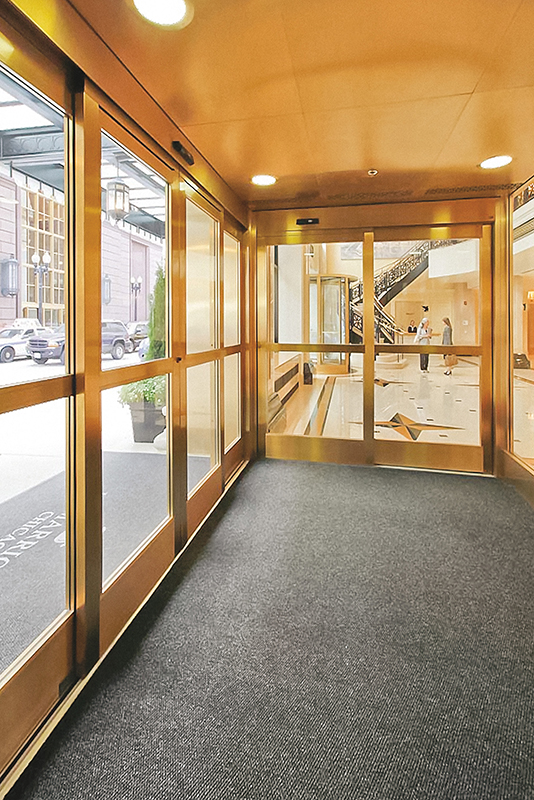
gold door entry way

Can I Convert My Manual Door to an Automatic Door?

Many property owners ask the same question when looking to modernize their facilities. Can I convert my manual door to automatic? The answer is often yes. In many cases, businesses can upgrade existing doors without replacing the entire entry system. The ability to convert a manual door to an automatic system allows building owners to improve accessibility, convenience, and hygiene while avoiding the higher costs of full door replacement.

Retrofit solutions make it possible to update older buildings quickly and efficiently. Instead of tearing out an existing entryway, specialists can modify the current door with advanced operators that automate the opening and closing process. This approach provides modern functionality while preserving the structure and appearance of the original doorway.

For commercial properties, healthcare facilities, offices, and retail spaces, automatic door conversions have become increasingly popular. They create smoother traffic flow, improve accessibility for people with mobility challenges, and help support touchless entry solutions that many businesses now prioritize.

Why Convert a Manual Door to an Automatic Door?

Retrofitting existing doors offers several benefits for businesses that want to modernize their entryways without extensive construction.

Improved Accessibility

Automatic doors significantly improve accessibility for customers, employees, and visitors. Individuals using wheelchairs, walkers, or other mobility aids can enter and exit more easily when doors open automatically.

Many commercial facilities also need to meet accessibility guidelines. Automatic doors can help buildings align with accessibility requirements and provide inclusive entry for everyone.

Greater Convenience for High Traffic Spaces

In busy environments such as hospitals, office buildings, and retail stores, people frequently enter while carrying items. Automatic doors eliminate the need to push or pull heavy doors, creating a smoother and faster experience.

Common locations that benefit from automation include:

  • Medical facilities and clinics
  • Retail stores and shopping centers
  • Office buildings
  • Restaurants and hospitality venues
  • Educational institutions

Enhanced Hygiene and Touchless Entry

Non-contact entry solutions have become increasingly important in recent years. Automatic doors allow users to enter without touching handles or push plates.

Touchless operation can be achieved through:

  • Motion sensors
  • Wave-to-open sensors
  • Touchless activation switches
  • Remote access controls

These systems help reduce the spread of germs and create a cleaner environment for employees and customers.

Cost-Effective Modernization

Replacing an entire door system can be expensive and disruptive. Retrofitting allows businesses to keep their existing door while upgrading it with an automated operator.

Benefits of retrofit automation include:

  • Lower installation costs
  • Faster project timelines
  • Minimal disruption to operations
  • Preservation of existing architectural elements

In many cases, the conversion process can be completed in just a few hours.

How Manual Doors Are Converted to Automatic

The process of converting a manual door into an automatic one typically involves installing an operator that controls the door’s movement. These operators can be integrated into existing doors and frames without major structural changes.

A professional technician will evaluate several factors before recommending the appropriate system, including:

  • Door size and weight
  • Traffic volume
  • Interior or exterior placement
  • Existing door hardware
  • Safety and accessibility requirements

Once the correct operator is selected, the technician installs the system and connects it to sensors or activation devices. The result is a door that opens and closes automatically while maintaining safe and reliable operation.

Choosing the Right Door Operator

Selecting the right operator is critical to ensuring reliable performance over time. Door closers and operators in commercial settings must withstand frequent use and varying conditions.

High-traffic environments require durable equipment that can handle constant operation. In these situations, door closers made from strong materials such as cast iron are commonly used because they can withstand heavy-duty workloads.

However, not every door requires the same level of durability.

For areas with lower traffic volumes, lighter-duty equipment may be appropriate. These options often cost less while still delivering dependable performance. Even for lighter-duty doors, reliability remains essential. Operators should be tested for long-term cycle performance to ensure consistent functionality.

When selecting a door operator, technicians typically evaluate:

  • Traffic frequency
  • Door weight and size
  • Environmental exposure
  • Accessibility requirements
  • Long-term durability needs

A qualified professional can help determine the best solution for each specific application.

Types of Automatic Door Operators

There are several types of operators used when converting manual doors to automatic systems. The right option depends on the door design, aesthetic requirements, and functional needs of the building.

Surface Applied Operators

Surface-applied operators are the most commonly used solution for retrofitting manual doors.

These operators are mounted on the top of the door frame and remain visible after installation. While they are exposed, they are designed to blend with the surrounding hardware and provide dependable performance.

Key characteristics include:

  • Mounted on the door frame surface
  • Typically installed on the interior side for exterior doors
  • Cost-effective automation option
  • Widely used in commercial buildings

Because of their straightforward installation and affordability, surface-applied operators are often the preferred solution when upgrading existing manual doors.

Overhead Concealed Door Operators

Overhead concealed operators provide a more discreet appearance by hiding the mechanism within the door frame or structure.

These systems are frequently used in aluminum storefront glass doors where maintaining the visual design of the entryway is important.

Unlike traditional surface-mounted closers, concealed operators remain hidden from view, allowing the building’s architectural style to remain unchanged.

Advantages include:

  • Hidden hardware for a clean appearance
  • Ideal for glass storefront doors
  • Preserves architectural aesthetics
  • Maintains a professional storefront design

While concealed operators often involve more complex installation, they are an excellent option for buildings where visual presentation is a priority.

Safety Standards and Industry Compliance

Automatic door systems must meet strict safety and performance standards to ensure reliable operation and protect users.

One of the most important organizations in this industry is the American Association of Automatic Door Manufacturers (AAADM). The AAADM develops guidelines for the safe installation, inspection, and maintenance of automatic door systems.

Working with professionals who follow AAADM standards ensures that your door automation system meets industry safety requirements.

AAADM compliance typically includes:

  • Proper sensor placement
  • Safe opening and closing speeds
  • Regular inspection and maintenance
  • Certification for installers and technicians

Routine inspections and maintenance are essential for keeping automatic doors operating safely and efficiently.

When Retrofitting Is the Best Solution

Not every building requires a full door replacement. In many cases, retrofitting an existing door provides the ideal balance of cost efficiency and modern performance.

Retrofit solutions are especially useful for:

  • Older buildings with functional doors
  • Facilities undergoing accessibility upgrades
  • Businesses seeking touchless entry solutions
  • Buildings that want to preserve architectural design

With the right equipment and professional installation, converting a manual door can significantly enhance the functionality of an existing entryway.

The Growing Demand for Touchless Entry

In recent years, businesses have increasingly prioritized contact-free access systems. Automatic doors are a key part of this trend.

Touchless technology helps create safer environments in places where many people pass through each day.

Common non-contact door solutions include:

  • Motion sensor activation
  • Wave to open technology
  • Smartphone access integration
  • Automatic sliding door systems

These technologies are becoming standard in healthcare environments, commercial buildings, and public spaces.

Frequently Asked Questions

Can any manual door be converted to automatic?

Many manual doors can be converted using retrofit operators. A professional assessment is required to determine whether the existing door frame and hardware are suitable for automation.

How long does it take to convert a manual door?

In many cases, installing a swing door operator can be completed within a few hours. More complex installations may take longer depending on the building structure and door type.

Are automatic doors safe?

Yes. When installed according to AAADM guidelines, automatic doors include sensors and safety features that prevent accidents and ensure smooth operation.

Are automatic doors energy efficient?

Modern automatic door systems are designed to meet energy compliance standards. Many systems include adjustable opening speeds and closing timers that help reduce energy loss.

Can automatic doors be touchless?

Yes. Many automatic doors use motion sensors or wave sensors that allow users to enter without touching the door.

Upgrade Your Entryway with Door Automation Corporation

If you are considering upgrading your building entrance, converting your existing doors may be the perfect solution. Door Automation Corporation specializes in retrofitting commercial spaces with reliable automatic door systems that improve convenience, accessibility, and safety.

Our team provides solutions for convenient access to commercial spaces. We install and service automatic and manual swing, slide, and revolving doors using industry-leading products that ensure functional, dependable, and secure entryways.

Door Automation Corporation also offers modern modifications that enable non-contact door operation, which has become increasingly important for businesses following COVID-19 safety practices.

In addition to retrofit solutions, we install new automatic doors that meet standard automated door energy compliance requirements. Our company works closely as design consultants with many of the top architectural firms in New York City to develop entryway solutions that balance functionality, safety, and aesthetics.

Whether you need to upgrade an existing door or install a brand-new automated entry system, our skilled professionals are ready to help.

Contact us to learn more about how we can help you modernize your building with reliable automatic door solutions. Our experienced team is here whenever you need expert support for your commercial entryway systems.