Posts made in April 2026

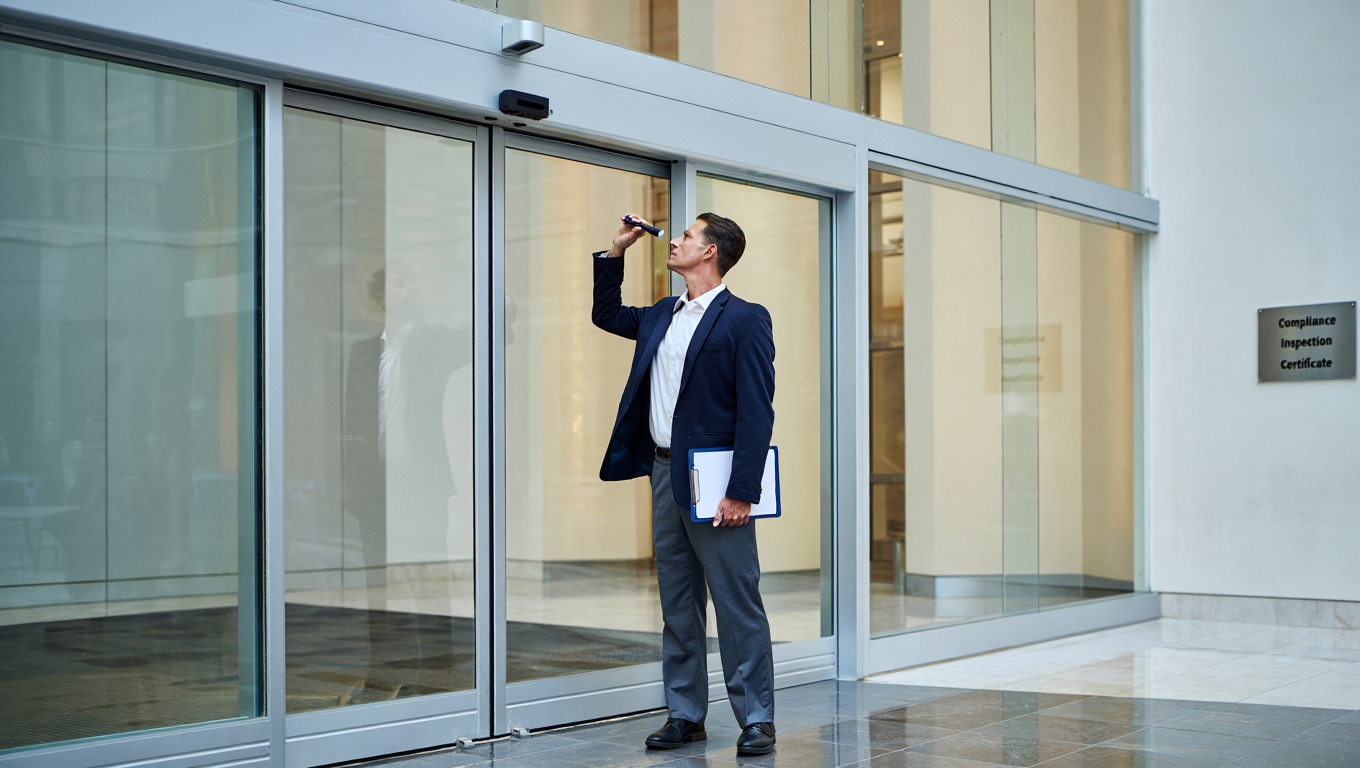
AAADM Inspection by a guy in a suit in front of a building

Why Glass Selection Matters for Automatic Doors

When planning or upgrading an entry system, many property owners focus on the door configuration first, but the glass itself deserves equal attention because of automatic door glass requirements. The right glass helps doors perform smoothly in busy environments while supporting the design of the building and protecting the people who use it.

Automatic doors are used in office buildings, healthcare facilities, hotels, retail centers, schools, airports, and many other commercial spaces. Because these doors often serve as the first point of contact for visitors, their appearance matters. Just as importantly, they must stand up to frequent operation, pedestrian traffic, environmental exposure, and safety expectations. Glass plays a central role in all of these areas. A poor glass choice can lead to breakage, vibration, noise, reduced energy performance, and safety concerns. A smart glass choice supports long-term function and strengthens the overall entrance system.

Why glass is a critical part of an automatic door system

Glass is not simply an insert within a door. It is one of the core components that affects how the door looks, moves, and performs over time. In commercial settings, doors must balance convenience, code compliance, accessibility, and architectural design. The glass contributes to each of these priorities.

From a performance perspective, quality glass helps maintain structural integrity and smooth movement. Doors that open and close repeatedly throughout the day need materials that can resist impact, limit energy loss, and stay properly aligned. Glass that is poorly matched to the application may flex too much or place stress on fittings and hardware.

From a design perspective, glass strongly influences the look of an entrance. Clear, tinted, frosted, or low-iron glass can create very different impressions. The transparency, color tone, and finish affect how welcoming, modern, or private a space feels. For many commercial buildings, doors are meant to blend seamlessly into a carefully designed facade. The glass choice helps create that architectural harmony.

From a safety perspective, the correct glass can reduce the risk of injury if a panel is struck or damaged. In automatic door systems, especially those in high-traffic environments, safety glass is essential. This is one reason manufacturers, installers, and building owners must pay close attention to applicable standards and best practices.

The role of glass in safety, performance, and aesthetics

Choosing high-quality glass allows an automatic door to perform the way it should while also complementing the surrounding architecture.

Safety

Safety is one of the main reasons glass selection matters so much. Automatic doors are used by employees, customers, patients, deliveries, and visitors of all ages and abilities. The glass must be able to withstand normal contact and occasional impact. Properly selected safety glass helps reduce the chance of dangerous breakage. It also contributes to user confidence, especially in spaces where doors operate continuously and quickly.

Performance

The wrong glass can compromise the performance of the door system. Glass that is too thin or not suited for the traffic level can vibrate during operation, create noise, and increase wear on surrounding components. Over time, this may affect door alignment, movement quality, and service life. Selecting the proper thickness and type helps support stable movement and dependable daily use.

Aesthetics

The visual effect of automatic doors should not be overlooked. Entrances shape first impressions, and glass has a major influence on how the building is perceived. Bright, clean, well-chosen glass can make an entryway feel open, modern, and professional. Specialty finishes can support privacy or branding while still maintaining a polished appearance. Even subtle details, such as the clarity and tone of the glass, can elevate the overall impression of the property.

Risks of choosing the wrong type of glass

Selecting the wrong glass can create problems that go far beyond appearance.

One major risk is breakage. Glass that is too thin or not rated as safety glass may crack or shatter when exposed to impact. In busy commercial areas, this creates a serious hazard for pedestrians and staff. High-traffic entrances demand materials that are specifically suited for repeated use and contact.

Another issue is operational instability. Low-grade or mismatched glass may vibrate excessively while the door moves. This vibration can produce distracting noise, reduce the sense of quality, and contribute to wear on the operator, fittings, and framing components. What begins as a small issue can lead to maintenance concerns over time.

Another issue is the transfer of energy. Glass is a major component of the building envelope and a significant source of energy loss or gain. Energy transfer through glass is governed by three key metrics: 

  • U-Factor: Measures heat transfer rate; lower values mean better insulation. For climate zones 4–7, U-Factor 0.30 is often required. 
  • Solar Heat Gain Coefficient (SHGC): Fraction of solar radiation admitted; lower SHGC reduces cooling loads in hot climates, higher SHGC can help in cold climates. 
  • Visible Transmittance (VT): Measures daylight penetration; balances lighting needs with solar control. Improper glass selection can lead to letting too much hot or cool temperatures permeate into or out of a building. 

Improper glass selection can also shorten the lifespan of the overall entrance system. If the glass is too heavy, too thin, or incompatible with the hardware, the door may experience alignment issues or increased strain. This can lead to service interruptions, more frequent repairs, and avoidable replacement costs.

There is also the issue of visual inconsistency. If the glass does not suit the building’s architectural style, the entrance may appear outdated or disconnected from the rest of the property. Since commercial doors are both functional and visible, the wrong glass can affect curb appeal just as much as performance.

Key factors that affect durability in automatic door applications

Durability in automatic doors depends on more than glass alone, but the glass choice is a foundational factor. Several elements should be evaluated when selecting glass for a commercial automatic door system.

Thickness

Glass thickness has a direct impact on strength, stability, and suitability for the door type. Thicker glass is often necessary in heavy-use settings or larger door systems. If the glass is too thin for the application, it may be more vulnerable to impact, vibration, and long-term fatigue.

Manufacturing quality

Not all glass is made to the same standard. High manufacturing quality improves flatness, consistency, and resistance to defects that could affect appearance or performance. Commercial automatic doors benefit from glass that is fabricated with precision and intended for demanding use.

Impact resistance

Automatic doors in commercial spaces encounter a wide range of daily stresses. People may push carts through them, carry packages near them, or accidentally strike them. Impact resistance matters, especially at entrances with constant traffic.

Heat tolerance and environmental exposure

Automatic doors are often exposed to sunlight, temperature shifts, humidity, and seasonal weather conditions. The selected glass must perform well in the specific environment. In some cases, thermal considerations are especially important for energy efficiency and long-term resilience.

Compatibility with hardware and framing

The glass must work properly with the surrounding system. Frames, clamps, gaskets, rails, and fittings all need to be matched to the glass type and thickness. Even excellent glass can underperform if it is paired with incompatible hardware. Proper integration helps prevent misalignment, stress points, and premature breakage.

Tempered glass and why it is so commonly used

Tempered glass is one of the most popular materials for doors, and for good reason. It is significantly stronger than standard glass and is well-suited to commercial environments where entrances need to perform consistently and safely.

Tempered glass is heat-treated to increase its strength and durability. This makes it more resistant to impact and daily wear. It also offers a clean, flat, attractive appearance that works well in a wide range of commercial designs, from sleek storefronts to corporate lobbies.

Another important advantage is its break pattern. When tempered glass breaks, it shatters into small, rounded pieces rather than large, sharp shards. While any glass breakage is a serious issue, this characteristic can reduce the risk of severe injury compared to ordinary glass. That said, proper selection and installation are still vital. Tempered glass is not a one-size-fits-all answer. The thickness, application, framing, and traffic conditions still need to be carefully evaluated.

How aesthetics influence glass selection

Safety and durability are essential, but appearance still matters. Commercial doors are part of the building’s identity. The right glass can reinforce a modern, professional image and create a more inviting entrance for customers, clients, and visitors.

Property owners and designers may consider:

  • Transparency level for openness and visibility 
  • Tint or color tone to complement the exterior facade 
  • Frosted or decorative finishes for privacy and style 
  • Clarity and reflectivity for a polished, high-end look 
  • Consistency across the entrance system for a cohesive design 

In many cases, the best glass is the one that balances visual appeal with the practical demands of daily use. A beautiful entrance should still function smoothly and safely year after year.

Why long-term value matters

The lowest upfront price does not always lead to the best result. Investing in the right glass can lower maintenance needs, improve user safety, reduce noise and vibration, and preserve the visual quality of the entrance. Over time, these benefits can translate into better operational efficiency and a stronger return on investment.

A high-quality entrance system can also support broader goals, such as accessibility, energy performance, and a more professional tenant or customer experience. Since automatic doors are used every day, even small improvements in durability and function can make a meaningful difference.

FAQ

What type of glass is most commonly used for doors?

Tempered glass is one of the most common choices because it offers strong impact resistance, a clean appearance, and a safer break pattern than standard glass.

Why is safety glass important in automatic doors?

Safety glass helps reduce the risk of serious injury if the glass is damaged. This is especially important in commercial spaces with high pedestrian traffic.

Can the wrong glass affect door performance?

Yes. Glass that is too thin, low quality, or incompatible with the system can cause vibration, noise, alignment issues, and faster wear on door components.

Does glass choice affect the appearance of a building?

Absolutely. The clarity, tint, finish, and overall quality of the glass have a major impact on how modern, welcoming, and cohesive the entrance looks.

Should glass selection be based only on appearance?

No. Appearance matters, but safety, durability, traffic level, hardware compatibility, and long-term performance are all essential factors.

Choose a trusted partner for safe and attractive entryways

Selecting the right glass for a door is about more than style. It is a decision that affects safety, performance, durability, accessibility, and the overall impression of your property. The right material can help your entrance operate smoothly, protect building occupants, and support a polished, professional look that lasts.

For expert guidance and dependable entry solutions, turn to Door Automation Corporation. We provide solutions for convenient access to commercial spaces, including automatic and manual, swing, slide, and revolving doors. Our reliable professionals work with industry-leading products to deliver functional, dependable, and secure entryways. As non-contact access solutions continue to be the new normal due to COVID-19, we can provide modifications for non-contact door operation as well as new automatic doors that follow standard automated door energy compliance. We also work closely as design consultants with many of the top architectural firms in New York City. Whether you need a new system, an upgrade, or expert support, our skilled team is here when you need us. Contact us today to learn more.
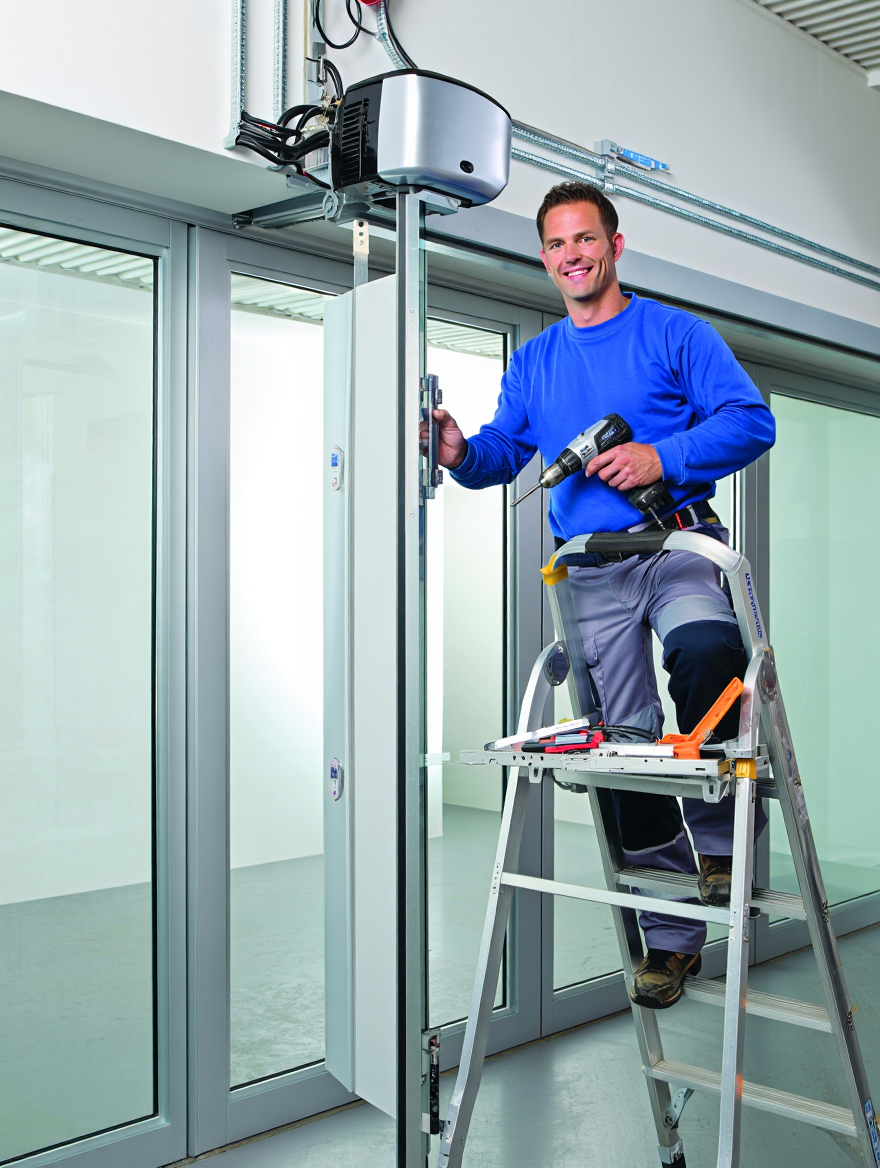
automatic door being repaired by Door Automation employee

Automatic Door Repair vs. Replacement: Which Makes Sense?

When a commercial entry system starts showing signs of wear, business owners and facility managers often face the same question: automatic door repair vs. replacement. The answer depends on more than the immediate price tag. It involves the age of the system, safety requirements, energy performance, reliability, and the long-term needs of the property. For decision-makers responsible for protecting budgets and maintaining smooth access, the right choice is the one that balances short-term practicality with lasting value.

Automatic doors play a major role in how people experience a building. They affect accessibility, convenience, first impressions, traffic flow, and security. In busy commercial environments, even a minor malfunction can disrupt operations, frustrate visitors, and create liability concerns. That is why deciding whether to repair or replace a system should never be based on cost alone. A door that appears fixable today may continue to generate repair bills, downtime, and compliance risks tomorrow. On the other hand, a targeted repair may be the most efficient solution when the system is otherwise sound.

This guide explains how to evaluate the decision with confidence and what factors matter most when choosing between repair and replacement.

Automatic Door Repair vs. Replacement Explained

The debate around automatic door repair vs. replacement comes down to the condition of the current system and the goals of the property owner. Repair generally focuses on restoring function by addressing a specific issue, such as a faulty sensor, worn motor component, damaged track, or inconsistent opening cycle. Replacement involves removing the old door or operator system and installing a newer solution that better meets present-day performance, safety, and compliance expectations.

Repair is often the right first step when the underlying system is still in good shape. If the problem is isolated, replacement parts are available, and the door can continue to operate safely after service, repairing the unit may be the most economical decision. This is especially true for newer doors or systems that have been properly maintained over time.

Replacement becomes more attractive when problems are recurring, parts are obsolete, or the current system no longer supports the demands of the building. Older automatic doors can become increasingly expensive to keep running. They may also lack modern features that improve safety, reduce touchpoints, increase energy efficiency, and support smoother daily traffic.

A smart decision begins with asking several practical questions:

  • Is the issue isolated or part of a larger pattern? 
  • How old is the system? 
  • Are parts readily available? 
  • Is the door meeting current safety and access expectations? 
  • Does the cost of ongoing repairs approach the value of a new system? 
  • Would a replacement improve building performance, user experience, or code compliance? 

The American Association of Automatic Door Manufacturers, commonly known as AAADM, plays an important role in this discussion. AAADM helps set standards and promotes safe installation, inspection, and service practices for automatic door systems. For commercial decision-makers, that matters because safety and compliance should be part of every repair or replacement decision. A door that functions inconsistently or no longer aligns with recognized industry standards may expose the property to unnecessary risk.

Automatic door repair vs. replacement for aging systems

Age is one of the clearest signals in the repair versus replacement decision. Like any mechanical system, automatic doors have a useful service life. As systems age, components wear out, electronic controls become outdated, and the door may struggle to operate as smoothly or efficiently as it once did.

An aging system can still be a candidate for repair if it has been well maintained and the problem is limited to a replaceable component. For example, replacing a sensor, control board, roller, or activation device may restore reliable operation without the need for a full system upgrade.

However, older systems often come with hidden drawbacks. Parts may be harder to source. Repairs may take longer. Compatibility between old and new components can become a challenge. In many cases, an older automatic door still works, but not at a level that supports current building traffic, accessibility expectations, or non-contact entry preferences.

Replacement often makes more sense for aging systems when:

  • Repair needs are becoming more frequent 
  • Downtime is affecting business operations 
  • The door lacks modern safety features 
  • Energy loss through the entrance is increasing costs 
  • The appearance of the entry no longer matches the image of the property 

In high-traffic commercial spaces, waiting too long to replace an outdated system can lead to greater disruption later. A proactive replacement strategy is often easier to budget for than repeated emergency service calls.

Factors That Influence Repair or Replacement Decisions

Every property has unique demands, so there is no universal rule that applies to every automatic door system. The best decisions are made by evaluating the full operational picture rather than reacting only to the latest breakdown.

One major factor is the type of property. Hospitals, office buildings, retail centers, schools, hotels, and mixed-use properties all place different demands on entry systems. A door in a low-traffic office entrance may have years of useful life left after a modest repair. A door in a busy healthcare or retail environment may need replacement sooner because the stakes for downtime, hygiene, and high-volume access are much greater.

Another important factor is traffic level. Doors that open hundreds or thousands of times each day experience more wear and tear than those with lighter use. Even if the visible damage seems minor, internal components may be approaching failure after years of heavy cycling.

Decision-makers should also consider occupant expectations. Today, people expect commercial entries to be convenient, dependable, and accessible. They also increasingly value non-contact access options. Following the COVID-19 pandemic, many businesses began rethinking how doors function in public and shared environments. Touchless activators and non-contact modifications are now viewed as practical upgrades rather than optional extras.

Replacement can be the better investment when it supports improvements such as:

  • Non-contact operation 
  • Better accessibility 
  • Smoother and quieter performance 
  • Improved appearance at the entrance 
  • Greater compatibility with building updates 
  • Stronger energy compliance performance 

The availability of experienced service professionals also matters. An accurate assessment by trained technicians can reveal whether repair is a cost-effective fix or only a temporary patch.

Frequency of breakdowns and downtime

One of the strongest indicators that replacement may be necessary is how often the system fails. A single repairable issue is one thing. Repeated malfunctions that interrupt access, create delays, or require emergency calls are something else entirely.

Frequent breakdowns do more than add service costs. They also create indirect costs that are easy to overlook. Staff time may be lost responding to access problems. Customers or visitors may form a negative impression. Accessibility may be compromised. Building operations can slow down when a key entrance is unavailable.

When evaluating downtime, consider the following:

  • How often has the door required service in the past 12 to 24 months? 
  • Are the same issues returning after repair? 
  • How long is the entrance out of service each time? 
  • Is the malfunction affecting customer flow, deliveries, or employee access? 
  • Are temporary fixes becoming the norm? 

A useful rule of thumb is that repeated repairs within a relatively short period often signal that the system is nearing the point where replacement is more cost-effective. Even if each individual repair seems manageable, the cumulative cost of labor, parts, delays, and inconvenience can quickly add up.

For commercial properties where entry access is mission-critical, reliability is not optional. A dependable entrance system protects daily operations and reduces the risk of unexpected interruptions.

Cost, Safety, and Performance Considerations

Most commercial decision-makers begin with cost, and that is understandable. Budget pressures are real. But the most affordable option on paper is not always the least expensive over time. The better question is not simply, “What costs less today?” but rather, “What delivers the strongest long-term value?”

Repair typically has a lower upfront cost. If the issue is straightforward and the rest of the system is in good condition, a repair can extend the life of the door and delay capital spending. That makes repair attractive for relatively new systems or one-time failures.

Replacement generally requires a larger investment upfront, but it can reduce long-term operating expenses in meaningful ways. Newer systems often offer better reliability, improved safety technologies, stronger energy efficiency, and better compatibility with current design and compliance requirements. In many cases, replacement can also reduce the frequency of future service needs.

When comparing costs, decision-makers should weigh both direct and indirect factors:

  • Immediate repair cost versus replacement cost 
  • Frequency of future service needs 
  • Availability and cost of replacement parts 
  • Labor costs over time 
  • Impact of downtime on operations 
  • Energy performance of the entrance system 
  • Risk exposure related to safety or compliance issues 

Safety should carry significant weight in the evaluation. Automatic doors are high-use access points, and any inconsistency in operation can increase the risk of injury or liability. Doors that open or close unpredictably, fail to detect pedestrians properly, or operate with worn components should be assessed promptly. AAADM guidelines and inspections provide valuable direction for maintaining safer automatic door systems, and they can help property owners identify whether a system remains fit for continued use.

Performance also matters from a user experience standpoint. A slow, noisy, unreliable, or outdated entry system reflects on the property as a whole. Whether the building serves customers, patients, tenants, or employees, the entrance shapes the first impression.

Compliance and safety upgrade needs

Compliance requirements and safety expectations continue to evolve, which is why older systems may become poor candidates for long-term repair. Even if an aging automatic door still works, it may not support the safety features, activation methods, or performance standards that commercial properties now need.

This is especially important in buildings where accessibility and public safety are critical. A system that no longer aligns with current operational needs can expose owners and managers to risk. Replacement may be the smarter investment when it allows the property to move closer to current standards and improve peace of mind.

Common reasons to replace for compliance or safety purposes include:

  • Outdated sensors or activation devices 
  • Inconsistent opening and closing speeds 
  • Poor pedestrian detection 
  • Limited support for non-contact operation 
  • Insufficient energy performance 
  • Difficulty meeting inspection expectations 

In some cases, a repair combined with selective upgrades may be enough. In others, piecemeal improvements only prolong the life of a system that should be replaced altogether. A comprehensive evaluation can determine which path creates the safest and most cost-effective result.

For many commercial properties, the move toward non-contact entry is a major factor. Touchless solutions help create more convenient, hygienic access and reflect changing user expectations. When a property is already considering major repairs, it may be the right time to evaluate whether a replacement system with integrated non-contact capability would provide greater value.

FAQ

How do I know if my automatic door should be repaired or replaced?

Start with the system’s age, service history, and current condition. If the issue is isolated and the rest of the door is functioning well, repair may be the right choice. If breakdowns are frequent, parts are obsolete, or safety and compliance concerns are growing, replacement is often the better long-term investment.

Is repairing an automatic door always cheaper than replacing it?

Not always. Repair usually costs less upfront, but repeated repairs can become more expensive over time. When maintenance costs, downtime, and reliability issues continue to add up, replacement may save more in the long run.

How long do automatic door systems typically last?

Service life varies based on usage, maintenance, and the type of system installed. High-traffic commercial doors wear faster than lightly used systems. Regular inspections and maintenance can help extend lifespan, but older systems often become less cost-effective to maintain.

Why is AAADM important for automatic doors?

AAADM promotes safety standards and best practices for automatic door systems. Their guidance helps property owners, managers, and service providers evaluate door performance, inspections, and safe operation.

Can older doors be upgraded for non-contact operation?

In some cases, yes. Existing systems can sometimes be modified with non-contact activation devices or other updates. However, if the underlying system is outdated or unreliable, replacing it may be the more practical option.

Does replacement improve energy efficiency?

It can. New automatic doors may better support current energy compliance expectations and reduce air exchange at entrances. This can contribute to improved comfort and lower operating costs in some commercial spaces.

What types of commercial doors can be repaired or replaced?

Many systems can be serviced or upgraded, including automatic and manual, swing, slide, and revolving doors. The best solution depends on the building layout, traffic patterns, and operational goals.

Make the Right Long-Term Choice with Door Automation Corporation

Choosing between repair and replacement is easier when you have a knowledgeable partner evaluating the full picture. At Door Automation Corporation, we provide solutions for convenient access to commercial spaces with automatic and manual, swing, slide, and revolving doors. Our reliable professionals work with industry-leading products to deliver functional, dependable, and secure entryways tailored to your property. We also provide modifications for non-contact door operation, new automatic doors that follow standard automated door energy compliance, and expert support backed by close collaboration with many of the top architectural firms in New York City. Whether you need a targeted repair, a system upgrade, or a full replacement, our skilled team is here when you need us. Contact us today to discuss the right entry solution for your commercial space.