

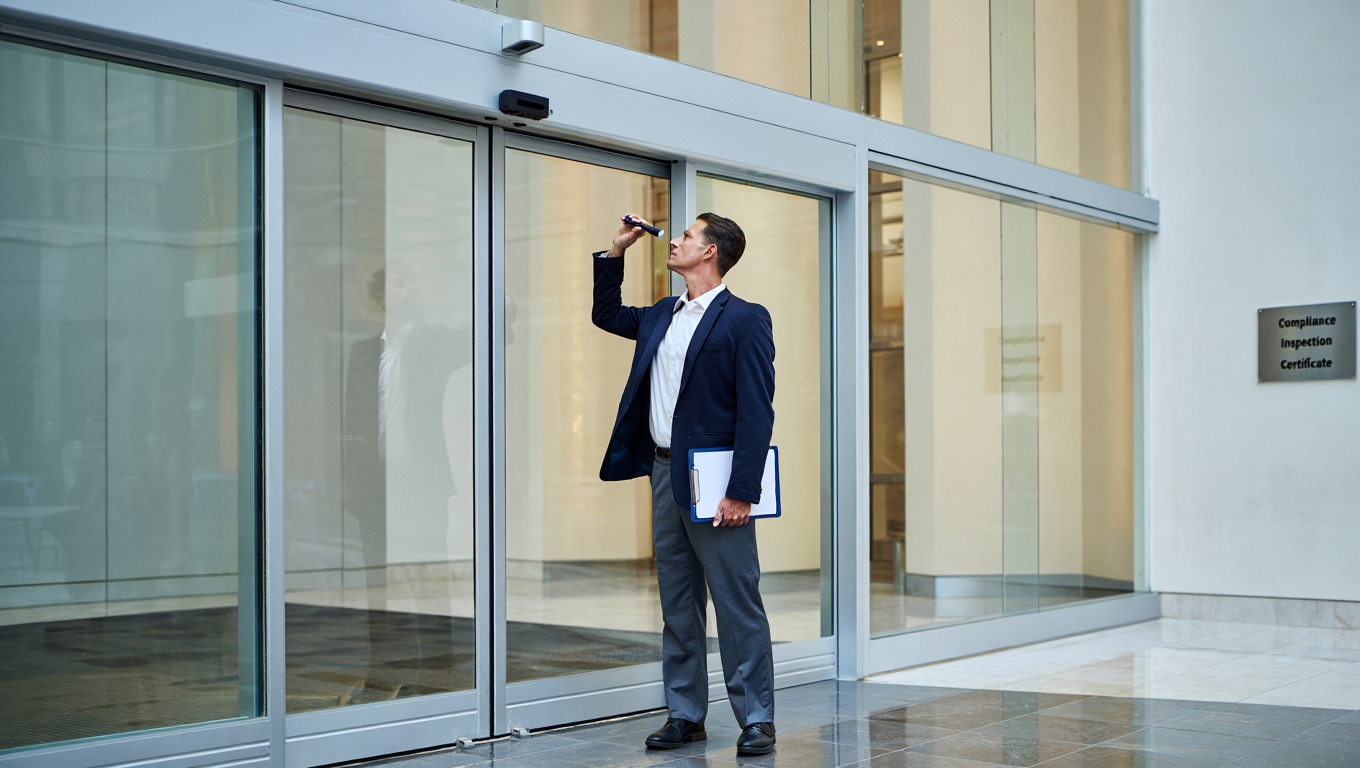
Automatic doors are essential components of modern commercial buildings. They provide accessibility, improve traffic flow, enhance safety, and contribute to energy efficiency. For facility managers, maintaining these systems is a critical responsibility. Implementing an effective automatic door maintenance checklist helps ensure smooth operation, reduces unexpected breakdowns, and extends the lifespan of the equipment.
Commercial automatic doors experience heavy daily use in environments such as hospitals, retail centers, office buildings, and transportation hubs. Without routine maintenance, components can wear out, sensors may malfunction, and safety risks can increase. Establishing a structured maintenance routine allows facility managers to detect potential issues early while maintaining compliance with industry standards such as those recommended by the American Association of Automatic Door Manufacturers (AAADM).
This guide provides a practical step-by-step approach to maintaining automatic doors, highlighting the most important inspection points, routine checks, and situations that require professional service.
Automatic Door Maintenance Checklist for Commercial Buildings
Facility managers should follow a systematic checklist to ensure automatic doors remain safe, reliable, and compliant with safety standards. Routine inspections help identify minor issues before they become costly repairs or operational failures.
A comprehensive automatic door maintenance program should include the following steps.
Visual Inspection
Begin with a thorough visual inspection of the door system.
Check for the following:
- Cracked or damaged glass panels
• Loose framing or mounting hardware
• Obstructions in the door track
• Unusual gaps between door panels
• Signs of corrosion or wear on metal components
Visible damage can indicate deeper mechanical problems that require attention.
Test Door Operation
Observe how the door functions during normal use.
Look for signs such as:
- Slow opening or closing speed
• Jerky or uneven movement
• Grinding or unusual noises
• Doors that fail to fully open or close
These symptoms often indicate issues with the operator, track system, or motor components.
Verify Safety Features
Automatic doors are required to include safety features designed to prevent accidents.
Test:
- Motion sensors
• Presence sensors
• Safety beams
• Emergency stop functions
Doors should stop or reverse when a person or object is detected in the closing path.
Check Signage and Accessibility
Accessibility compliance is an important part of automatic door maintenance.
Ensure:
- Required safety signage is clearly visible
• Push plates or activation switches are properly labeled
• Doors comply with ADA accessibility standards
Following AAADM guidelines helps maintain safety and regulatory compliance.
Key Components That Require Routine Door Maintenance
Automatic doors consist of several mechanical and electronic components that must function together properly. Regular inspection of these parts ensures optimal performance and safety.
Door Panels and Tracks
Sliding doors rely on smooth track movement to function properly.
Inspect for:
- Dirt and debris accumulation
• Track misalignment
• Worn rollers or guides
Clean tracks regularly and remove debris that could interfere with door movement.
Door Operators
The operator is the motorized system that controls door movement.
Maintenance tasks include:
- Checking motor performance
• Inspecting belts or drive mechanisms
• Ensuring the operator cover is secure
Unusual noise or vibration may indicate a worn component that needs replacement.
Sensors and Detection Systems
Automatic doors depend on sensors to detect motion and prevent collisions.
Check that sensors:
- Detect approaching users consistently
• Activate the door promptly
• Prevent doors from closing when someone is in the doorway
Faulty sensors are one of the most common causes of automatic door safety issues.
Activation Devices
Activation hardware includes push plates, touchless sensors, and access control devices.
Inspect these components to ensure they:
- Respond immediately to user input
• Remain securely mounted
• Communicate properly with the door operator
As non-contact access becomes more common in commercial spaces, properly functioning activation devices are essential.
How Preventive Maintenance Reduces Downtime and Risk
Preventive maintenance plays a major role in maintaining safe and efficient building operations. Automatic doors that receive regular inspections and servicing experience fewer unexpected failures.
Key benefits include:
Improved Safety
Automatic doors that malfunction can create hazards such as sudden closing or failure to detect pedestrians.
Routine inspections help ensure safety systems operate as intended.
Reduced Repair Costs
Minor mechanical problems are much less expensive to fix than major component failures.
Preventive maintenance helps identify small issues before they escalate.
Longer Equipment Lifespan
Commercial automatic doors represent a significant investment. Proper maintenance can significantly extend the life of motors, sensors, and mechanical parts.
Compliance with Industry Standards
Organizations such as the American Association of Automatic Door Manufacturers (AAADM) provide guidelines that promote safe door operation. Regular inspections help maintain compliance with these standards.
Automatic door maintenance checklist for daily and weekly checks
Daily and weekly inspections allow facility staff to catch potential issues early.
Daily Checks
Perform quick operational checks during regular building walkthroughs.
Daily tasks include:
- Confirm the door opens smoothly when activated
• Check that sensors detect approaching users
• Ensure doors close completely after use
• Look for visible damage or obstructions
• Verify push plates or activation switches work properly
These simple checks take only a few minutes but can prevent operational disruptions.
Weekly Checks
Weekly inspections should be slightly more detailed.
Include the following:
- Clean tracks and remove debris
• Wipe sensor lenses to maintain accuracy
• Inspect door alignment and panel movement
• Test safety stop and reversal functions
• Listen for unusual sounds during operation
Documenting inspection results helps track system performance over time.
Sensors, operators, and activation hardware inspections
More detailed inspections should be conducted periodically to evaluate the performance of the door’s core components.
Sensor Testing
Sensors should detect people approaching the door from both directions.
Test the system by:
- Approaching the door from different angles
• Standing in the doorway to ensure the door does not close
• Checking response time when entering the sensor field
If sensors respond slowly or inconsistently, recalibration or replacement may be necessary.
Operator System Inspection
Inspect the operator unit for signs of mechanical wear.
Key inspection points include:
- Motor condition
• Belt or chain tension
• Mounting brackets
• Electrical connections
Loose connections or worn belts can cause inconsistent door movement.
Activation Hardware Check
Activation systems have evolved to include touchless technologies and access control integrations.
Inspect:
- Push plates and wall switches
• Card readers or access devices
• Touchless wave sensors
• Wireless activation components
Ensure all devices trigger the door correctly and communicate with the operator.
When professional automatic door service is required
While facility teams can perform basic inspections, certain situations require professional technicians with specialized training.
Professional service should be scheduled when:
- Doors fail safety compliance tests
• Sensors stop detecting users properly
• The door operator motor begins malfunctioning
• Structural components show signs of significant wear
• Electrical issues or wiring faults are detected
Technicians trained according to AAADM standards understand the complex safety requirements associated with automatic doors. Regular professional inspections ensure systems remain compliant and reliable.
Annual safety inspections conducted by certified professionals are strongly recommended for commercial buildings.
Frequently Asked Questions
How often should automatic doors be inspected?
Automatic doors should receive daily visual checks, weekly operational inspections, and at least one comprehensive professional inspection each year.
What causes most automatic door failures?
Common causes include sensor misalignment, debris in door tracks, worn operator components, and electrical issues.
Are automatic doors required to follow safety standards?
Yes. Industry guidelines established by the American Association of Automatic Door Manufacturers help ensure automatic doors operate safely and reliably.
Can facility staff perform automatic door maintenance?
Facility teams can perform basic inspections and cleaning. However, complex mechanical or electrical repairs should always be handled by trained professionals.
Why are touchless automatic doors becoming more common?
Touchless door activation reduces the spread of germs and improves convenience. Many commercial facilities adopted non-contact door solutions after COVID 19 to enhance safety and accessibility.
Keep Your Entryways Reliable with Door Automation Corporation
Automatic doors play a critical role in providing safe and convenient access to commercial spaces. Following a detailed maintenance routine helps facility managers maintain performance, reduce downtime, and extend the lifespan of their systems.
When professional expertise is required, Door Automation Corporation is ready to help. Our team provides reliable solutions for automatic and manual swing, slide, and revolving doors across commercial environments. We work with industry-leading products to deliver functional, dependable, and secure entryways for businesses of all sizes.
Door Automation Corporation also provides solutions for modern access needs, including non-contact door operation systems that support healthier building environments. As touchless entry continues to become the new normal, our specialists can implement modifications that improve safety and convenience.
In addition to maintenance and upgrades, we design and install new automatic doors that meet current automated door energy compliance standards. Our team collaborates closely with leading architectural firms throughout New York City, serving as trusted design consultants for innovative commercial projects.
Whether you need maintenance support, system upgrades, or new installations, our skilled professionals are here whenever you need them.
Contact us to learn how we can help you create reliable, secure, and accessible entryways for your commercial property.
