About Door Automation

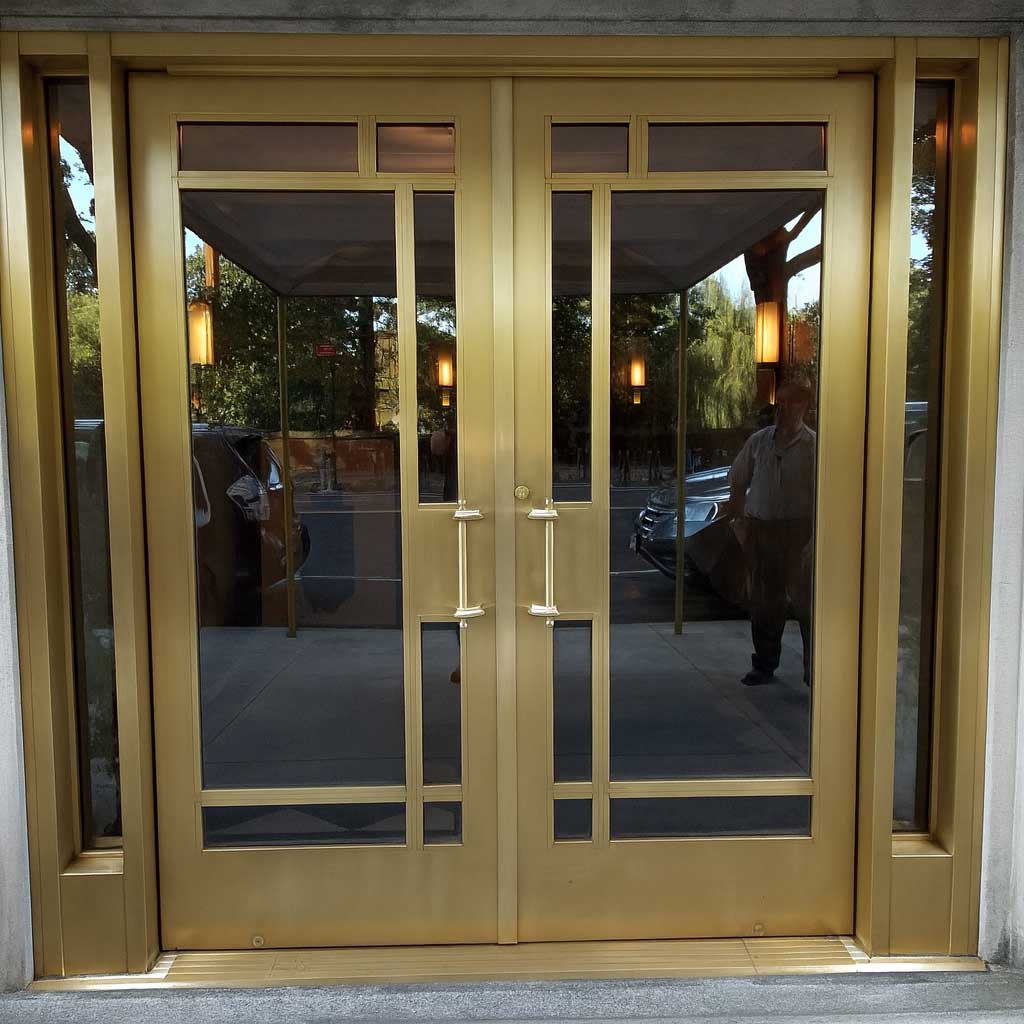
gold door entry way

Can I Convert My Manual Door to an Automatic Door?

Many property owners ask the same question when looking to modernize their facilities. Can I convert my manual door to automatic? The answer is often yes. In many cases, businesses can upgrade existing doors without replacing the entire entry system. The ability to convert a manual door to an automatic system allows building owners to improve accessibility, convenience, and hygiene while avoiding the higher costs of full door replacement.

Retrofit solutions make it possible to update older buildings quickly and efficiently. Instead of tearing out an existing entryway, specialists can modify the current door with advanced operators that automate the opening and closing process. This approach provides modern functionality while preserving the structure and appearance of the original doorway.

For commercial properties, healthcare facilities, offices, and retail spaces, automatic door conversions have become increasingly popular. They create smoother traffic flow, improve accessibility for people with mobility challenges, and help support touchless entry solutions that many businesses now prioritize.

Why Convert a Manual Door to an Automatic Door?

Retrofitting existing doors offers several benefits for businesses that want to modernize their entryways without extensive construction.

Improved Accessibility

Automatic doors significantly improve accessibility for customers, employees, and visitors. Individuals using wheelchairs, walkers, or other mobility aids can enter and exit more easily when doors open automatically.

Many commercial facilities also need to meet accessibility guidelines. Automatic doors can help buildings align with accessibility requirements and provide inclusive entry for everyone.

Greater Convenience for High Traffic Spaces

In busy environments such as hospitals, office buildings, and retail stores, people frequently enter while carrying items. Automatic doors eliminate the need to push or pull heavy doors, creating a smoother and faster experience.

Common locations that benefit from automation include:

  • Medical facilities and clinics
  • Retail stores and shopping centers
  • Office buildings
  • Restaurants and hospitality venues
  • Educational institutions

Enhanced Hygiene and Touchless Entry

Non-contact entry solutions have become increasingly important in recent years. Automatic doors allow users to enter without touching handles or push plates.

Touchless operation can be achieved through:

  • Motion sensors
  • Wave-to-open sensors
  • Touchless activation switches
  • Remote access controls

These systems help reduce the spread of germs and create a cleaner environment for employees and customers.

Cost-Effective Modernization

Replacing an entire door system can be expensive and disruptive. Retrofitting allows businesses to keep their existing door while upgrading it with an automated operator.

Benefits of retrofit automation include:

  • Lower installation costs
  • Faster project timelines
  • Minimal disruption to operations
  • Preservation of existing architectural elements

In many cases, the conversion process can be completed in just a few hours.

How Manual Doors Are Converted to Automatic

The process of converting a manual door into an automatic one typically involves installing an operator that controls the door’s movement. These operators can be integrated into existing doors and frames without major structural changes.

A professional technician will evaluate several factors before recommending the appropriate system, including:

  • Door size and weight
  • Traffic volume
  • Interior or exterior placement
  • Existing door hardware
  • Safety and accessibility requirements

Once the correct operator is selected, the technician installs the system and connects it to sensors or activation devices. The result is a door that opens and closes automatically while maintaining safe and reliable operation.

Choosing the Right Door Operator

Selecting the right operator is critical to ensuring reliable performance over time. Door closers and operators in commercial settings must withstand frequent use and varying conditions.

High-traffic environments require durable equipment that can handle constant operation. In these situations, door closers made from strong materials such as cast iron are commonly used because they can withstand heavy-duty workloads.

However, not every door requires the same level of durability.

For areas with lower traffic volumes, lighter-duty equipment may be appropriate. These options often cost less while still delivering dependable performance. Even for lighter-duty doors, reliability remains essential. Operators should be tested for long-term cycle performance to ensure consistent functionality.

When selecting a door operator, technicians typically evaluate:

  • Traffic frequency
  • Door weight and size
  • Environmental exposure
  • Accessibility requirements
  • Long-term durability needs

A qualified professional can help determine the best solution for each specific application.

Types of Automatic Door Operators

There are several types of operators used when converting manual doors to automatic systems. The right option depends on the door design, aesthetic requirements, and functional needs of the building.

Surface Applied Operators

Surface-applied operators are the most commonly used solution for retrofitting manual doors.

These operators are mounted on the top of the door frame and remain visible after installation. While they are exposed, they are designed to blend with the surrounding hardware and provide dependable performance.

Key characteristics include:

  • Mounted on the door frame surface
  • Typically installed on the interior side for exterior doors
  • Cost-effective automation option
  • Widely used in commercial buildings

Because of their straightforward installation and affordability, surface-applied operators are often the preferred solution when upgrading existing manual doors.

Overhead Concealed Door Operators

Overhead concealed operators provide a more discreet appearance by hiding the mechanism within the door frame or structure.

These systems are frequently used in aluminum storefront glass doors where maintaining the visual design of the entryway is important.

Unlike traditional surface-mounted closers, concealed operators remain hidden from view, allowing the building’s architectural style to remain unchanged.

Advantages include:

  • Hidden hardware for a clean appearance
  • Ideal for glass storefront doors
  • Preserves architectural aesthetics
  • Maintains a professional storefront design

While concealed operators often involve more complex installation, they are an excellent option for buildings where visual presentation is a priority.

Safety Standards and Industry Compliance

Automatic door systems must meet strict safety and performance standards to ensure reliable operation and protect users.

One of the most important organizations in this industry is the American Association of Automatic Door Manufacturers (AAADM). The AAADM develops guidelines for the safe installation, inspection, and maintenance of automatic door systems.

Working with professionals who follow AAADM standards ensures that your door automation system meets industry safety requirements.

AAADM compliance typically includes:

  • Proper sensor placement
  • Safe opening and closing speeds
  • Regular inspection and maintenance
  • Certification for installers and technicians

Routine inspections and maintenance are essential for keeping automatic doors operating safely and efficiently.

When Retrofitting Is the Best Solution

Not every building requires a full door replacement. In many cases, retrofitting an existing door provides the ideal balance of cost efficiency and modern performance.

Retrofit solutions are especially useful for:

  • Older buildings with functional doors
  • Facilities undergoing accessibility upgrades
  • Businesses seeking touchless entry solutions
  • Buildings that want to preserve architectural design

With the right equipment and professional installation, converting a manual door can significantly enhance the functionality of an existing entryway.

The Growing Demand for Touchless Entry

In recent years, businesses have increasingly prioritized contact-free access systems. Automatic doors are a key part of this trend.

Touchless technology helps create safer environments in places where many people pass through each day.

Common non-contact door solutions include:

  • Motion sensor activation
  • Wave to open technology
  • Smartphone access integration
  • Automatic sliding door systems

These technologies are becoming standard in healthcare environments, commercial buildings, and public spaces.

Frequently Asked Questions

Can any manual door be converted to automatic?

Many manual doors can be converted using retrofit operators. A professional assessment is required to determine whether the existing door frame and hardware are suitable for automation.

How long does it take to convert a manual door?

In many cases, installing a swing door operator can be completed within a few hours. More complex installations may take longer depending on the building structure and door type.

Are automatic doors safe?

Yes. When installed according to AAADM guidelines, automatic doors include sensors and safety features that prevent accidents and ensure smooth operation.

Are automatic doors energy efficient?

Modern automatic door systems are designed to meet energy compliance standards. Many systems include adjustable opening speeds and closing timers that help reduce energy loss.

Can automatic doors be touchless?

Yes. Many automatic doors use motion sensors or wave sensors that allow users to enter without touching the door.

Upgrade Your Entryway with Door Automation Corporation

If you are considering upgrading your building entrance, converting your existing doors may be the perfect solution. Door Automation Corporation specializes in retrofitting commercial spaces with reliable automatic door systems that improve convenience, accessibility, and safety.

Our team provides solutions for convenient access to commercial spaces. We install and service automatic and manual swing, slide, and revolving doors using industry-leading products that ensure functional, dependable, and secure entryways.

Door Automation Corporation also offers modern modifications that enable non-contact door operation, which has become increasingly important for businesses following COVID-19 safety practices.

In addition to retrofit solutions, we install new automatic doors that meet standard automated door energy compliance requirements. Our company works closely as design consultants with many of the top architectural firms in New York City to develop entryway solutions that balance functionality, safety, and aesthetics.

Whether you need to upgrade an existing door or install a brand-new automated entry system, our skilled professionals are ready to help.

Contact us to learn more about how we can help you modernize your building with reliable automatic door solutions. Our experienced team is here whenever you need expert support for your commercial entryway systems.
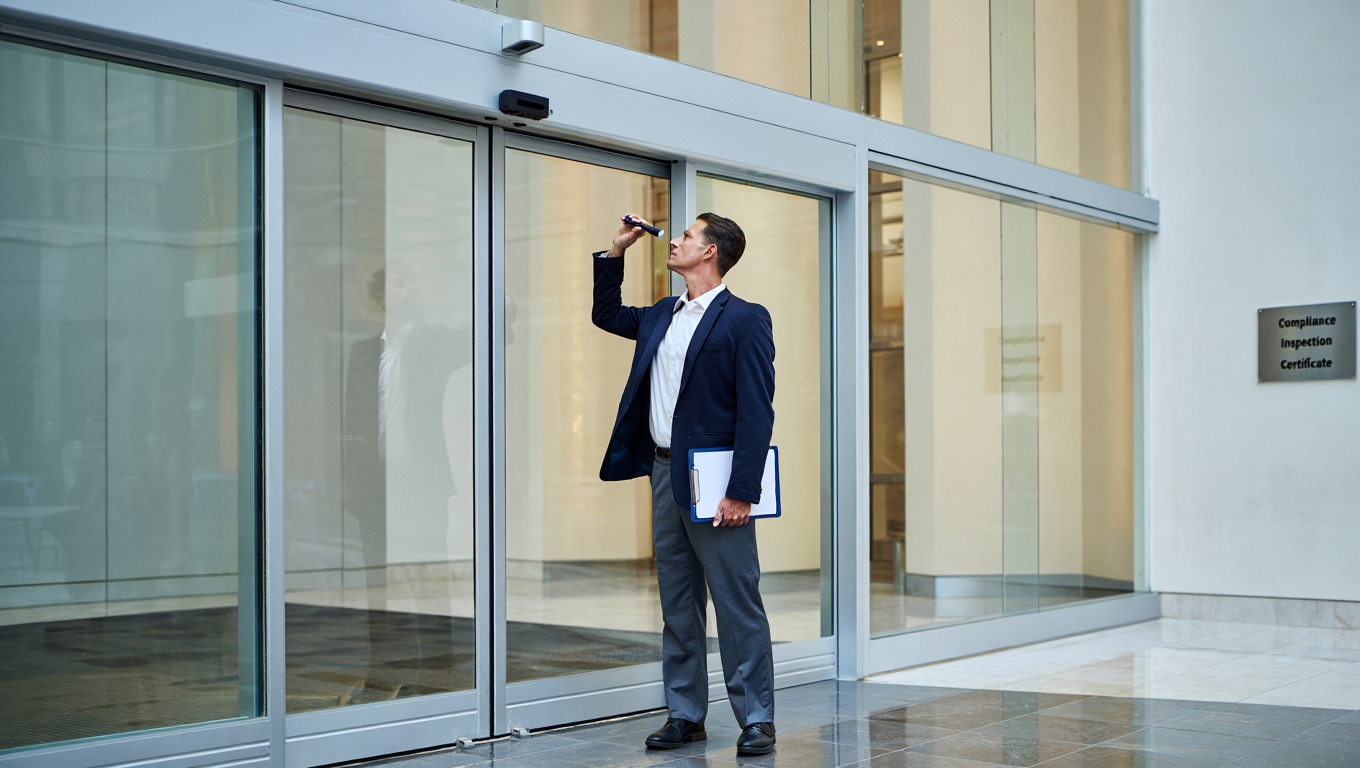
AAADM Inspection by a guy in a suit in front of a building

Automatic Door Maintenance Checklist for Commercial Buildings

Automatic doors are essential components of modern commercial buildings. They provide accessibility, improve traffic flow, enhance safety, and contribute to energy efficiency. For facility managers, maintaining these systems is a critical responsibility. Implementing an effective automatic door maintenance checklist helps ensure smooth operation, reduces unexpected breakdowns, and extends the lifespan of the equipment.

Commercial automatic doors experience heavy daily use in environments such as hospitals, retail centers, office buildings, and transportation hubs. Without routine maintenance, components can wear out, sensors may malfunction, and safety risks can increase. Establishing a structured maintenance routine allows facility managers to detect potential issues early while maintaining compliance with industry standards such as those recommended by the American Association of Automatic Door Manufacturers (AAADM).

This guide provides a practical step-by-step approach to maintaining automatic doors, highlighting the most important inspection points, routine checks, and situations that require professional service.

Automatic Door Maintenance Checklist for Commercial Buildings

Facility managers should follow a systematic checklist to ensure automatic doors remain safe, reliable, and compliant with safety standards. Routine inspections help identify minor issues before they become costly repairs or operational failures.

A comprehensive automatic door maintenance program should include the following steps.

Visual Inspection

Begin with a thorough visual inspection of the door system.

Check for the following:

  • Cracked or damaged glass panels
    • Loose framing or mounting hardware
    • Obstructions in the door track
    • Unusual gaps between door panels
    • Signs of corrosion or wear on metal components

Visible damage can indicate deeper mechanical problems that require attention.

Test Door Operation

Observe how the door functions during normal use.

Look for signs such as:

  • Slow opening or closing speed
    • Jerky or uneven movement
    • Grinding or unusual noises
    • Doors that fail to fully open or close

These symptoms often indicate issues with the operator, track system, or motor components.

Verify Safety Features

Automatic doors are required to include safety features designed to prevent accidents.

Test:

  • Motion sensors
    • Presence sensors
    • Safety beams
    • Emergency stop functions

Doors should stop or reverse when a person or object is detected in the closing path.

Check Signage and Accessibility

Accessibility compliance is an important part of automatic door maintenance.

Ensure:

  • Required safety signage is clearly visible
    • Push plates or activation switches are properly labeled
    • Doors comply with ADA accessibility standards

Following AAADM guidelines helps maintain safety and regulatory compliance.

Key Components That Require Routine Door Maintenance

Automatic doors consist of several mechanical and electronic components that must function together properly. Regular inspection of these parts ensures optimal performance and safety.

Door Panels and Tracks

Sliding doors rely on smooth track movement to function properly.

Inspect for:

  • Dirt and debris accumulation
    • Track misalignment
    • Worn rollers or guides

Clean tracks regularly and remove debris that could interfere with door movement.

Door Operators

The operator is the motorized system that controls door movement.

Maintenance tasks include:

  • Checking motor performance
    • Inspecting belts or drive mechanisms
    • Ensuring the operator cover is secure

Unusual noise or vibration may indicate a worn component that needs replacement.

Sensors and Detection Systems

Automatic doors depend on sensors to detect motion and prevent collisions.

Check that sensors:

  • Detect approaching users consistently
    • Activate the door promptly
    • Prevent doors from closing when someone is in the doorway

Faulty sensors are one of the most common causes of automatic door safety issues.

Activation Devices

Activation hardware includes push plates, touchless sensors, and access control devices.

Inspect these components to ensure they:

  • Respond immediately to user input
    • Remain securely mounted
    • Communicate properly with the door operator

As non-contact access becomes more common in commercial spaces, properly functioning activation devices are essential.

How Preventive Maintenance Reduces Downtime and Risk

Preventive maintenance plays a major role in maintaining safe and efficient building operations. Automatic doors that receive regular inspections and servicing experience fewer unexpected failures.

Key benefits include:

Improved Safety

Automatic doors that malfunction can create hazards such as sudden closing or failure to detect pedestrians.

Routine inspections help ensure safety systems operate as intended.

Reduced Repair Costs

Minor mechanical problems are much less expensive to fix than major component failures.

Preventive maintenance helps identify small issues before they escalate.

Longer Equipment Lifespan

Commercial automatic doors represent a significant investment. Proper maintenance can significantly extend the life of motors, sensors, and mechanical parts.

Compliance with Industry Standards

Organizations such as the American Association of Automatic Door Manufacturers (AAADM) provide guidelines that promote safe door operation. Regular inspections help maintain compliance with these standards.

Automatic door maintenance checklist for daily and weekly checks

Daily and weekly inspections allow facility staff to catch potential issues early.

Daily Checks

Perform quick operational checks during regular building walkthroughs.

Daily tasks include:

  • Confirm the door opens smoothly when activated
    • Check that sensors detect approaching users
    • Ensure doors close completely after use
    • Look for visible damage or obstructions
    • Verify push plates or activation switches work properly

These simple checks take only a few minutes but can prevent operational disruptions.

Weekly Checks

Weekly inspections should be slightly more detailed.

Include the following:

  • Clean tracks and remove debris
    • Wipe sensor lenses to maintain accuracy
    • Inspect door alignment and panel movement
    • Test safety stop and reversal functions
    • Listen for unusual sounds during operation

Documenting inspection results helps track system performance over time.

Sensors, operators, and activation hardware inspections

More detailed inspections should be conducted periodically to evaluate the performance of the door’s core components.

Sensor Testing

Sensors should detect people approaching the door from both directions.

Test the system by:

  • Approaching the door from different angles
    • Standing in the doorway to ensure the door does not close
    • Checking response time when entering the sensor field

If sensors respond slowly or inconsistently, recalibration or replacement may be necessary.

Operator System Inspection

Inspect the operator unit for signs of mechanical wear.

Key inspection points include:

  • Motor condition
    • Belt or chain tension
    • Mounting brackets
    • Electrical connections

Loose connections or worn belts can cause inconsistent door movement.

Activation Hardware Check

Activation systems have evolved to include touchless technologies and access control integrations.

Inspect:

  • Push plates and wall switches
    • Card readers or access devices
    • Touchless wave sensors
    • Wireless activation components

Ensure all devices trigger the door correctly and communicate with the operator.

When professional automatic door service is required

While facility teams can perform basic inspections, certain situations require professional technicians with specialized training.

Professional service should be scheduled when:

  • Doors fail safety compliance tests
    • Sensors stop detecting users properly
    • The door operator motor begins malfunctioning
    • Structural components show signs of significant wear
    • Electrical issues or wiring faults are detected

Technicians trained according to AAADM standards understand the complex safety requirements associated with automatic doors. Regular professional inspections ensure systems remain compliant and reliable.

Annual safety inspections conducted by certified professionals are strongly recommended for commercial buildings.

Frequently Asked Questions

How often should automatic doors be inspected?

Automatic doors should receive daily visual checks, weekly operational inspections, and at least one comprehensive professional inspection each year.

What causes most automatic door failures?

Common causes include sensor misalignment, debris in door tracks, worn operator components, and electrical issues.

Are automatic doors required to follow safety standards?

Yes. Industry guidelines established by the American Association of Automatic Door Manufacturers help ensure automatic doors operate safely and reliably.

Can facility staff perform automatic door maintenance?

Facility teams can perform basic inspections and cleaning. However, complex mechanical or electrical repairs should always be handled by trained professionals.

Why are touchless automatic doors becoming more common?

Touchless door activation reduces the spread of germs and improves convenience. Many commercial facilities adopted non-contact door solutions after COVID 19 to enhance safety and accessibility.

Keep Your Entryways Reliable with Door Automation Corporation

Automatic doors play a critical role in providing safe and convenient access to commercial spaces. Following a detailed maintenance routine helps facility managers maintain performance, reduce downtime, and extend the lifespan of their systems.

When professional expertise is required, Door Automation Corporation is ready to help. Our team provides reliable solutions for automatic and manual swing, slide, and revolving doors across commercial environments. We work with industry-leading products to deliver functional, dependable, and secure entryways for businesses of all sizes.

Door Automation Corporation also provides solutions for modern access needs, including non-contact door operation systems that support healthier building environments. As touchless entry continues to become the new normal, our specialists can implement modifications that improve safety and convenience.

In addition to maintenance and upgrades, we design and install new automatic doors that meet current automated door energy compliance standards. Our team collaborates closely with leading architectural firms throughout New York City, serving as trusted design consultants for innovative commercial projects.

Whether you need maintenance support, system upgrades, or new installations, our skilled professionals are here whenever you need them.

Contact us to learn how we can help you create reliable, secure, and accessible entryways for your commercial property.

What Are the Benefits of Low-Energy Automatic Door Systems?

Low-energy automatic doors have become an essential solution for commercial buildings seeking to balance accessibility, safety, and energy efficiency. As building owners and facility managers adapt to stricter accessibility expectations and changing user needs, these systems provide a reliable way to modernize entrances without the higher power demands of full-energy automatic doors. Designed to meet ADA requirements while operating at slower speeds and with controlled force, low-energy automatic doors are especially valuable in high-traffic or older buildings where upgrades must be thoughtful and compliant. Understanding how these systems work and where they perform best can help decision-makers create more inclusive, efficient, and future-ready spaces.

low-energy automatic doors

Understanding Low-Energy Automatic Doors

Low-energy automatic door systems are motorized door operators that open and close at reduced speeds and forces compared to full-power automatic doors. They are typically activated by push plates, wall-mounted switches, or non-contact sensors rather than continuous motion detection. Because of their controlled operation, these doors are widely used to achieve ADA compliance in environments where pedestrian traffic is steady but not constant.

Unlike high-energy automatic doors, low-energy systems are designed to operate within strict safety thresholds. This makes them suitable for retrofitting existing manual doors, especially swing doors, without requiring extensive structural changes. Many older buildings, including schools, healthcare facilities, and municipal buildings, rely on these systems to improve accessibility while preserving architectural integrity.

Low-energy doors are also governed by industry standards. Installation and servicing are often aligned with guidance from the American Association of Automatic Door Manufacturers (AAADM), which promotes safe and compliant automatic door solutions across the industry. Working with AAADM-informed professionals helps ensure that systems meet performance expectations and regulatory requirements.

ADA Requirements for Low-Energy Doors

The Americans with Disabilities Act sets clear guidelines for door operation to ensure accessibility for individuals with mobility challenges. Low-energy automatic doors are specifically recognized under ADA standards when they meet certain criteria.

Key ADA considerations include:

  • Controlled opening and closing speeds to prevent injury
  • Limited force during operation so doors can be stopped easily
  • Adequate, clear opening width for wheelchair access
  • Accessible activation devices mounted at appropriate heights

Because low-energy doors open more slowly and with less force, they are often permitted in spaces where full-energy doors would require additional safety sensors. This makes them a practical and compliant choice for many commercial environments.

Key Benefits of Low-Energy Door Systems

Low-energy automatic door systems offer a wide range of benefits beyond basic accessibility. Their design supports operational efficiency, user safety, and long-term cost savings, making them a smart investment for many facilities.

Some of the most notable benefits include:

  • Improved accessibility for people with disabilities, seniors, and those carrying items
  • Enhanced safety due to slower movement and reduced force
  • Lower energy consumption compared to high-energy automatic doors
  • Easier integration into existing door openings
  • Compliance with ADA and industry standards when properly installed

These advantages explain why low-energy systems are increasingly specified in commercial renovation projects and new construction alike.

How These Systems Reduce Energy Waste

Energy efficiency is a growing concern in commercial building design, and door systems play a larger role than many people realize. Low-energy automatic doors are engineered to minimize unnecessary energy use while still providing convenient access.

They reduce energy waste in several ways:

  • Slower opening and closing cycles limit air exchange between indoor and outdoor environments
  • Activation-based operation prevents doors from opening unless needed
  • Compatibility with energy-efficient door hardware and seals improves thermal performance
  • Reduced power draw compared to full-energy systems lowers overall electrical consumption

By limiting how often and how widely doors open, these systems help maintain interior temperatures. This can reduce the workload on HVAC systems, especially in high-traffic buildings or facilities with exterior entrances.

When to Install Low-Energy Doors in Commercial Spaces

Choosing the right type of automatic door depends on traffic patterns, building use, and regulatory requirements. Low-energy automatic doors are particularly effective in spaces where accessibility is essential but continuous automatic operation is not necessary.

They are often installed in:

  • Office buildings with controlled foot traffic
  • Healthcare facilities where patient safety is critical
  • Educational institutions and libraries
  • Government and municipal buildings
  • Religious and community centers
  • Retail or service entrances with moderate usage

Low-energy doors are also an excellent option when upgrading older buildings that were not originally designed with automatic access in mind. Their adaptability allows owners to enhance accessibility without extensive reconstruction.

Examples of Ideal Applications

Certain environments benefit more than others from the unique characteristics of low-energy door systems. Understanding these applications can help facility managers determine whether this solution is appropriate for their needs.

Ideal applications include:

  • Interior corridor doors that require ADA compliance
  • Restroom entrances in public buildings
  • Employee-only access points where controlled entry is preferred
  • Secondary entrances that complement primary automatic doors
  • Buildings with historic or architectural constraints

In each of these cases, low-energy doors provide accessibility and convenience without compromising safety, aesthetics, or energy efficiency.

Supporting Safety and Health in a Post-COVID Environment

In recent years, non-contact access solutions have become increasingly important. Low-energy automatic doors can be configured with wave-to-open sensors, touchless push plates, or other hands-free activation methods. These options reduce the need for physical contact, supporting better hygiene and user confidence in shared spaces.

As organizations continue to prioritize health and safety, upgrading to automatic door systems that allow for non-contact operation is becoming the new normal. Low-energy systems offer a flexible platform for these enhancements while still meeting energy and accessibility standards.

Compliance, Reliability, and Professional Installation

Proper installation and maintenance are critical to ensuring that low-energy automatic doors perform as intended. Following best practices and industry guidance, including recommendations from the American Association of Automatic Door Manufacturers, helps ensure long-term reliability and compliance.

Working with experienced professionals ensures:

  • Correct system selection based on traffic and building needs
  • Accurate installation that meets ADA and safety requirements
  • Integration with existing doors and access control systems
  • Ongoing service and maintenance for dependable operation

A professionally installed system not only enhances accessibility but also protects building owners from potential liability and operational issues.

Why Low-Energy Automatic Doors Are a Smart Investment

From accessibility and safety to energy efficiency and modernization, low-energy automatic door systems deliver value across multiple dimensions. They help create inclusive environments, support sustainability goals, and improve the overall user experience in commercial buildings.

As codes evolve and expectations rise, investing in compliant and efficient door solutions positions organizations for long-term success. Whether upgrading an older facility or designing a new commercial space, low-energy doors provide a balanced solution that meets today’s needs without unnecessary complexity.

Partner with Door Automation Corporation for Reliable Access Solutions

If you are considering low-energy automatic doors or other entryway upgrades, Door Automation Corporation is here to help. We provide solutions for convenient access to commercial spaces, offering automatic and manual swing, slide, and revolving doors designed for performance and reliability. Our team works with industry-leading products to deliver functional, dependable, and secure entryways that meet modern accessibility and energy compliance standards.

Door Automation Corporation also specializes in non-contact door opening solutions, which are increasingly important in a post-COVID environment. We can provide modifications that enable touchless operation, as well as new automatic doors that follow standard automated door energy compliance. Working closely as design consultants with many of the top architectural firms in New York City, our skilled professionals bring experience, precision, and responsiveness to every project.

When you need trusted expertise and tailored solutions, rely on Door Automation Corporation. Contact our team to discuss how we can support your next commercial door automation project.

How Are Smart Sensors Changing Automatic Door Safety?

Automatic doors have become a standard feature in modern commercial buildings, healthcare facilities, retail spaces, and transportation hubs. Their role extends far beyond convenience. Today, safety, accessibility, and efficiency are central expectations, and this is where automatic door sensor technology plays a transformative role. Smart sensors are redefining how automated entry systems operate by improving responsiveness, reducing accidents, supporting accessibility standards, and enabling non-contact entry solutions that are increasingly important in a post COVID environment. As sensor capabilities evolve, automatic doors are no longer reactive systems but intelligent components of a building’s overall safety and automation strategy.

Automatic doors must comply with strict safety and performance guidelines, including those established by the American Association of Automatic Door Manufacturers (AAADM). Smart sensors help ensure compliance by providing precise detection, consistent performance, and real-time adaptability to changing conditions. From detecting slow-moving pedestrians to preventing door strikes and ensuring seamless access for individuals with disabilities, sensor-driven systems are changing expectations for what automatic doors can and should do.

automatic door sensor technology

Advances in Automatic Door Sensor Technology

Sensor technology has advanced rapidly over the past decade, driven by improvements in microprocessors, machine learning, and connectivity. Early automatic doors relied on basic motion detection that could only sense large movements directly in front of the door. Modern systems now use a combination of sensor types that communicate with door operators to create a comprehensive safety zone around the entrance.

These advances allow automatic doors to respond more intelligently to real-world conditions. For example, sensors can distinguish between a person approaching the door and someone simply walking nearby. They can adjust opening speed, hold open time, and closing force based on traffic flow and environmental factors. This level of precision significantly reduces unnecessary door cycles, wear and tear, and the risk of injury.

Key advancements in sensor technology include improved detection accuracy that minimizes false activations, wider detection fields that cover both approach and threshold areas, faster response times that improve user experience, and enhanced durability designed for high-traffic commercial environments. Together, these innovations help building owners meet safety standards while also improving operational efficiency.

Types of Sensors Used in Automatic Doors

Modern automatic doors rely on several sensor types working together to ensure safe operation. Each sensor plays a specific role in detecting presence, motion, and obstructions.

Common sensor types include:

  • Motion sensors, often using microwave or infrared technology, to detect approaching pedestrians.
  • Presence sensors, typically active infrared, to monitor the threshold and prevent doors from closing on people or objects.
  • Pressure and contact sensors, sometimes integrated into mats or safety edges, to detect physical contact.
  • Vision-based sensors, using cameras and advanced processing to analyze movement patterns and object size.
  • Laser scanners, which create precise detection fields and are increasingly used in high-risk or high-traffic environments.

By combining multiple sensor types, automatic doors can create layered safety zones that align with AAADM recommendations and evolving building codes.

How Smart Sensors Improve Door Safety

Safety is the primary purpose of automatic door sensors, and smart technology has significantly elevated safety performance. Traditional systems operated on fixed parameters, which could not account for variations in pedestrian speed, mobility aids, or environmental conditions. Smart sensors adapt dynamically, improving protection for all users.

One of the most important safety improvements is enhanced obstruction detection. Smart sensors continuously monitor the door opening and surrounding area, ensuring that doors do not close when a person, wheelchair, cart, or stroller is present. This reduces the risk of impact injuries and liability concerns for property owners.

Smart sensors also improve safety by supporting compliance with accessibility standards. Doors can remain open longer when sensors detect slower-moving individuals, such as seniors or people using mobility devices. This adaptive behavior aligns with the intent of accessibility guidelines and creates a more inclusive entry experience.

Additional safety benefits include reduced tailgating incidents in secure facilities, improved detection in low-light or adverse weather conditions, and automatic system diagnostics that alert maintenance teams when sensor performance degrades.

How Sensors Detect Obstructions and Movement

Smart sensors use a combination of detection methods to identify movement and presence accurately. Microwave sensors emit radio waves and analyze the reflected signal to detect motion. Active infrared sensors project infrared light and measure reflections to determine if an object is within the detection zone. Vision-based systems use image processing to interpret movement patterns and differentiate between people and background activity.

These technologies work together to provide redundancy and reliability. For example, motion sensors may trigger the door to open, while presence sensors ensure the door remains open until the pathway is completely clear. Advanced algorithms help filter out false positives, such as moving shadows or passing vehicles, which improves both safety and energy efficiency.

Upgrading to the Latest Sensor Systems

Upgrading existing automatic doors with modern sensor systems is a practical way for building owners to enhance safety without replacing the entire door assembly. Many legacy doors can be retrofitted with new sensors that meet current AAADM standards and local code requirements.

An upgrade typically includes replacing outdated motion sensors, adding presence detection where it may be lacking, and recalibrating door operators to work with the new technology. In some cases, upgrading sensors also enables non-contact activation options, such as wave to open or touchless switches, which have become increasingly popular due to heightened hygiene awareness.

Benefits of upgrading include improved safety compliance, reduced maintenance costs due to fewer mechanical issues, better energy performance through optimized door operation, and enhanced user satisfaction. Modern sensors are also more reliable and easier to adjust, allowing facility managers to fine-tune performance as building usage changes.

Upgrading sensor systems is particularly valuable in older buildings where original automatic doors may not meet current expectations for accessibility or safety. With the guidance of experienced professionals, these upgrades can be completed efficiently and with minimal disruption.

Integrating Sensors with Building Automation

One of the most significant trends in automatic door safety is the integration of sensor systems with broader building automation platforms. Smart sensors can now communicate with access control, security, HVAC, and energy management systems, creating a more coordinated and intelligent building environment.

For example, automatic door sensors can work with access control systems to manage secure entry points, ensuring doors open only for authorized users while maintaining safety protocols. Integration with HVAC systems allows doors to minimize air exchange, improving energy efficiency without compromising accessibility.

This level of integration also supports data-driven decision-making. Facility managers can analyze door usage patterns, identify peak traffic times, and proactively schedule maintenance. Over time, this data helps optimize both safety and operational performance.

As smart buildings become more common, automatic door sensors are increasingly seen as critical components rather than standalone devices. Their ability to contribute to overall safety, efficiency, and user experience makes them an essential part of modern building design.

The Role of Industry Standards and AAADM

The American Association of Automatic Door Manufacturers plays a vital role in establishing safety standards and best practices for automatic door systems. AAADM certification and guidelines help ensure that doors are designed, installed, and maintained to protect users and property owners alike.

Smart sensor technology supports compliance with these standards by providing consistent and verifiable safety performance. Many modern sensors are designed specifically to meet or exceed AAADM requirements, making it easier for building owners to demonstrate due diligence and reduce liability risk.

Working with professionals who understand AAADM standards is essential when installing or upgrading automatic door systems. Proper sensor placement, calibration, and testing are critical to achieving the intended safety benefits.

Looking Ahead at the Future of Automatic Door Safety

As technology continues to evolve, smart sensors will play an even greater role in automatic door safety. Advances in artificial intelligence and connectivity will allow sensors to learn from usage patterns and adjust performance automatically. Predictive maintenance capabilities will reduce downtime and improve reliability.

The growing demand for non-contact entry solutions is also shaping sensor development. Touchless activation methods, combined with precise presence detection, will continue to define best practices in commercial access design. These innovations not only improve safety but also support public health and user confidence.

Automatic doors are no longer simple mechanical systems. They are intelligent access solutions that reflect a building’s commitment to safety, accessibility, and modern design.

Partner with Door Automation Corporation

If you are considering upgrading your automatic door systems or planning a new installation, Door Automation Corporation is ready to help. We provide solutions for convenient access to commercial spaces and specialize in automatic and manual, swing, slide, and revolving doors. Our reliable professionals work with industry-leading products to deliver functional, dependable, and secure entryways. Solutions for providing non-contact door openings are becoming the new normal due to COVID 19, and Door Automation Corp offers a range of modifications and new automatic doors that meet current energy compliance standards. We also work closely as design consultants with many of the top architectural firms in New York City. Our skilled team is here whenever you need us. Contact us to learn how we can help you enhance safety, accessibility, and performance at every entrance.

Why Is Automatic Door Certification So Important?

In modern commercial environments, automatic doors are no longer a luxury feature but a functional necessity that supports accessibility, safety, energy efficiency, and user convenience. From hospitals and office buildings to retail centers and transportation hubs, these systems are relied upon every day by thousands of people. Because of their frequent use and critical role in public access, ensuring they are installed, maintained, and operated correctly is essential. This is where automatic door certification becomes especially important. Automatic door certification establishes that a door system and the professionals who install and service it meet recognized safety, performance, and compliance standards. Without proper certification, automatic doors can present serious risks, including accessibility violations, safety hazards, and costly noncompliance issues. Understanding what certification means, who regulates it, and how it benefits building owners and users helps organizations make informed decisions about their entrance systems.

automatic door certification

What Is Automatic Door Certification?

Automatic door certification refers to a formal process that verifies an automatic door system or installer meets specific industry standards and regulatory requirements. Certification confirms that doors are designed, installed, tested, and maintained according to established safety and performance guidelines. These guidelines are created to protect the public, ensure accessibility, and promote consistent operation across a wide range of building types.

Certification can apply to different aspects of an automatic door system. It may involve product certification, which ensures the door equipment complies with applicable codes and standards, or installer certification, which verifies that technicians have the training and expertise required to properly install and service automatic doors. In many cases, both are equally important. A certified product installed incorrectly can still pose risks, while a skilled installer using noncompliant equipment may lead to violations.

Automatic door certification typically evaluates factors such as opening and closing speeds, sensor functionality, safety mechanisms, emergency breakout features, and accessibility requirements. These elements work together to ensure that doors operate smoothly and safely for all users, including individuals with disabilities, children, and older adults.

Who Regulates Automatic Door Certification?

Automatic door certification is guided by a combination of national standards organizations, industry associations, and building codes. While no single entity oversees every aspect of certification, several organizations play a central role in establishing and maintaining standards.

Key regulatory and standards bodies include:

  • The American National Standards Institute, which accredits standards such as ANSI A156 for automatic pedestrian doors.
  • The American Association of Automatic Door Manufacturers, which develops industry best practices and provides certification programs for inspectors and technicians.
  • The International Code Council, which incorporates door safety and accessibility requirements into building codes adopted by states and municipalities.
  • The Americans with Disabilities Act, which sets accessibility requirements that automatic doors must meet in many public and commercial spaces.

Together, these organizations create a framework that defines how automatic doors should perform and how compliance is measured. Certification ensures that door systems align with these requirements, reducing confusion and inconsistency across projects.

The Role of Certification in Door Compliance

Compliance is one of the most important reasons automatic door certification matters. Commercial buildings are subject to numerous regulations related to safety, accessibility, and energy efficiency. Automatic doors that are not compliant can result in fines, failed inspections, legal liability, and reputational damage.

Certified automatic doors help ensure compliance with:

  • ADA accessibility guidelines, including clear opening widths, activation forces, and response times.
  • Local and state building codes that reference ANSI standards for automatic doors.
  • Fire and life safety requirements related to emergency egress and fail-safe operation.
  • Energy codes that regulate air infiltration and automatic door operation to reduce energy loss.

Certification provides documented proof that a door system meets these requirements at the time of installation and inspection. This documentation is especially valuable during code reviews, renovations, or property sales, when compliance history may be scrutinized.

Beyond regulatory compliance, certification also supports internal risk management. Building owners and facility managers can demonstrate due diligence by working with certified installers and maintaining certified systems. This can be critical in the event of an accident or insurance claim, as it shows that recognized safety standards were followed.

The Role of AAADM in Automatic Door Certification

The American Association of Automatic Door Manufacturers, commonly referred to as AAADM, plays a central role in establishing and maintaining safety standards within the automatic door industry. AAADM is widely recognized for its commitment to promoting safe and reliable automatic pedestrian door systems through education, certification, and inspection programs.

AAADM administers certification programs for inspectors and technicians, ensuring that professionals working with automatic doors are properly trained and qualified. AAADM-certified technicians receive education on ANSI standards, ADA requirements, and best practices for installation, testing, and maintenance. This training helps ensure that doors are installed correctly and continue to operate safely throughout their service life.

For building owners and facility managers, working with AAADM-certified professionals provides added confidence. It indicates that automatic doors are being handled by experts who understand regulatory requirements and prioritize safety, compliance, and performance. AAADM certification also supports consistency across projects, making it easier to meet inspection requirements and maintain long-term reliability.

How to Verify a Certified Automatic Door Installer

Not all automatic door installers are certified, and not all certifications are equal. Verifying that an installer holds appropriate credentials is an important step in protecting your investment and ensuring long-term performance.

When evaluating an automatic door installer, consider the following steps:

  • Ask for proof of certification from recognized industry organizations such as the American Association of Automatic Door Manufacturers.
  • Confirm that technicians have completed formal training programs specific to automatic pedestrian doors.
  • Verify that the installer is familiar with local building codes and ADA requirements.
  • Request references or case studies from previous projects in similar commercial environments.
  • Ensure the company provides documentation for inspections, testing, and ongoing maintenance.

A certified installer not only understands how to install doors correctly but also how to assess site-specific conditions, select appropriate equipment, and troubleshoot issues before they become problems. This expertise reduces the likelihood of costly rework and operational disruptions.

Benefits of Working with Certified Providers

Choosing a certified provider offers advantages that extend well beyond initial installation. Certified professionals bring a higher level of knowledge, accountability, and consistency to every project.

Some of the key benefits include:

  • Improved safety for building occupants through properly calibrated sensors and safety features.
  • Reduced risk of noncompliance with accessibility and building codes.
  • More efficient installations that minimize downtime and disruption.
  • Access to industry-leading products that meet or exceed certification standards.
  • Clear documentation that supports inspections, audits, and future upgrades.

Certified providers are also more likely to stay current with evolving standards and technologies. As regulations change and new door systems are introduced, certified professionals are better equipped to recommend solutions that remain compliant and effective over time.

How Certification Ensures Long-Term Reliability

Reliability is a critical factor in automatic door performance. Doors that malfunction or break down frequently can frustrate users, disrupt operations, and create safety concerns. Certification plays a direct role in promoting long-term reliability by emphasizing proper design, installation, and maintenance practices.

Certified automatic doors are tested against performance criteria that simulate real-world use. This testing helps identify potential weaknesses before doors are installed in high-traffic environments. Certified installers also follow standardized procedures that reduce wear and tear caused by improper alignment, incorrect sensor placement, or unsuitable hardware selection.

Long-term reliability is further supported through ongoing inspection and maintenance programs. Many certification frameworks encourage or require periodic inspections to ensure doors continue to operate within specified parameters. These inspections can identify issues such as sensor drift, mechanical fatigue, or control system errors early, before they lead to failures.

Over time, certified systems tend to offer:

  • Longer service life due to correct installation and calibration.
  • Fewer unexpected breakdowns and emergency repairs.
  • Consistent performance that meets user expectations.
  • Lower total cost of ownership through proactive maintenance.

In an era where non-contact access solutions are becoming the new normal due to COVID-19, reliability is even more important. Touchless automatic doors must function flawlessly to deliver both safety and convenience. Certification helps ensure these systems perform as intended under increased demand.

Why Certification Matters More Than Ever Today

The growing emphasis on accessibility, health, and energy efficiency has increased scrutiny on building systems, including automatic doors. Touchless entry solutions, energy-compliant doors, and advanced access technologies are now standard expectations rather than optional upgrades.

Automatic door certification provides confidence that these systems are:

  • Safe for all users, including those with mobility challenges.
  • Designed to minimize physical contact and support hygienic environments.
  • Compliant with energy standards that reduce heating and cooling losses.
  • Integrated correctly with building design and traffic flow.

For architects, property managers, and business owners, certification simplifies decision-making. It creates a clear benchmark for quality and compliance in a complex regulatory landscape.

Partner With Door Automation Corporation for Certified Solutions

Automatic door certification is not just a technical requirement. It is a commitment to safety, accessibility, reliability, and professionalism. By working with certified experts and compliant products, organizations protect their buildings, their users, and their long-term investments.

Door Automation Corporation provides solutions for convenient access to commercial spaces with a strong focus on compliance and performance. Rely on our team for automatic and manual swing, slide, and revolving doors designed to meet today’s demanding standards. Our reliable professionals work with industry-leading products to deliver functional, dependable, and secure entryways. As non-contact door openings become increasingly important, we offer a range of modifications and new automatic doors that support touchless operation and standard automated door energy compliance. We also work closely as design consultants with many of the top architectural firms in New York City, ensuring seamless integration from concept through installation. Our skilled team is here for you whenever you need it. To learn more about certified automatic door solutions and how we can support your next project, contact us and speak with our experts today.