

Walk into almost any landmark office tower, museum, or high-end retail space in Manhattan and you have almost certainly passed through one without realizing it. Balanced doors are one of the most technically refined entrance systems in commercial architecture, combining an offset pivot mechanism with precision engineering to deliver effortless operation, superior energy control, and a clean aesthetic that standard swing doors simply cannot match. This guide covers how they work, where they are used, and why architects and property managers across New York and New Jersey continue to specify them for demanding commercial environments.
What Is a Balanced Door? The Engineering Behind the Design
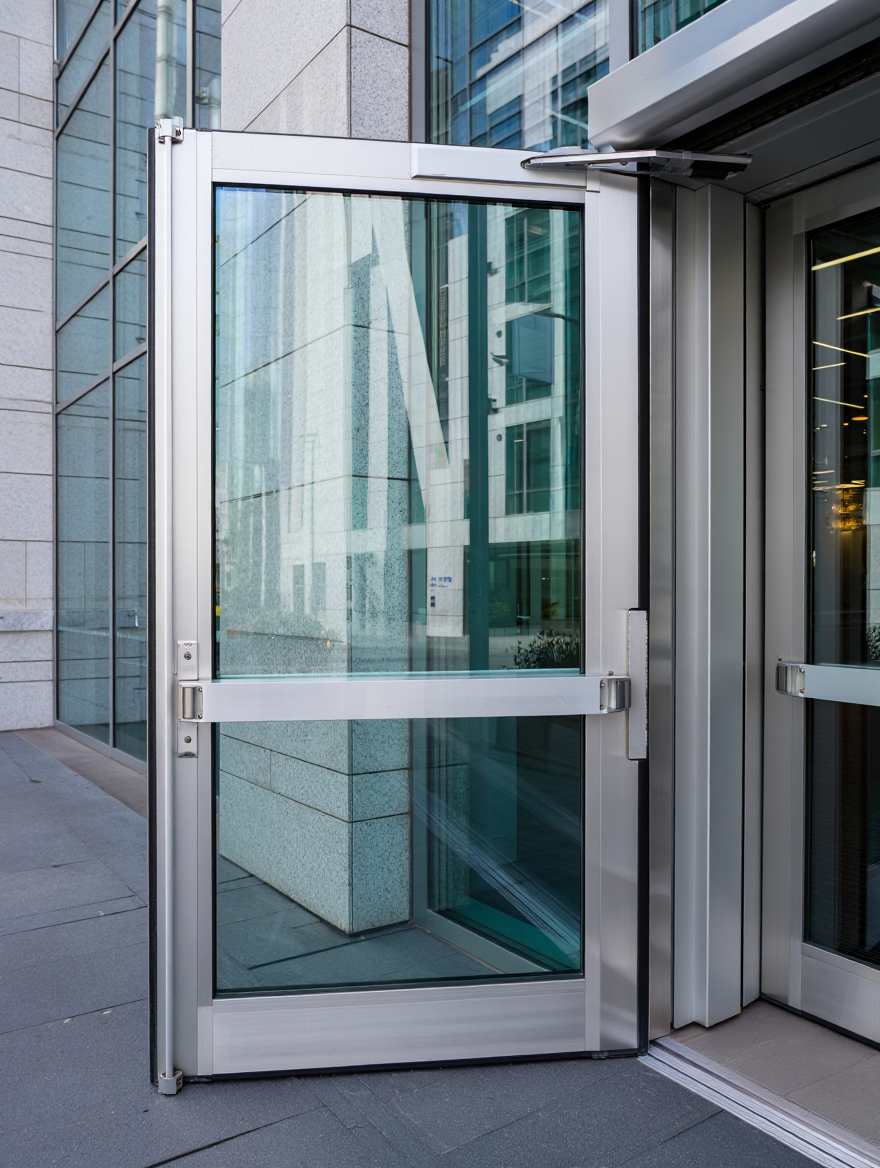
A balanced door is a type of commercial entrance door that pivots on an offset axis rather than swinging from a traditional side hinge. The pivot point is positioned roughly one-third of the way across the door panel width, which distributes the door’s weight on both sides of the pivot. This distribution is what makes the door feel light and controlled to the user regardless of the actual size or weight of the panel.
The result is a door that can be opened with minimal effort even when it is large, heavy, and subject to wind pressure or building stack effects. That combination of low operating force and structural resilience is why balanced doors appear consistently in the most demanding commercial entrances, from airport terminals to urban office towers to hospital lobbies.
What Is a Balanced Door Pivot System vs. a Standard Hinge
Understanding the difference between a balanced pivot and a conventional door hinge clarifies exactly why the two perform so differently in commercial use:
| Feature | Balanced Door (Offset Pivot) | Standard Swing Door (Side Hinge) |
|---|---|---|
| Pivot location | Approx. one-third from the pull side | Edge of the door frame |
| Weight distribution | Balanced across pivot axis | Full weight loaded on hinge side |
| Operating force required | Very low, even for oversized panels | Increases significantly with door size |
| Wind resistance | High, pivot absorbs lateral pressure | Moderate, can be difficult in high-wind conditions |
| Swing path over building line | Minimal (typically under 18 inches) | Full door width swings out |
| ADA compliance | Achievable with low operating force | Requires operator or low-energy assist |
How Balanced Door Systems Work in High-Traffic Commercial Environments
The mechanics of a balanced door go beyond just the pivot point. The full system includes a floor closer, an overhead concealed closer, and the pivot hardware itself, all working in coordination to control the door’s speed, return force, and hold-open behavior. This makes the system more mechanically complex than a standard swing door but far more capable in environments where doors cycle hundreds of times per day.
The Offset Pivot and Why It Matters in Urban Settings Like New York City
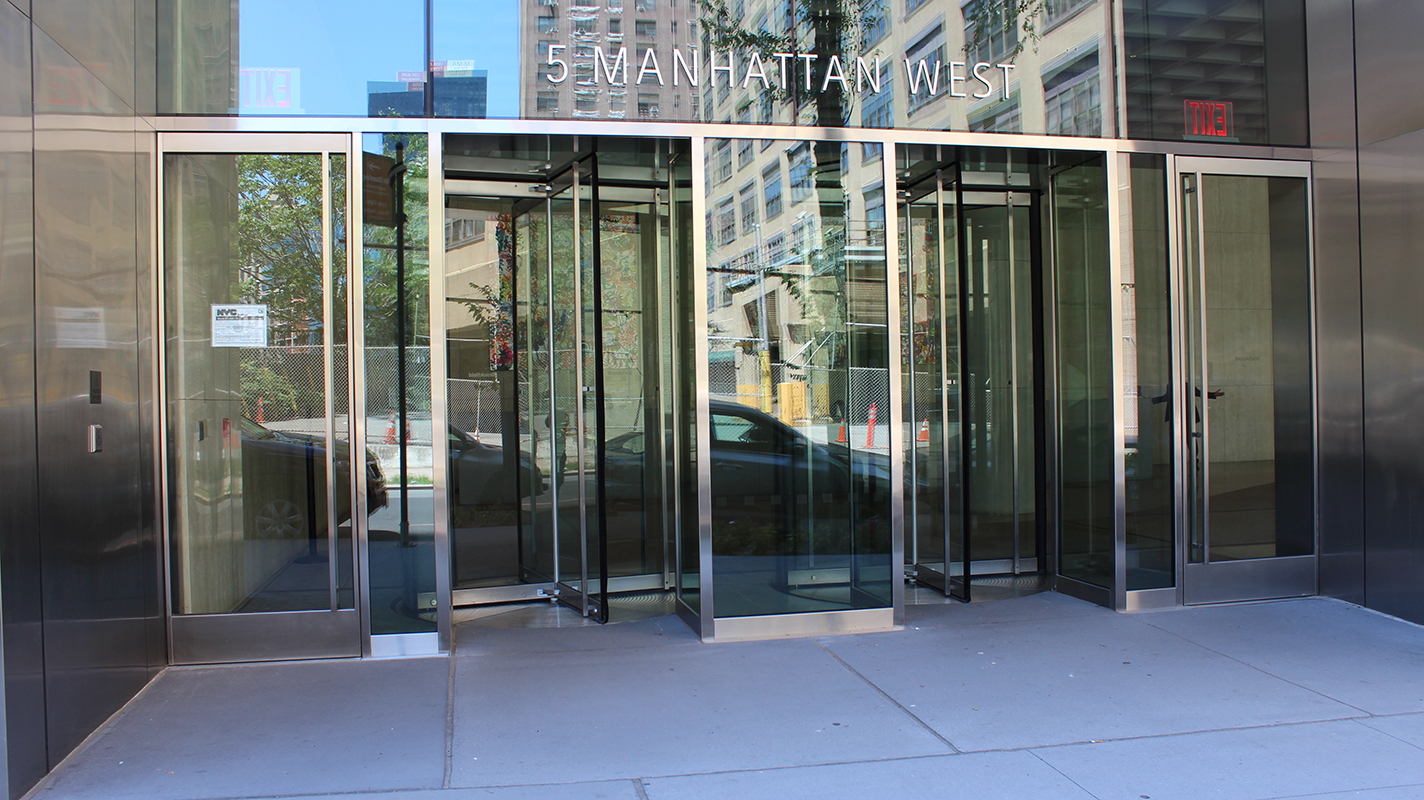
In dense urban environments, the swing path of a door over the public sidewalk is a regulatory and practical issue. New York City building codes restrict how far a door can project over the building line, typically limiting outward swing to no more than 18 inches. A standard side-hung door on a wide commercial opening can easily exceed that limit, creating code compliance problems and pedestrian hazards.
The offset pivot on a balanced door solves this directly. Because the door pivots on an interior axis rather than swinging from the edge, the exterior projection of the door is dramatically reduced. This is one of the primary reasons that balanced doors became so prevalent in Manhattan and other dense urban markets where large commercial entrances and tight sidewalk clearances coexist.
Where Balanced Doors Are Specified in Commercial Architecture
Balanced doors appear across a wide range of commercial building types where the combination of high traffic volume, large opening sizes, and aesthetic expectations rules out simpler door systems:
- Class A office buildings: Lobby entrances with oversized glass panels and monumental proportions benefit from the effortless operation and clean sightlines of a balanced system.
- Hotels and hospitality properties: High guest volume and a premium aesthetic expectation make balanced doors a natural fit for main entrances and ballroom corridors.
- Museums and cultural institutions: Large, heavy door panels can be operated easily by visitors of all ages and abilities.
- Airports and transit hubs: Continuous cycling in high-wind airside and landside environments is where the wind resistance of the balanced mechanism proves its value.
- Healthcare facilities: Low operating force supports accessibility requirements, and the controlled close speed reduces noise and impact in patient care settings.
- Retail flagships: Brand-conscious retailers use oversized balanced door panels as an architectural statement at street level, particularly in Manhattan and urban New Jersey markets.
Balanced Doors and ADA Compliance
The Americans with Disabilities Act (ADA) sets specific requirements for the operating force allowed on accessible doors in commercial buildings. Interior doors must require no more than 5 pounds of force to open, while exterior doors have a higher threshold but must still be operable without tight grasping or twisting.
How Balanced Automatic Doors Meet ADA Operating Force Requirements
Because the balanced pivot distributes weight across the door panel, the actual force required to operate the door is significantly lower than a side-hung door of the same size and weight. A well-specified and properly maintained balanced door can meet ADA force requirements without an automatic operator in many applications, which can reduce installation cost compared to adding a low-energy swing door operator to a standard hinge door.
When ADA compliance is a primary driver of the specification, it is worth reviewing our detailed look at commercial swinging door service and ADA requirements alongside balanced door options, since the right choice depends on opening size, traffic volume, and budget.
Energy Efficiency Benefits of Balanced Door Systems
Energy performance at the building envelope is a growing priority for commercial property owners in New York and New Jersey, driven by both operating cost pressures and compliance requirements under the NYC Energy Conservation Code and New Jersey’s energy standards.
How Balanced Doors Reduce Air Infiltration and Combat Stack Effect
Balanced doors contribute to building energy performance in two primary ways:
- Reduced air infiltration: The precision alignment of the balanced pivot system, combined with high-quality perimeter seals and threshold seals, minimizes gaps around the door panel. Less air movement through the entrance means lower heating and cooling loads.
- Stack effect management: In tall commercial buildings, the pressure differential between lower and upper floors creates a stack effect that forces air through every available gap at lower levels. The controlled operation and tight sealing of a balanced door system is significantly more effective at limiting this infiltration than a loosely fitted standard door.
For buildings pursuing LEED certification or targeting energy performance benchmarks, specifying balanced doors at primary entrances is a documented strategy for improving envelope performance metrics.
Balanced Doors vs. Other Commercial Entrance Systems
Balanced doors are not the right solution for every opening. Understanding how they compare to other commercial entrance types helps architects and property owners make the right specification decision:
| Door Type | Best For | Limitations |
|---|---|---|
| Balanced Door | Large, heavy panels; dense urban sites; monumental entrances | Higher hardware cost; requires professional maintenance |
| Automatic Sliding Door | High-volume retail and healthcare; hands-free operation | Wider structural opening required; not ideal for narrow facades |
| Revolving Door | Maximum energy efficiency; high-rise lobbies | Highest cost; requires adjacent swing door for ADA compliance |
| Standard Swing Door | Lower traffic, smaller openings, tighter budgets | High operating force on larger panels; full swing path over building line |
| Manual Sliding Door | Interior partitions; lower traffic applications | Not suitable for primary exterior commercial entrances |
For a broader look at the full range of commercial entrance options, our commercial door types guide covers each system in detail.
Materials, Finishes, and Customization for Balanced Doors
Balanced doors are specified in a wide range of materials and finishes, making them adaptable to virtually any architectural program:
- Aluminum: The most common framing material for commercial balanced doors. Lightweight, corrosion-resistant, and available in a full range of anodized and painted finishes.
- Stainless steel: Used in high-end retail, hospitality, and institutional applications where a premium finish and maximum durability are required.
- Bronze: A classic specification for landmark buildings, cultural institutions, and historic properties where patina and architectural character are priorities.
- Glass infill: Most commercial balanced doors use tempered or laminated glass infill panels. Insulated glass units can be specified for improved thermal performance.
- Wood and specialty materials: Interior balanced doors in hospitality and high-end office environments can incorporate wood veneer, decorative metal, or other specialty infill materials.

Maintenance Requirements for Balanced Door Hardware
The floor closer and overhead concealed closer in a balanced door system require periodic adjustment and lubrication to maintain proper operation. Pivot hardware should be inspected for wear, and seals should be checked and replaced as needed to maintain energy performance. Because the mechanical components are more complex than a standard hinge, balanced door maintenance is not a DIY task.
A scheduled commercial door maintenance program that includes balanced door hardware inspection is the most cost-effective way to prevent premature wear on the pivot system and floor closer, which are the most expensive components to replace. Buildings that skip scheduled maintenance typically face significantly higher repair costs and more frequent downtime.
For a complete look at what routine upkeep should include, our automatic door maintenance checklist for commercial buildings covers the full scope of what a proper inspection should address.
Frequently Asked Questions About Balanced Doors
What is a balanced door and how does it differ from a regular door?
A balanced door pivots on an offset axis located approximately one-third of the way across the door panel, distributing the panel’s weight on both sides of the pivot. A standard door hangs entirely from hinges on one edge, meaning all of the door’s weight is loaded onto the hinge side. The balanced pivot system results in much lower operating force and better performance in wind and high-traffic conditions.
Are balanced doors ADA compliant?
Yes, balanced doors can meet ADA operating force requirements when properly specified and maintained. Because the pivot distributes the door’s weight, the force required to open the door is significantly lower than a side-hung door of equivalent size. The ADA sets a maximum of 5 pounds of interior door operating force and has separate guidance for exterior doors, both of which a well-maintained balanced door can satisfy.
What types of buildings typically use balanced doors?
Balanced doors are most common in Class A office buildings, hotels, museums, airports, hospitals, and high-end retail environments. They are particularly prevalent in dense urban markets like Manhattan where limited sidewalk clearance restricts how far a door can swing over the building line.
How much do balanced doors cost compared to standard commercial doors?
Balanced door hardware carries a higher upfront cost than standard swing door hardware due to the precision pivot system and concealed closer components. Total installed costs vary significantly based on panel size, material, glazing, and hardware specification. Contact our team directly for a project-specific estimate.
Do balanced doors require special maintenance?
Yes. The floor closer, overhead concealed closer, and pivot hardware all require periodic inspection, adjustment, and lubrication by a qualified door service technician. Annual preventative maintenance is strongly recommended to protect the pivot hardware and maintain proper operating force and close speed.
Can a balanced door be automated?
Yes, balanced doors can be integrated with low-energy automatic operators that allow hands-free activation via push plates, motion sensors, or access control systems. This is a common specification in healthcare facilities and ADA-accessible entrances where hands-free operation is required. Our team can assess the right automation approach for your specific balanced door configuration.
Get Expert Guidance on Balanced Door Specification and Installation
Balanced doors represent one of the more technically demanding entrance specifications in commercial architecture, and getting the hardware selection, installation, and ongoing maintenance right makes a significant difference in long-term performance. At Door Automation Corporation, we work with architects, property managers, and general contractors across New York City, Long Island, and New Jersey on balanced door projects of all scales.
Contact us today to discuss your project requirements and get expert guidance on balanced door specification, installation, and service.