

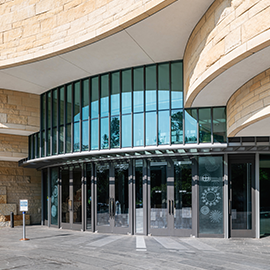
The entrance is the first thing every visitor touches, or in many buildings now, never has to touch. Automatic door technology has moved well beyond the simple motion mat, and across New York property owners are using it to cut energy costs, meet accessibility rules and keep lobbies moving. Sensors are smarter, glass and frames hold heat better, and operators can now report their own status to a building team before a small problem becomes a service call.
Whether you manage a hospital entrance in Manhattan, a retail center on Long Island or an office lobby in Westchester, what happens at the door affects comfort, safety and operating cost every day. The right entrance technology pays off quietly, in lower utility bills, fewer complaints and doors that simply work.
Automatic Door Technology in New York: What Is Changing
Automatic doors started as simple mats that opened a slider when someone stepped on them. Today’s systems combine a motor and controller, layered sensors, programmable timing and, increasingly, a network connection. The result is an entrance that opens only when it should, stays open long enough to be safe and closes quickly enough to protect the building’s indoor climate.
For New York buildings, the shift matters more than in most places. Winters are cold, summers are humid, foot traffic is heavy and building codes are demanding. An entrance that was perfectly acceptable fifteen years ago may now waste energy, struggle with accessibility rules or fail to communicate with the rest of the building.
How Automatic Door Technology Works Today
Every automatic entrance has three core parts: an operator, sensors and a way for the user to activate it. The operator is the motor and controller that moves the door. Sensors tell it when to open, when to hold and when to stop. Activation can be as simple as walking toward the door or as deliberate as pressing a wall-mounted switch.
- Operators: sliding, swinging, folding and revolving systems each use a different drive, but modern controllers let installers fine-tune opening speed, hold-open time and closing force.
- Motion sensors: microwave or infrared units detect someone approaching and signal the door to open.
- Presence sensors: active infrared sensors watch the threshold so the door does not close on a person or object standing in the doorway.
- Safety beams and side guards: additional protection along the leading edge and the sides of sliding doors.
- Activation devices: push plates, wave sensors, card readers and remote switches for deliberate entry.
Choosing the right drive starts with understanding the main automatic door types and how each one behaves in a busy entrance. A wide sliding door suits a hospital lobby, while a low-energy swing door may be the better fit for a small office suite.
Sensor and Safety Advances
Sensors are where most of the recent progress has happened. Older units reacted to any movement in range, which meant doors opened for passing carts, blowing leaves and people walking parallel to the glass. Newer adaptive sensors read direction and speed, so the door opens for someone approaching it and stays closed for someone walking past. That cuts nuisance openings, reduces wear on the operator and keeps conditioned air inside. Keeping those sensors aligned is a core part of any program of automatic sliding door repair and service on wide sliding entrances.
Safety standards guide all of this. Full-powered automatic doors are built to ANSI/BHMA A156.10, while low-energy and power-assisted doors follow ANSI/BHMA A156.19. A properly configured system meets those standards at installation and is verified again during routine service. Owners who want a clear checklist can review commercial entrance safety compliance requirements before planning an upgrade.
Energy-Efficient Entrances for New York Weather
Every time a door opens, conditioned air leaves and outside air enters. In a building with hundreds of door cycles a day, that exchange adds up. Energy-focused entrance technology attacks the problem from three directions: the materials in the door, the way the door operates and the type of door chosen.
Glass, Frames and Thermal Breaks
- Insulated and Low-E glass: low-emissivity coatings reduce heat transfer, which helps hold interior temperatures steady and trims heating and cooling costs.
- Thermally broken frames: a thermal break interrupts the metal path so exterior cold is not conducted straight through the door and frame to the interior.
- Weather seals and sweeps: tight seals at the head, jambs and threshold limit drafts that sensors and controllers cannot fix on their own.
- Air curtains: a band of air above the opening creates a barrier that slows the exchange of indoor and outdoor air, easing the load on HVAC equipment.
These upgrades pair well with the aluminum storefront and entrance systems common across New York retail and office buildings, where the frame and glass can be specified for performance at the same time the operator is selected.
Revolving Doors and Air Exchange
The type of door changes how much air moves. In 2006, MIT students analyzed door use in campus Building E25 and calculated that a swinging door exchanged as much as eight times more air than a revolving door. They estimated that if everyone used the revolving doors, MIT would save almost $7,500 in natural gas each year and avoid nearly 15 tons of carbon dioxide. It was a single building, so results will vary, but it shows how much the choice of door matters.
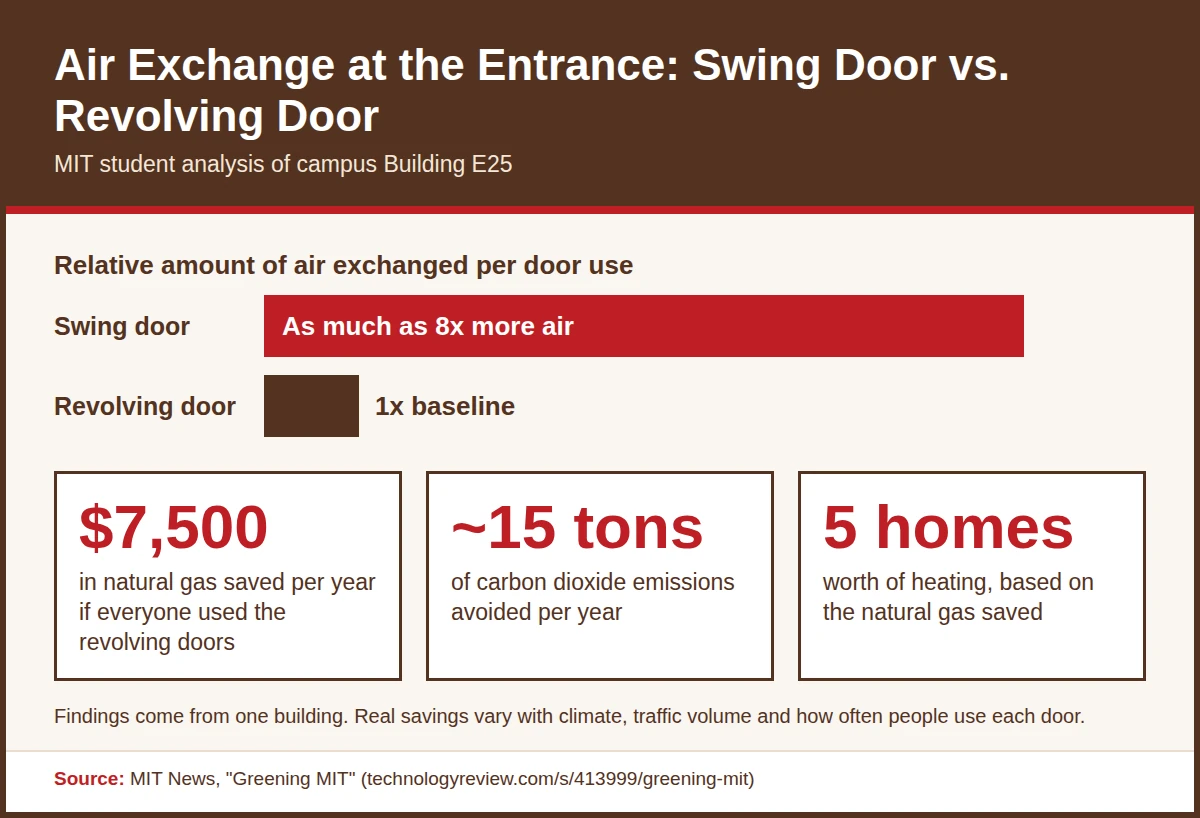
Source: MIT News, "Greening MIT"
A revolving door works like a moving vestibule that is never fully open. Modern automatic revolving door systems add convenience for high-traffic lobbies by turning at a controlled speed and slowing or stopping when sensors detect a person, a stroller or a wheelchair user. They are usually installed with an adjacent swinging or sliding door so every visitor has an accessible path.
Why New York Owners Are Paying Attention to Entrance Efficiency
Energy performance is no longer only a utility-bill question in the city. New York City’s Local Law 97 sets greenhouse gas emissions limits for most buildings over 25,000 square feet. The limits began in 2024 and become stricter in 2030, and buildings that exceed them face a penalty of $268 for every metric ton of CO2e above the limit. The city reports that over two thirds of its greenhouse gas emissions come from buildings, which is why heating and cooling loads get so much attention.
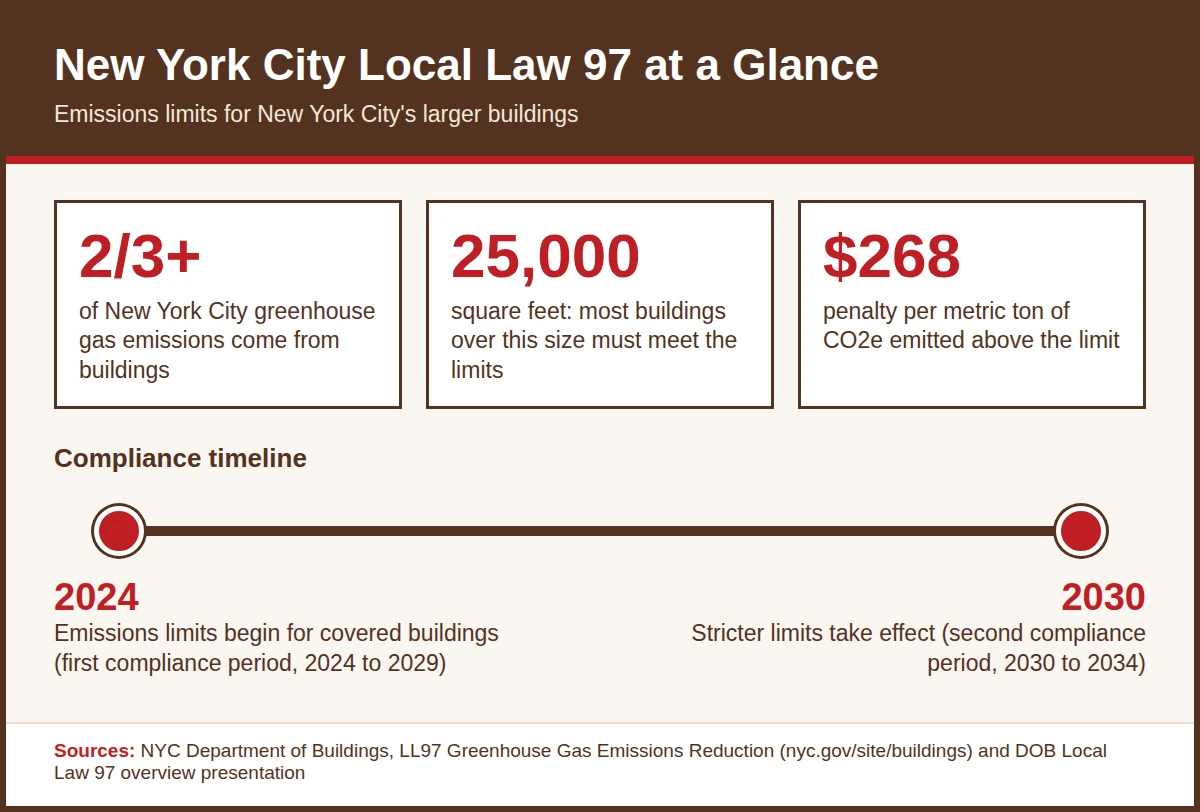
Sources: NYC Department of Buildings, LL97 Greenhouse Gas Emissions Reduction and DOB Local Law 97 overview presentation
Entrances are only one part of a building’s energy picture, but they are among the few openings in the envelope that operate all day long. Better glass, tighter seals, smarter sensors and the right door type all reduce the heating and cooling load that passes through them.
Operating Settings That Reduce Waste
- Adjustable hold-open time: shorter delays during quiet periods keep doors from standing open longer than necessary, within the limits set by safety standards.
- Reduced opening width: some operators can open to a narrower width for light traffic, which limits air exchange.
- Scheduled modes: programmable timers can lock, unlock or change door behavior on a set schedule.
Touchless and Accessible Entry
Touchless entry became a standard request after 2020, and it remains popular because it removes shared touchpoints and makes buildings easier to use for everyone, not only people who need accessibility features. A hands-free entrance also helps anyone carrying packages, pushing a cart or managing a child. In hospitals, where hygiene and reliability are non-negotiable, touchless entry is now the expectation, and dedicated hospital and healthcare automatic door service keeps those entrances working around the clock.
Touchless Activation Options
- Wave-to-open sensors: a wave of the hand in front of the sensor opens the door with no physical contact.
- Approach sensors: the door opens automatically as a visitor walks toward it.
- Mobile and remote activation: some systems can be triggered by a smartphone or a remote switch for staff and deliveries.
- Voice-activated control: voice commands can be routed through the building’s automation system to open a door.
- RFID and card readers: credentials open the door for authorized users only.
- Facial recognition: in high-security areas, the access control system verifies a face and then signals the operator.
Hands-free activation is especially useful on automatic swing doors, where a wave sensor or wall switch lets the door open at a controlled speed for pedestrians who cannot easily push or pull a heavy door.
Balanced Doors and Architectural Entrances
Some entrances call for heavy, custom or architectural doors that would be hard for many visitors to open by hand. Balanced door systems offset the weight of a large door so it can be operated manually with very little effort or automated with a smaller, quieter operator. They are a good example of technology serving design rather than limiting it.
Accessibility by the Numbers
Accessibility is the strongest practical reason to modernize an entrance. More than 1 in 4 U.S. adults have some type of disability, and the CDC reports that 12.2 percent have a mobility disability, meaning serious difficulty walking or climbing stairs. A heavy manual door can be a real barrier for those visitors, and for older adults and parents with strollers as well.
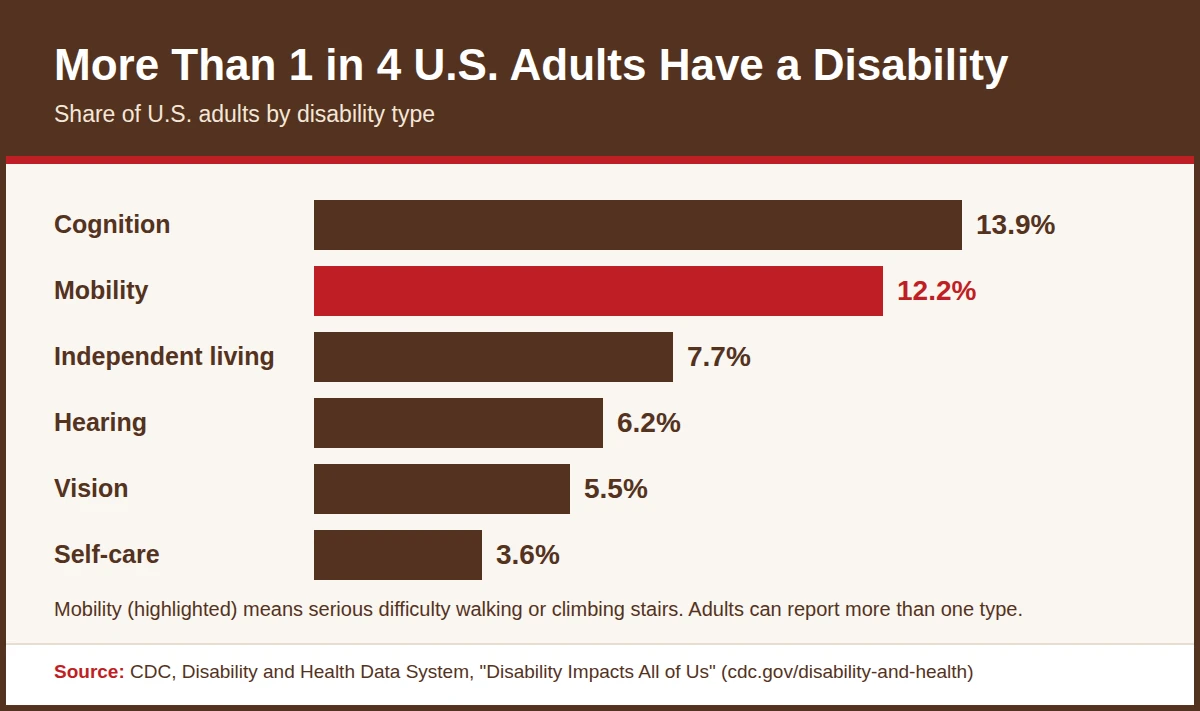
Source: CDC, Disability Impacts All of Us
The ADA Standards address automatic doors directly in Section 404.3. Full-powered automatic doors must comply with ANSI/BHMA A156.10, and low-energy and power-assisted doors must comply with ANSI/BHMA A156.19. The doorway must also provide a clear opening of at least 32 inches in both power-on and power-off modes, measured with all leaves in the open position.
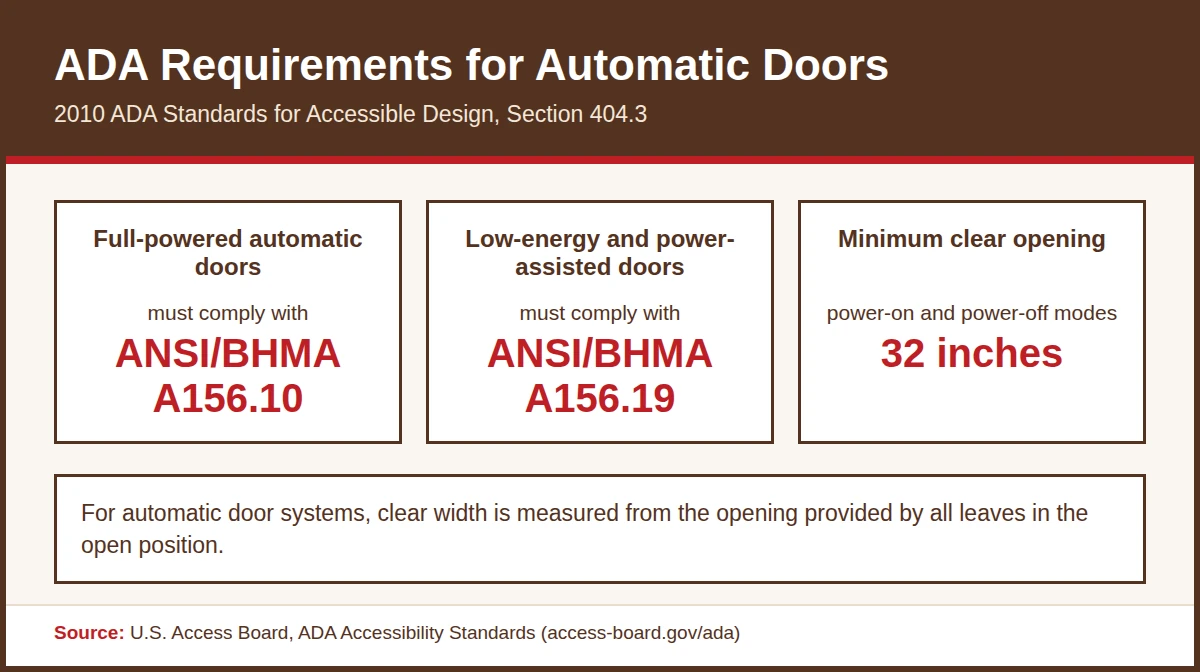
Source: U.S. Access Board, ADA Accessibility Standards
Standards only protect people when doors keep working as designed. The American Association of Automatic Door Manufacturers, known as AAADM, sets the safety and inspection framework that many building owners rely on to confirm that automatic doors stay compliant.
A trained technician can verify sensor coverage, closing force, hold-open time and safety devices during AAADM-certified inspections, which gives owners documented proof that the entrance meets current requirements.
Smart Features and Building Integration
The newest automatic door technology does not stop at opening and closing. Operators and controllers can now report data and respond to signals from other building systems, so the entrance becomes part of how the whole building runs.
Remote Monitoring and Diagnostics
Many modern operators track cycle counts and log fault codes. When that information reaches a service team, wear items such as belts, rollers and sensors can be replaced on a schedule instead of after a failure. For owners with several entrances or several buildings, that visibility turns door service from reactive to planned.
- Cycle counts: show how heavily each door is used and when major service is due.
- Fault logs: help technicians diagnose intermittent problems that never appear during a visit.
- Sensor status: flags a failing or misaligned sensor before it affects safety.
- Usage data: supports decisions about staffing, hours and layout.
Monitoring works best alongside a routine program of preventive maintenance for automatic doors, where a technician adjusts, lubricates and tests the system on a regular schedule.
Access Control and Security Integration
Automatic doors can be wired to card readers, intercoms and credential systems so they open only for authorized users or only during set hours. Mobile credentials and facial recognition work the same way: the access control system verifies the person, then signals the operator to open. For lobbies that need both a welcoming entrance and controlled access, this combination replaces a guard desk bottleneck with a smooth, verified flow.
Door Behavior in Emergencies
Doors should behave predictably when power is lost or an alarm activates, and the correct behavior depends on the building’s egress design and local code. Fire alarm interfaces, battery backup and manual breakout modes are all part of that conversation, and a qualified installer should confirm the setup for each individual opening.
Upgrading Existing Doors or Installing New Automatic Doors
Not every building needs new doors to benefit from new technology. Many older operators can be brought up to current performance with updated sensors, controllers and safety devices, while others reach the point where replacement is the better investment.
| Approach | Best fit | What changes |
|---|---|---|
| Sensor and safety upgrade | Doors in good mechanical shape with outdated sensors | Adaptive motion and presence sensors, updated safety devices |
| Operator and controller modernization | Sound frames and glass with aging motors or controls | New operator, programmable controller, touchless activation |
| Full replacement | Worn frames, failing glass or doors that no longer meet current standards | New door system with energy-efficient glass and thermal breaks |
| New installation | Manual entrances and new construction | Complete automatic entrance with sensors, activation and safety devices |
If the frame and glass are sound, modernizing existing automatic door operators is often the fastest way to add touchless activation and better sensors without disrupting the building.
What to Look for When Planning an Upgrade
- Traffic volume: a door that cycles thousands of times a day needs a heavier-duty operator than a small office entrance.
- Climate exposure: wind, snow and humidity affect glass, seals and sensor placement.
- Accessibility needs: confirm clear width, activation height and compliance with the applicable standard.
- Security requirements: decide early whether the door must connect to access control.
- Service access: choose equipment that local technicians can support quickly.
For manual entrances and new construction, professional automatic door installation starts with a site survey that measures traffic, power, frame condition and code requirements before any equipment is specified.
Plan for Service From the Start
The best technology still wears. A written automatic door service contract sets the inspection and maintenance schedule in advance, so a sensor drift or a worn roller is corrected during a planned visit instead of during a lobby full of people.
Choosing Automatic Door Technology by Building Type in New York
Different buildings ask different things of an entrance. Hospitals prioritize hygiene and reliability, retail centers care about traffic flow and curb appeal, and office towers weigh security against a welcoming lobby. Across the full range of commercial entrances across New York industries, the same priorities tend to point to the same technology choices.
| Building type | Entrance priorities | Technology to consider |
|---|---|---|
| Hospitals and clinics | Hygiene, wide openings, reliability | Touchless activation, wide sliding doors, remote monitoring |
| Retail and shopping centers | Traffic flow, energy cost, appearance | Adaptive sensors, thermally broken storefront frames, Low-E glass |
| Office lobbies | Security, comfort, first impressions | Revolving doors with accessible side doors, access control integration |
| Hotels and restaurants | Guest experience, luggage, weather protection | Sliding or swing automatic doors, air curtains, reduced opening width |
| Schools and public buildings | Durability, accessibility, safety | Low-energy swing doors, durable operators, scheduled lock modes |
| Multi-site property portfolios | Consistency, predictable service | Standardized operators and sensors, remote monitoring, service contracts |
Healthcare entrances deserve special attention because they combine heavy traffic, strict hygiene expectations and visitors who may be frail or in a hurry. Reliability matters more than novelty there, so doors, sensors and the service plan behind them should be chosen together.
Working With a New York Automatic Door Specialist
Technology only delivers value when it is specified, installed and maintained correctly. Door Automation Corp designs, installs and services automatic sliding, swinging, folding and revolving doors for commercial buildings across New York and New Jersey, and works with architects and property teams to match each entrance to its traffic, climate and code requirements.
If you are weighing an upgrade, talk with an entrance specialist about what your building needs and which improvements will deliver the most value.
| Request an Entrance Consultation |
Automatic Door Technology FAQs
What is automatic door technology?
Automatic door technology is the combination of an operator (the motor and controller), sensors, activation devices and safety systems that opens and closes a door without manual effort. Modern systems also include programmable timing, energy-saving features and connections to access control and building management systems.
How does automatic door technology save energy in New York buildings?
Energy savings come from insulated Low-E glass, thermally broken frames, tight weather seals, adaptive sensors that avoid nuisance openings, adjustable hold-open times and door types such as revolving doors that limit air exchange. Together they reduce the heating and cooling load that passes through the entrance in cold winters and humid summers.
Do touchless automatic doors meet ADA requirements?
The ADA Standards set performance requirements for automatic doors that are installed. Full-powered doors must comply with ANSI/BHMA A156.10, low-energy and power-assisted doors must comply with ANSI/BHMA A156.19, and the doorway must provide at least 32 inches of clear opening in both power-on and power-off modes. Touchless activation can be added to a compliant door, but it does not replace those requirements.
What sensors do modern automatic doors use?
Most systems pair a motion sensor, usually microwave or infrared, that detects someone approaching with an active infrared presence sensor that protects the threshold. Safety beams and side guards add protection on sliding doors, and activation devices such as wave sensors, push plates and card readers handle deliberate entry.
Can older automatic doors be upgraded with newer technology?
In many cases, yes. If the frame, glass and track are in good condition, an older operator can often be updated with new sensors, a programmable controller and touchless activation. A qualified technician should inspect the door first to confirm that the existing components can support the upgrade.
Do automatic doors work with access control systems?
Yes. Automatic door operators can be connected to card readers, intercoms, mobile credentials and other access control systems. The access control system verifies the person, then signals the operator to open, which lets a building restrict entry to authorized users or set hours.